WhatsApp: +86 16626708626
 Email:
 Phone: +86 16626708626
Description
Core Product Summary (Brand / Model / Key Attributes)
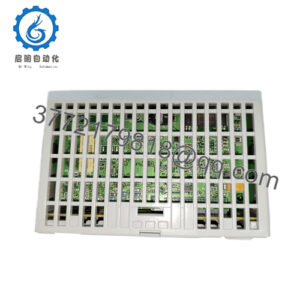
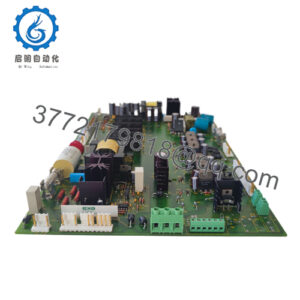
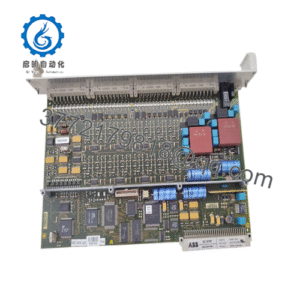
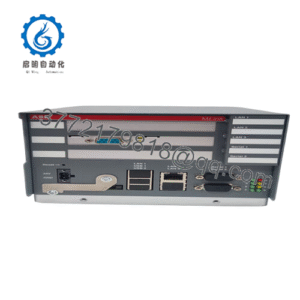
The GE Fanuc / VMIC VMIVME-7807 (also cataloged as VME-7807 or VME-7807RC for rugged applications) is a high-performance 6U single-slot VMEbus single-board computer (SBC) powered by the Intel Pentium M processor family and the Intel 855GME chipset. Developed under the legacy VMIC product line and maintained under GE Fanuc / GE Intelligent Platforms (Abaco Systems), this board provides an x86 processing platform for demanding embedded automation, defense, aerospace, and real-time control applications.
The VMIVME-7807 accommodates up to 1.5 GB of DDR SDRAM (via one 200-pin SODIMM slot and optional onboard soldered RAM) with optional ECC data protection. System integration features include an onboard secondary IDE CompactFlash socket for bootable solid-state storage, integrated Intel 855GME SVGA graphics, DVI-D digital video out via rear I/O, dual Gigabit Ethernet ports, one 10/100 Mbit Fast Ethernet port, four USB 2.0 ports, four 16550-compatible serial interfaces, and one 66 MHz 64-bit PCI-X PMC mezzanine expansion slot. Full VMEbus master, slave, and system controller capabilities are managed via an onboard Tundra Universe II PCI-to-VME bridge.
Key Technical Specifications
| Parameter | Specification |
| Product Type | 6U VMEbus Single-Board Computer (SBC) |
| Manufacturer / Brand | VMIC / GE Fanuc / GE Intelligent Platforms (Abaco Systems) |
| Model / Ordering Series | VMIVME-7807 (VME-7807 / VME-7807RC) |
| Processor Options | Intel Pentium M (1.1 GHz, 1.4 GHz LV, 1.6 GHz, or 1.8 GHz) |
| Chipset | Intel 855GME Chipset (400 MHz system bus) |
| L2 Cache | Up to 2 MB Advanced Transfer Cache (on-die) |
| System Memory (DRAM) | Up to 1.5 GB DDR SDRAM (SO-DIMM + optional 512 MB soldered RAM, optional ECC) |
| VMEbus Controller | Tundra Universe II ASIC (A32/A24/A16, D32/D16/D8, MBLT64, BLT32) |
| Graphics Controller | Integrated Intel 855GME Graphics (Front-panel SVGA up to 1600 × 1200 + Rear DVI-D) |
| Network Interfaces | 1 × 10/100Base-TX (Intel 82551ER) + 2 × 10/100/1000Base-T (Intel 82546EB, optional VITA 31.1) |
| Mezzanine Expansion | 1 × 66 MHz / 64-bit PCI-X PMC (IEEE 1386.1) expansion slot |
| Storage Interfaces | Onboard bootable CompactFlash socket (IDE), Ultra ATA/100 IDE, SATA via P2 rear I/O |
| Peripheral Ports | 4 × USB 2.0, 4 × 16550 Serial ports (COM1 RS-232 on front, COM2–COM4 via rear I/O), PS/2 |
| Non-Volatile Memory | 32 KB battery-backed NVRAM / SRAM |
| Form Factor / Dimensions | Single-slot 6U VMEbus (233.4 mm × 160.0 mm × 20.3 mm) |
| Power Requirements | +5 V DC (±5%), 6.42 A to 7.28 A typical depending on CPU clock speed |
Detailed Product Overview
The GE Fanuc VMIVME-7807 brings low-power, high-efficiency x86 computing into the 6U VMEbus architecture by utilizing the Intel Pentium M processor combined with the Intel 855GME graphics and memory controller hub. Built for real-time control, process visualization, and edge data processing, it bridges standard PC operating software ecosystems with heavy-duty VME hardware.
The system memory design accepts up to 1.5 GB of high-speed DDR SDRAM dual-ported to the VMEbus, allowing external VME bus masters to exchange data with local application memory. For applications exposed to high shock or vibration, an optional 512 MB block of memory can be factory soldered directly onto the PCB. Storage flexibility is handled through an onboard bootable CompactFlash socket along with SATA and Ultra ATA support, providing solid-state operation without mechanical hard drives.
System I/O is routed through both front-panel interfaces and rear P2/P0 connectors. Dedicated networking consists of front-panel 10/100 Fast Ethernet alongside dual Gigabit Ethernet ports. The onboard PCI-X PMC slot supports 66 MHz 64-bit mezzanine boards for custom fieldbus, data acquisition, or specialized hardware add-ons. System controller duties (Slot 1 arbitration, SYSCLK driving, and interrupt handling) are managed by the Tundra Universe II VME bridge.
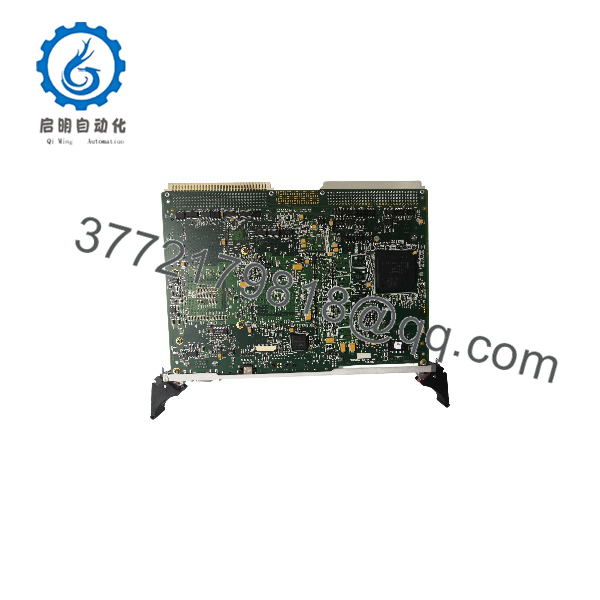
VMIVME-7807
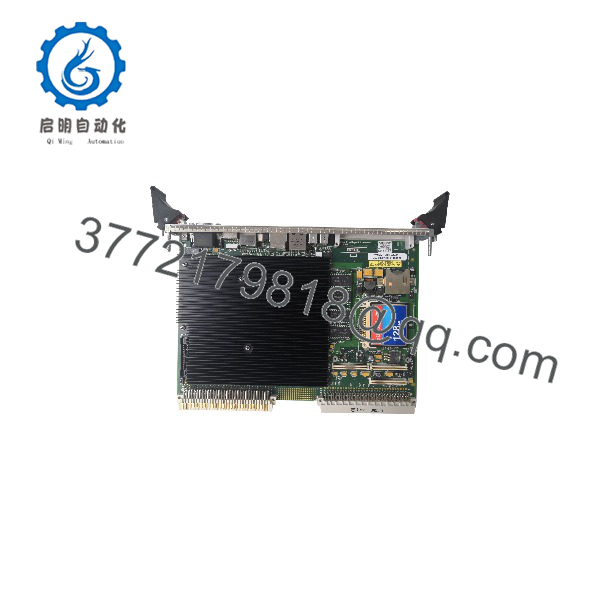
VMIVME-7807
Engineering Selection Highlights
- Intel Pentium M Architecture: Offers processing efficiency with low thermal dissipation compared to traditional desktop processors.
- Dual-Ported System Memory: Enables up to 1.5 GB DDR SDRAM with optional ECC protection accessible directly from the VMEbus backplane.
- High-Speed Network Options: Integrates up to three independent Ethernet channels, including dual Gigabit ports (with optional VITA 31.1 backplane fabric support).
- 64-bit / 66 MHz PCI-X PMC Site: Provides a mezzanine slot for expansion modules while maintaining single-slot 6U form factor bounds.
- Solid-State Storage Boot Capability: Accepts onboard Type I/II CompactFlash cards directly onto the secondary IDE controller for diskless OS execution.
- Dual Independent Display Output: Drives simultaneous analog SVGA (front panel) and DVI-D digital video (rear I/O) via the Intel 855GME graphics engine.
System Compatibility & Integration Requirements
| Item / Dependency | Verified Compatibility or Requirement | Practical Note |
| Chassis / Rack Standard | 6U VMEbus Chassis (IEEE 1014 / VME64 / VITA 31.1 option) | Mounts into a standard single 6U VME slot with J1/J2 (and optional J0) backplane connections. |
| Operating System Support | VxWorks, Windows XP / 2000, Linux, QNX, LynxOS | Supported by board-support packages (BSPs) and standard x86 graphics/chipset drivers. |
| PMC Expansion Card | IEEE 1386.1 PCI-X PMC Mezzanine Module (3.3V signaling) | Backwards compatible with legacy 33 MHz / 32-bit PMC cards (bus throttles to match). |
| Rear Transition Module (RTM) | VMIACC-0586 or VMIACC-0590 Rear Utility Boards | Required to break out P2/P0 rear signals (COM2–COM4, SATA, DVI-D, secondary USB). |
| Cooling Requirement | Forced-Air Cooling | Requires minimum forced airflow across heatsinks (300 to 450 LFM recommended based on CPU model). |
Dimensions, Mounting & Connection Notes
- Board Dimensions: Standard 6U single-slot Eurocard (Height: 233.4 mm / 9.2 in., Depth: 160.0 mm / 6.3 in., Width: 20.3 mm / 0.8 in.).
- Front Panel I/O Interface:
- Networking: 1 × RJ-45 Fast Ethernet (10/100 Mbit) + 2 × RJ-45 Gigabit Ethernet.
- Graphics & USB: 1 × High-density DB-15 VGA female port, 2 × USB 2.0 type-A ports.
- Serial & Input: 1 × RJ-45 COM1 serial port (RS-232 console), 1 × PS/2 mini-DIN (supports Y-splitter cable for mouse and keyboard).
- Backplane Pin Connections:
- P1 / P2 Connectors: Standard 96-pin VMEbus connections routing bus signals, rear serial channels, SATA, and DVI-D lines.
- P0 Connector (Optional): Routes Gigabit Ethernet lines for VITA 31.1 backplane fabric networks.
FAQ
What is the GE Fanuc VMIVME-7807?
The VMIVME-7807 is a 6U VMEbus single-board computer built on the Intel Pentium M processor and Intel 855GME chipset platform.
What memory options are supported on the VMIVME-7807?
The board supports up to 1.5 GB DDR SDRAM using a combination of one 200-pin SODIMM socket and an optional 512 MB onboard soldered memory block, with optional ECC support.
Does the VMIVME-7807 support onboard solid-state storage?
Yes, it features an onboard bootable CompactFlash socket connected to the secondary IDE controller, allowing full OS boot execution without external disk drives.
What expansion slots are available on the board?
It includes one 64-bit / 66 MHz PCI-X PMC expansion site (IEEE 1386.1) for installing add-on mezzanine modules.
How are the serial ports distributed on the board?
The board has four 16550-compatible serial ports: COM1 is accessible via an RJ-45 front panel connector, while COM2, COM3, and COM4 are routed through the rear I/O P2 connector.
Verification & Troubleshooting Notes
- Board Locked in Reset / SYSFAIL LED Active: Verify +5 V DC backplane power delivery. Check DIP switch S1 settings to ensure VME System Controller mode (Slot 1) is only enabled when the module is positioned in Slot 1 of the chassis.
- Loss of System Time / CMOS Settings: If BIOS settings reset on power-down, inspect header E3 for the battery-enable setting or replace the onboard coin-cell battery.
- PMC Card Speed Throttling: Installing a legacy 33 MHz / 32-bit PMC card in the PCI-X mezzanine site will automatically cause the board bus to throttle from 66 MHz down to 33 MHz.
- Display Output Issues: If no image appears on the front-panel VGA monitor, verify that dual-display settings in the BIOS or operating system are not directing primary display output to the rear DVI-D port.