WhatsApp: +86 16626708626
 Email:
  Phone: +86 16626708626
Description
3. Key Technical Specifications
| Parameter | Value |
|---|---|
| Measurement Range | 0–2000 ppm (H₂ equivalent, volume/volume) |
| Sensor Type | Fuel-cell composite gas sensor |
| Relative Sensitivity | H₂ 100 %; CO 15 ±4 %; C₂H₂ 8 ±2 %; C₂H₄ 1.5 ±0.5 % |
| Accuracy | ±10 % of reading ±25 ppm (H₂ equivalent) |
| Response Time | ≈10 minutes (90 % of step change) |
| Mounting | Single transformer oil valve (no pump or extra piping) |
| Display | Local LCD |
| Communication | Isolated RS-485 Modbus; local USB port |
| Power Supply | Standard AC (exact voltage per nameplate) |
| Operating Principle | Dynamic oil sampling through gas-permeable membrane |
| Compliance | IEEE C57.104 basic DGA information |
4. Product Introduction
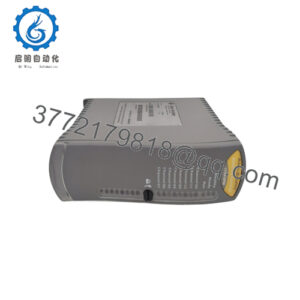
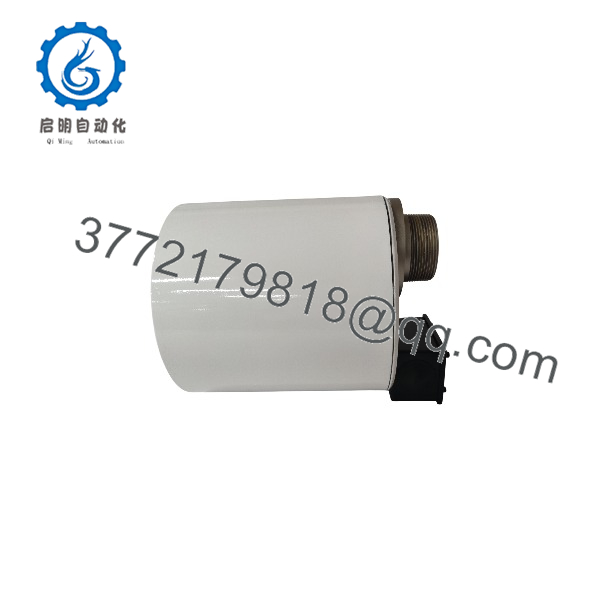
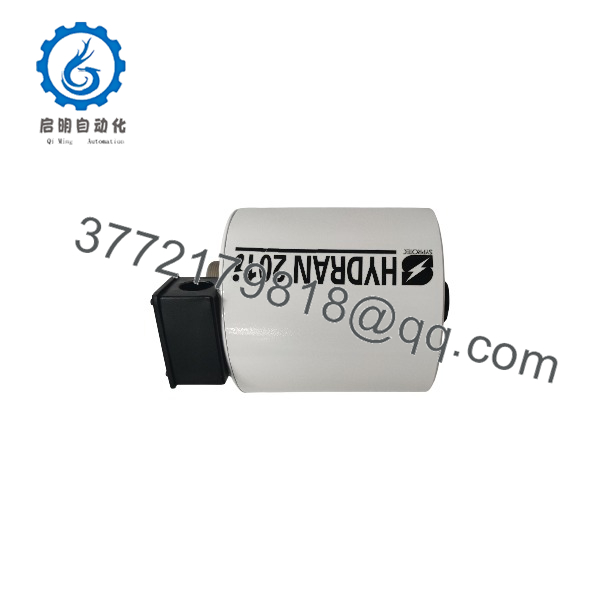
The GE Hydran H201Ti (H201TI) is a compact online Dissolved Gas-in-oil Analysis (DGA) monitor designed for continuous transformer health monitoring. It uses a fuel-cell composite gas sensor that responds 100 % to hydrogen while remaining sensitive to carbon monoxide, acetylene, and ethylene—covering the primary fault gases identified in IEEE C57.104.
The unit mounts directly on a single transformer oil valve and employs dynamic oil sampling, eliminating the need for pumps or additional piping. Local LCD readout and Modbus RS-485 communication allow both on-site and remote monitoring of gas concentration trends, providing early warning of developing insulation faults.
H201Ti
H201Ti
5. Troubleshooting Quick Reference
| Symptom | Possible Cause |
Relevance to this Part |
Quick Check Method | Recommendation |
|---|---|---|---|---|
| No gas reading / zero output | Sensor membrane blocked or oil not present | ✅ High | Verify oil fills the manifold; check for air pockets | Bleed air; confirm valve is open and oil flows to sensor |
| Unstable or drifting readings | Temperature variation or contaminated membrane | ✅ Medium | Compare local LCD value with recent lab DGA sample | Allow thermal stabilization; clean or replace sensor if contaminated |
| Communication failure (Modbus) | Wiring error or incorrect baud/address | ✅ High | Check RS-485 polarity and termination; verify node address | Correct wiring; confirm Modbus parameters match system settings |
| Alarm relay always active | Threshold set too low or actual gas rise | ✅ Medium | Read current ppm on LCD; compare with configured alarm limits | Adjust alarm set-points; investigate actual gas generation if elevated |
| Unit powers but no LCD activity | Power supply issue or internal fault | ✅ High | Measure supply voltage at terminals | Confirm correct supply voltage; replace unit if power is present but no display |
If the fault continues after these checks, provide the current ppm reading, recent lab DGA results, and photos of the installation to technical support.
6. Frequently Asked Questions (FAQ)
Q: What gases does the H201Ti actually detect?
A: The composite sensor responds 100 % to hydrogen and has calibrated sensitivity to carbon monoxide, acetylene, and ethylene. It does not provide individual gas concentrations—only a composite “Hydran gas value” expressed as H₂ equivalent ppm.
Q: Does the monitor require a circulating oil pump?
A: No. The H201Ti uses dynamic oil sampling through a single valve mount and a gas-permeable membrane. No external pump or multi-valve piping is needed.
Q: Can the H201Ti be used on natural-ester or synthetic-ester filled transformers?
A: Standard units are calibrated for mineral oil. Special configurations exist for ester fluids; confirm compatibility with the exact oil type before ordering.
Q: How often does the sensor need replacement?
A: Sensor life depends on oil condition and operating environment. Many units operate for years; GE historically offered extended sensor warranty options. Monitor trend stability and replace when response degrades or accuracy falls outside specification.
Q: Is the Mark IV version different from earlier H201Ti units?
A: The Mark IV incorporates updated electronics, RoHS compliance, improved power supply, USB port (replacing older RS-232), and full Modbus support while retaining the same mechanical footprint and sensor principle.
Q: Why is secondary-market pricing often lower than list?
A: These monitors are frequently available as new surplus from utility projects or decommissioned transformers. Verified units remain fully functional, but they typically carry a seller warranty rather than a current factory warranty.
Q: What communication options are available?
A: Isolated RS-485 Modbus for remote SCADA or fleet software (Perception), plus a local USB port for configuration and data download. Analog or relay outputs may be present depending on exact configuration.