 WhatsApp: +86 16626708626
 Email:
  Phone: +86 16626708626
Description
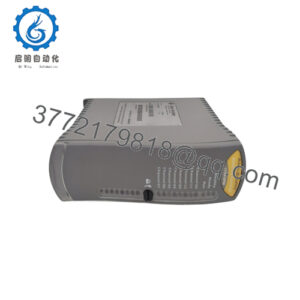
The GE IC697MEM717D CMOS expansion memory module provides the additional RAM capacity that Series 90-70 systems require when program complexity, data logging needs, or register usage outgrow the base memory built into CPUs like the 771, 772, or related coprocessor modules. In industrial automation and process control, older 90-70 installations frequently run into memory constraints as logic expands—adding more rungs, subroutines, PID instances, recipe tables, or diagnostic data blocks quickly exhausts onboard limits, forcing program simplification, slower execution, or external workarounds that complicate maintenance. The GE IC697MEM717D delivers a clean 256 KB of configurable CMOS RAM, allowing engineers to allocate space freely between user program logic, data registers, and retentive storage without compromising performance or determinism.
This becomes particularly useful in mid-to-large applications where scan times must remain tight despite growing functionality, or in systems that store historical trends, setpoints, or machine parameters locally for faster access. For teams sustaining legacy racks, GE IC697MEM717D extends operational capability cost-effectively, avoiding premature migration while preserving high reliability in continuous processes that can’t tolerate frequent reprogramming or downtime.
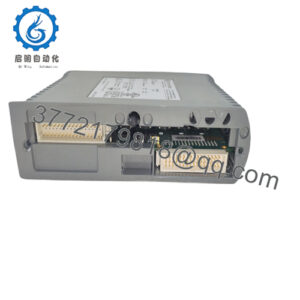
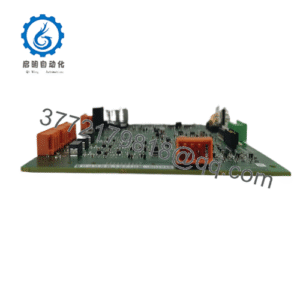
The GE IC697MEM717D functions as a daughterboard-style expansion, mounting directly onto compatible base modules—typically the IC697CPU771, IC697CPU772, or IC697PCM711 coprocessor—in the same rack slot to supplement their onboard memory. It uses CMOS SRAM technology for low-power, volatile storage backed by the host module’s lithium battery (IC697ACC701), ensuring retention of programs and data during power interruptions for months without applied power (nominal 6 months, with battery shelf life up to 10 years at room temperature). The full 256 KB can be user-configured via programming software (VersaPro or Control) for logic memory, data storage, or a mix of both, with background error checking by the CPU on program memory and power-cycle/reset validation for storage areas.
No separate backplane slot is consumed; it integrates transparently, appearing as extended memory to the system. Diagnostics rely on the host CPU’s fault tables and LEDs—no dedicated indicators on the memory board itself. In the automation hierarchy, GE IC697MEM717D enhances the processor’s capacity at the core level, enabling more sophisticated control strategies, larger I/O handling, or data-intensive features while maintaining seamless interaction with I/O modules, Genius networks, and supervisory systems.

- IC697MEM717D
| Specification | Details |
|---|---|
| Model Number | IC697MEM717D |
| Brand | GE Fanuc (now Emerson) |
| Type | CMOS Expansion Memory Module |
| Input Voltage | Powered from host module (5 V DC) |
| Operating Temp Range | 0 to +60 °C |
| Mounting Style | Daughterboard on compatible CPU/PCM (same slot) |
| Dimensions | Standard Series 90-70 compatible (approx. fits within host module footprint) |
| Weight | Approx. 0.2–0.5 lbs (0.09–0.2 kg) |
| Interface/Bus | Direct connection to host CPU/PCM |
| Compliance | CE, various industrial standards |
| Supported Protocols | N/A (memory expansion only) |
| Typical Power Draw | Negligible (powered via host) |
Adding the GE IC697MEM717D restores headroom and flexibility to memory-constrained Series 90-70 setups, enabling engineers to implement richer logic, more registers for trending or alarming, or expanded data tables without performance hits. The CMOS design with battery backup ensures long-term performance consistency—programs and retentive data survive power cycles reliably, reducing the risk of lost configurations during outages or maintenance. Configuration options let you tailor allocation precisely, minimizing wasted space and supporting incremental upgrades as process requirements evolve.
Maintenance overhead drops noticeably: no separate module to power or wire, just plug-and-play onto the host, with diagnostics handled centrally by the CPU. The robust construction tolerates industrial vibration and temperature swings, contributing to fewer failures in 24/7 environments. Overall, it extends the economic life of existing racks, lowers total ownership costs by deferring full replacements, and keeps systems responsive even as applications grow more demanding.
In power generation, the GE IC697MEM717D supports expanded turbine sequencing, alarm logging, or setpoint storage in CPU 771/772-based controls where large programs demand extra memory for critical system uptime. Manufacturing sectors—automotive, metals, or pulp & paper—use it to accommodate detailed machine recipes, production data buffers, or diagnostic routines in high-throughput lines. Chemical and process plants deploy it for batch management, historical data retention, or complex interlock logic in environments needing reliable, non-volatile-like storage under continuous operation.
Compatible or alternative products include:
IC697MEM717 (base or other suffixes like A/B/C) – Standard 256 KB version; D suffix typically a later revision with equivalent specs
IC697MEM715 – 64 KB CMOS expansion for lighter memory needs
IC697MEM719 – 128 KB variant in the same family
IC697MEM731 – 256 KB alternative (often interchangeable depending on CPU)
IC697MEM733 – Higher-capacity 512 KB option for more demanding programs
IC697CPU771 – CPU model that hosts GE IC697MEM717D for expansion
IC697CPU772 – Higher-performance CPU commonly paired with this memory
IC697PCM711 – Programmable Coprocessor Module that uses
GE IC697MEM717D for additional storage
Before installing the GE IC697MEM717D, confirm compatibility with your host module (e.g., CPU771, CPU772, or PCM711)—it must be a supported base for daughterboard mounting. Power down the rack, carefully attach the board per the host’s instructions (align connectors, secure without force), and verify seating to ensure proper contact. After installation, use programming software to configure memory allocation (logic vs. data/retentive) and perform a power cycle to validate error-free recognition in the CPU fault tables. Check the host’s lithium battery (IC697ACC701) status and age—replace if low or over 5–10 years to guarantee retention.
Ongoing maintenance is minimal: monitor CPU fault tables during routine checks for any memory-related parity or checksum errors, which could indicate battery issues or rare hardware faults. No cleaning or calibration is needed beyond ensuring the rack remains dust-free and ventilated. Test retentive data integrity after extended outages by verifying key registers or programs. Keep a spare GE IC697MEM717D on hand—installation is quick and non-disruptive with backups, minimizing impact on operations.