 WhatsApp: +86 16626708626
 Email:
  Phone: +86 16626708626
Description
3. Key Technical Specifications
| Parameter | Value |
|---|---|
| Manufacturer | GE Fanuc (Emerson) |
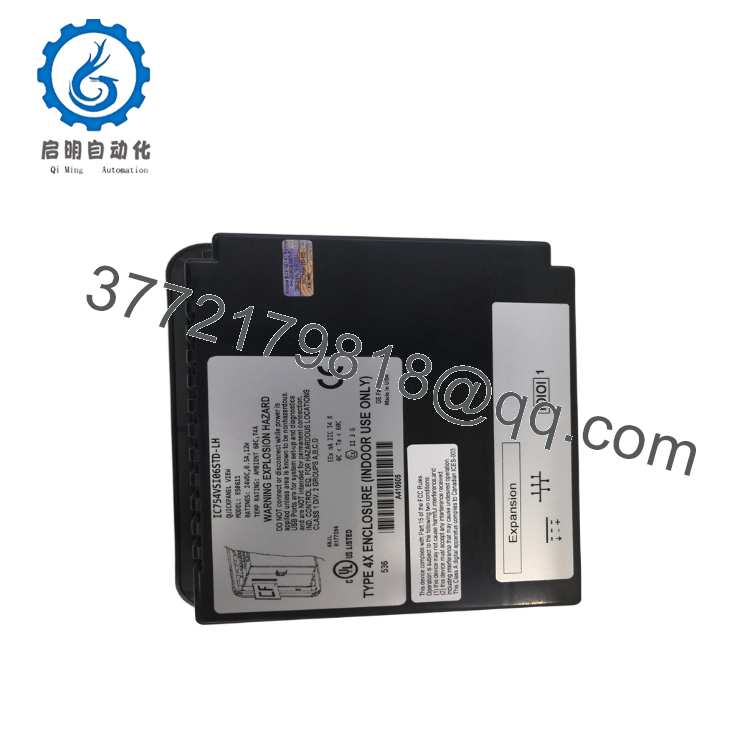
| Model | IC754VSI06STD-LH |
| Product Series | QuickPanel View |
| Product Type | Industrial HMI |
| Display Size | 6-inch STN Color LCD |
| Resolution | 320 × 240 pixels (QVGA) |
| Touch Technology | Analog Resistive Touchscreen |
| Operating System | Microsoft Windows CE.NET |
| Processor | Intel XScale 400 MHz |
| Flash Memory | 32 MB |
| DRAM | 32 MB |
| Retentive Memory | 512 KB Battery-Backed SRAM |
| Communication Ports | RS-232, RS-485 |
| Programming Software | Proficy View Machine Edition |
| Supply Voltage | 12–30 VDC |
| Operating Temperature | 0 °C to +50 °C |
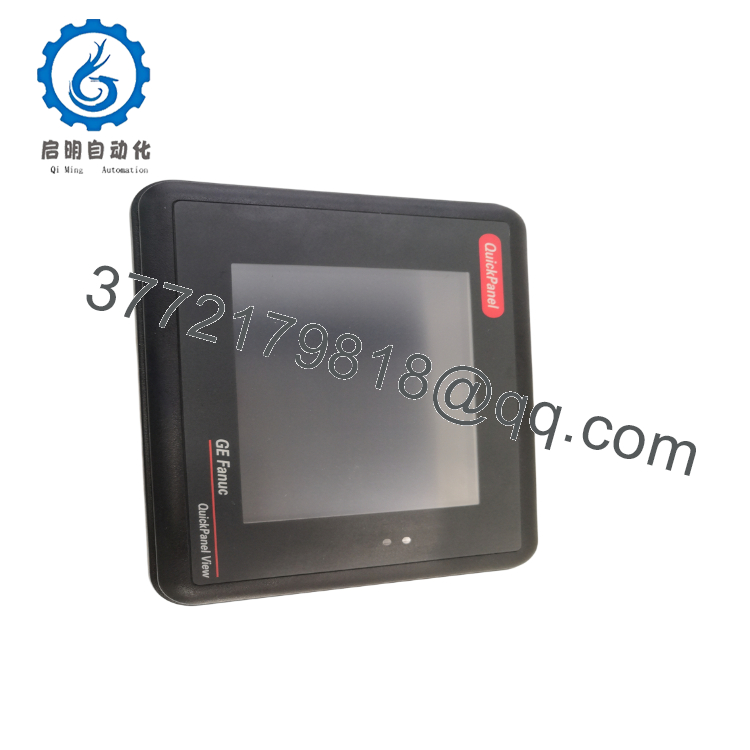
The IC754VSI06STD-LH is a 6-inch QuickPanel View HMI designed for industrial operator interfaces. It combines a Windows CE.NET operating system, touchscreen display, serial communications, and battery-backed memory for machine monitoring and control applications.
4. Product Introduction
The GE IC754VSI06STD-LH is a compact operator interface terminal developed for the QuickPanel View family. It provides process visualization, alarm handling, recipe management, and operator control through a 6-inch color STN touchscreen. The terminal communicates with GE PLCs and many third-party controllers through standard serial interfaces using applications developed in Proficy View Machine Edition.
Although this model belongs to a legacy HMI platform, it remains common in production facilities where existing machine applications continue to operate reliably. For replacement projects, matching both the hardware revision and the Machine Edition project version helps avoid unnecessary commissioning delays.
5. Installation & Configuration Guide
Stage 1 – Pre-Installation Preparation (10 Minutes)
⚠️ Safety First
- Notify operations personnel of the planned shutdown.
- Stop the machine using the approved operating procedure.
- Apply Lockout/Tagout (LOTO).
- Disconnect the 24 VDC control power.
- Wait at least 5 minutes before disconnecting the HMI.
Tools Required
- Grounded ESD wrist strap
- PH1 screwdriver
- Fluke 115 digital multimeter
- Laptop with Proficy View Machine Edition
- Ethernet or serial communication cable
- Smartphone for reference photos
Data Backup
Before removing the HMI:
- Upload the complete HMI application.
- Record the firmware revision.
- Document communication settings.
- Record serial baud rate and node address.
- Photograph rear terminal wiring.
- Verify battery status.
Stage 2 – Removing the Existing Terminal (10 Minutes)
- Remove control power.
- Label every communication cable.
- Disconnect serial wiring.
- Remove the mounting clamps.
- Carefully remove the terminal from the panel.
Inspect:
- Touchscreen surface
- LCD panel
- Rear connector
- Terminal block
- Mounting gasket
⚠️ Keep the original HMI until the replacement has completed successful commissioning.
Stage 3 – Installing the New Terminal (15 Minutes)
- Wear a grounded ESD wrist strap.
- Verify the exact model:
IC754VSI06STD-LH
- Install the terminal into the panel cutout.
- Tighten mounting clamps evenly.
- Connect the 12–30 VDC power supply.
- Reconnect communication wiring.
- Download the HMI application if necessary.
Installation Checklist
- Correct catalog number
- Mounting gasket properly seated
- Power polarity verified
- Communication wiring connected
- Application restored
Stage 4 – Power-On & Functional Testing (20 Minutes)
Pre-Power Checks
- Verify input voltage.
- Confirm communication wiring.
- Inspect touchscreen.
- Verify panel grounding.
Startup Procedure
- Apply control power.
- Observe the Windows CE.NET startup sequence.
- Verify touchscreen calibration.
- Confirm communication with the PLC.
- Download the application if required.
- Test alarms, trends, and navigation screens.
- Verify all operator buttons function correctly.
⚠️ Troubleshooting Note
If communication cannot be established:
- Verify baud rate and serial parameters.
- Confirm PLC driver selection.
- Check COM port assignment.
- Verify cable pinout.
- Confirm project compatibility with the installed firmware.
SOP Quality Verification
1. Inbound Inspection & Traceability
- Verify OEM labels and serial numbers.
- Inspect the touchscreen for scratches.
- Check for corrosion, UV discoloration, and repair marks.
- Verify hardware revision.
- Review traceability documentation.
2. Live Functional Testing
Testing should be performed on a genuine GE QuickPanel test bench.
Verification includes:
- Windows CE boot verification
- LCD display inspection
- Touchscreen calibration
- Serial communication test
- HMI project loading
- Continuous operation exceeding 24 hours
- Thermal stability monitoring
- Functional test report generation
Test photographs and videos should be available upon request.
3. Electrical Parameter Testing
- 500 V insulation resistance test (>10 MΩ where applicable)
- Ground continuity verification
- Input current measurement
- Power consumption verification
4. Firmware & Configuration Verification
- Record firmware revision.
- Verify Machine Edition compatibility.
- Backup application files.
- Document communication parameters.
5. Final QC & Packaging
- QC inspector approval
- Anti-static ESD packaging
- LCD protective film
- Bubble-wrap protection
- Heavy-duty shipping carton
- QC Passed label with inspection date

- IC754VSI06STD-LH
- IC754VSI06STD-LH
Technical Pitfalls & Survival Guide
❗ Project Version Compatibility
One of the easiest ways to create unnecessary downtime is downloading a project developed with a newer Machine Edition release into an older terminal.
Before replacing the HMI, archive the original project and verify the engineering software version. Project conversion may be required when migrating between firmware revisions.
❗ Record Communication Parameters
Factory-default serial settings rarely match the running machine.
Before disconnecting the original HMI, record:
- PLC driver
- Baud rate
- Station address
- COM port configuration
I’ve seen perfectly functional replacement terminals appear “dead” simply because the communication settings were never copied.
❗ Touchscreen Calibration
A replacement touchscreen often requires recalibration after installation.
Skipping this step can make screen presses appear inaccurate even though the hardware is operating correctly.
❗ Battery-Backed Memory
The battery-backed SRAM retains critical runtime information.
If the battery is depleted during extended storage, some retained data may be lost. Check battery condition during scheduled maintenance rather than waiting for an alarm.
❗ Electrostatic Discharge (ESD)
The processor, LCD controller, and memory components are sensitive to electrostatic discharge.
Always use a grounded wrist strap and perform installation on an ESD-safe work surface.
Keep these checks in mind and you’ll avoid most commissioning issues associated with legacy QuickPanel View terminals.
6. Frequently Asked Questions (FAQ)
Q1. What is the IC754VSI06STD-LH used for?
It is a 6-inch industrial HMI that provides process visualization, alarm management, operator input, and communication with PLCs in machine automation and process control applications.
Q2. Which engineering software is required?
The terminal is configured using Proficy View Machine Edition, which creates and downloads HMI applications for the QuickPanel View platform.
Q3. Can I replace the terminal without modifying the PLC program?
In most cases, yes.
The HMI operates independently from the PLC application. As long as the communication settings and HMI project are restored correctly, the PLC logic usually requires no modification.
Q4. Is the IC754VSI06STD-LH still manufactured?
No.
The QuickPanel View family is a legacy product line. Current availability is generally limited to New Surplus inventory and professionally tested refurbished units.
Q5. Why doesn’t the replacement HMI communicate with my PLC?
The most common causes are:
- Incorrect serial communication settings
- Wrong PLC driver
- Different firmware revision
- Incorrect cable wiring
- Mismatched project version
From field experience, configuration mismatches are considerably more common than hardware failures.
Q6. What inspections should I request before shipment?
For production-critical installations, request:
- OEM serial number verification
- LCD and touchscreen inspection
- Complete Windows CE startup verification
- Serial communication testing
- Touchscreen calibration
- 24-hour burn-in
- Firmware documentation
- ESD-safe packaging
- Complete QC test report
Requesting startup photographs, touchscreen calibration records, and communication test results before shipment can reduce commissioning risk and shorten maintenance windows for legacy QuickPanel View systems.