 WhatsApp: +86 16626708626
 Email:
  Phone: +86 16626708626
Description
3. Key Technical Specifications
| Parameter | Value |
| Manufacturer | General Electric (GE) |
| Part Number | IS200ESELH3AAA |
| Control System Series | EX2100 Excitation Control / Mark VI |
| Board Functional Acronym | ESEL (Exciter Selector Board) |
| Group Variation | Group 3 (H3 Variant – Highest available redundancy tier) |
| Bridge Drivers Onboard | 6 independent bridge drivers |
| Controlled Power Modules | Up to 6 Power Conversion Modules (PCMs) |
| Input Logic Signals | 6 logic-level gate pulse inputs from EMIO board |
| Output Distribution Interface | 6 dedicated cable driver channels to EGPA boards |
| Hardware Redundancy Support | Dual configuration support for master controllers M1 and M2 |
| Status Indicators | 3 Green Front-Panel LEDs (Power | Active | Gating) |
| Weight | 6.00 lbs (2.72 kg) |
4. Product Introduction & Supply Chain Strategy
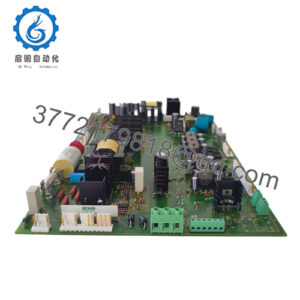
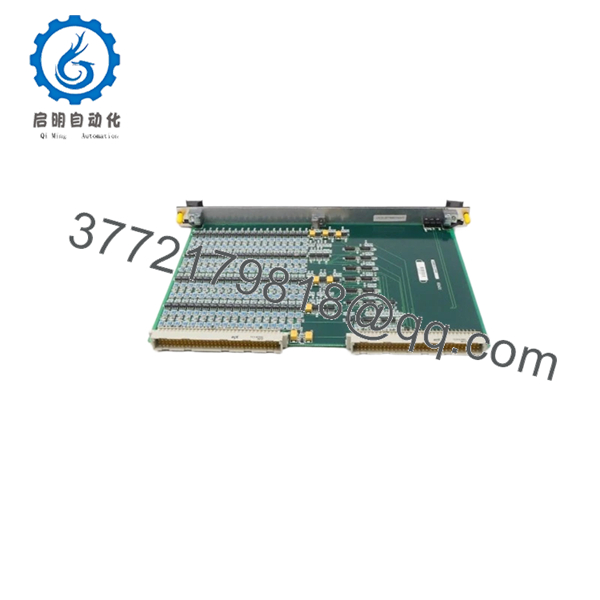
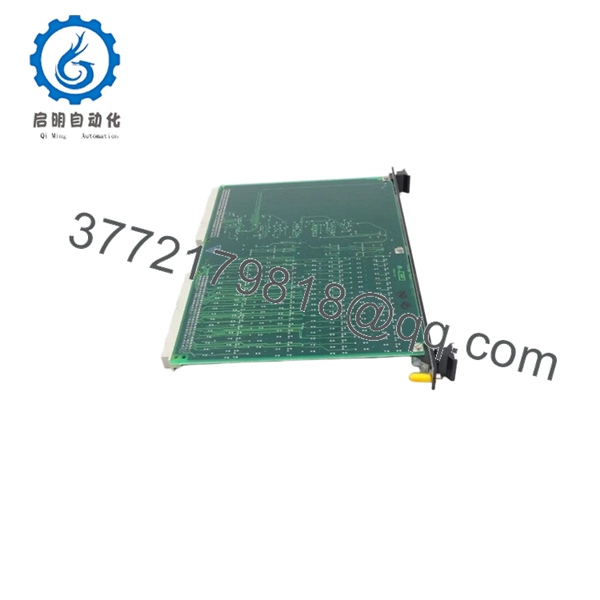
The GE IS200ESELH3AAA is an Exciter Selector Board developed for the EX2100 Excitation Control and Mark VI Speedtronic systems. As a Group 3 (H3) variant, this module features six onboard bridge drivers capable of controlling up to six independent Power Conversion Modules (PCMs). The ESEL board sits inside the core control rack, where it intercepts six logic-level gate pulse signals generated by the master I/O (EMIO) board and channels them out to the Exciter Gate Pulse Amplifier (EGPA) cards housed in the external power conversion cabinets. It relies on oversight from the central “C” controller to seamlessly toggle gating commands between redundant master paths.
From a supply chain lifecycle perspective, stocking the IS200ESELH3AAA as a New Surplus unit is a critical investment in asset availability. Because this high-redundancy Group 3 board is an obsolete legacy component, lead time variability via conventional industrial suppliers can stretch into months. Opting for a certified New Surplus unit eliminates the severe risk of hidden component degradation—such as aged gate driver circuitry—frequently found in unverified refurbished hardware. Having a zero-hour backup card directly on-site provides immediate security, minimizing Total Cost of Ownership (TCO) and guarding against the extreme financial losses caused by an unexpected generator trip.
5. Installation & Configuration Guide
Stage 1: Pre-Installation (Prep & Safety)
- Completely isolate control and bus power going to the active EX2100 control enclosure by strictly carrying out plant lock-out/tag-out (LOTO) protocols.
- Put on a grounded static-dissipative wrist strap and confirm it is locked onto an unpainted metal section of the grounding busbar.
- Check adjacent slot layouts and trace routes. Take detailed reference photos of the backplane cabling interfaces and front status arrays before making alterations.
Stage 2: Removal
- Unplug the external interface cables linked to the front or bottom interface segments of the active sub-rack assembly.
- Unfasten the top and bottom card retention clips securing the ESEL faceplate to the VME rack structure.
- Pull the module straight out along its guide tracks using firm, balanced horizontal traction. Do not angle, wiggle, or force the card during this phase, as doing so can irreparably distort the high-density backplane connection pins.
Stage 3: Installation (Clone & Seat)
- Place the old card and your New Surplus IS200ESELH3AAA module next to each other on an ESD-safe workspace mat.
- Confirm that there are no custom jumper blocks on the legacy board, as standard ESEL modules utilize hardcoded backplane routing (verify layout matches exactly).
- Slide the new card cleanly down the slot guide rails. Push it fully home until the rear DIN connectors plug flush into the backplane, then lock the faceplate retaining clips.
Stage 4: Power-On & Testing
- Re-engage all interface cables and locking connectors into their designated positions on the card layout.
- Restore rack control power and carefully observe the three front-panel green diagnostic LEDs.
- Verify that the Power LED illuminates constantly, the Active LED matches the designated controller status (M1/M2 authority), and the Gating LED flickers or holds steady once firing pulses pass down to the EGPA cards.

- IS200ESELH3AAA
- IS200ESELH3AAA
6. Firmware/Software Versions & Upgrade Notes
The IS200ESELH3AAA functions primarily as a high-speed hardware logic selector and line driver board. The “H3AAA” suffix identifies its structural classification as a Group 3 component featuring three layers of hardware artwork revisions (A, A, and A).
Because this module utilizes hardware-driven signal routing rather than an independent operating system kernel, it does not require field firmware updates. However, ensure that the system configuration parameters inside the master controller software are explicitly set to recognize a Group 3 ESEL card driving six bridge channels. Swapping an H3 board into a rack configured for a single-bridge H1 or three-bridge H2 profile will cause immediate system initialization failures, missing driver errors, or severe excitation faults upon boot-up.
7. Frequently Asked Questions (FAQ)
Q: What makes this H3AAA variant different from older ESEL boards like the H1 or H2 models?
A: The differences lie in the built-in redundancy tier and driver capacity. The H1 variant manages a single bridge driver for one PCM, and the H2 handles three. This IS200ESELH3AAA Group 3 module contains six independent bridge drivers controlling up to six PCMs, offering the highest level of system redundancy and output capability.
Q: Are these IS200ESELH3AAA modules brand new or reconditioned components?
A: This product is a Brand New Surplus unit. It is not used, not pulled from a decommissioned plant, and not refurbished. Every card comes sourced as zero-hour inventory from clean, climate-controlled storage conditions and has never been subjected to thermal stress or industrial runtime conditions.
Q: Can we safely hot-swap this selector board while the excitation loop is live?
A: No. The ESEL board actively channels gate pulse logic commands directly to your main power conversion modules. Pulling this card while the excitation system is online disrupts the gate timing signals instantly, which will trigger a major voter mismatch fault, trip the generator field protection loop, and cause an immediate emergency generator shutdown.
Q: How does the excitation system choose which ESEL board is active in a redundant setup?
A: In redundant systems utilizing dual controllers (M1 and M2), two separate ESEL cards are installed on the backplane. The central “C” controller constantly monitors the health of the system and shifts gating control over the backplane bus to the ESEL board tied to whichever master path (M1 or M2) is currently designated as active.
Q: Why does a New Surplus ESEL board carry a price premium over refurbished alternatives?
A: Our pricing reflects the high security value of providing uncompromised, zero-hour legacy components. Refurbished line-driver boards often feature internal degradation on gate output paths or old solder joints that can fail under thermal cycling. A certified New Surplus card eliminates those unpredictable failure vectors, protecting your facility against thousands of dollars in lost generation.
Q: What type of warranty coverage comes standard with this module?
A: Every IS200ESELH3AAA card includes a full 1-year functional warranty starting from the day it arrives at your plant, providing your engineering team with comprehensive operational assurance.