 WhatsApp: +86 16626708626
 Email:
  Phone: +86 16626708626
Description
3. Key Technical Specifications
| Parameter | Value |
| Manufacturer | General Electric (GE) |
| Part Number | IS200VAICH1C |
| Control System Series | Speedtronic Mark VI |
| Board Functional Acronym | VAIC (VME Analog Input Card) |
| Group Variation | Group 1 (H1 Variant – Standard high-density configuration) |
| Hardware Revision | C (Designates internal component optimization and artwork layout) |
| Analog Inputs | 20 differential or single-ended inputs (supports \pm10 V, 0-20 mA, 4-20 mA) |
| Analog Outputs | 4 operational outputs (supports 0-20 mA, 4-20 mA) |
| A/D Conversion Resolution | 16-bit successive approximation |
| Scan Rate | 10 ms (across all channels) |
| Form Factor | Standard single-slot VME board |
| Weight | 2.50 lbs (1.13 kg) |
4. Product Introduction & Supply Chain Strategy
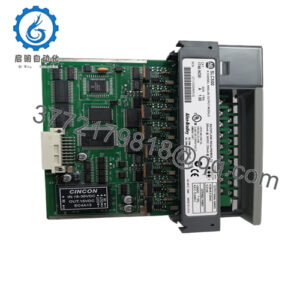
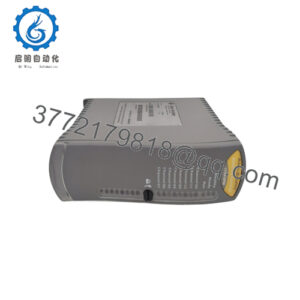
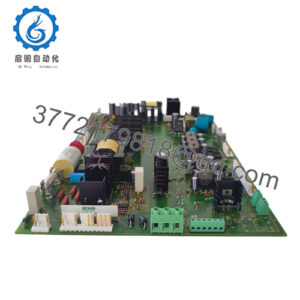
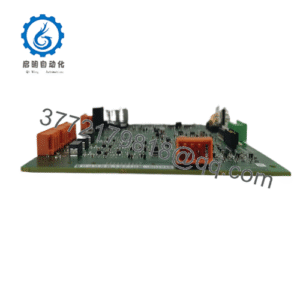
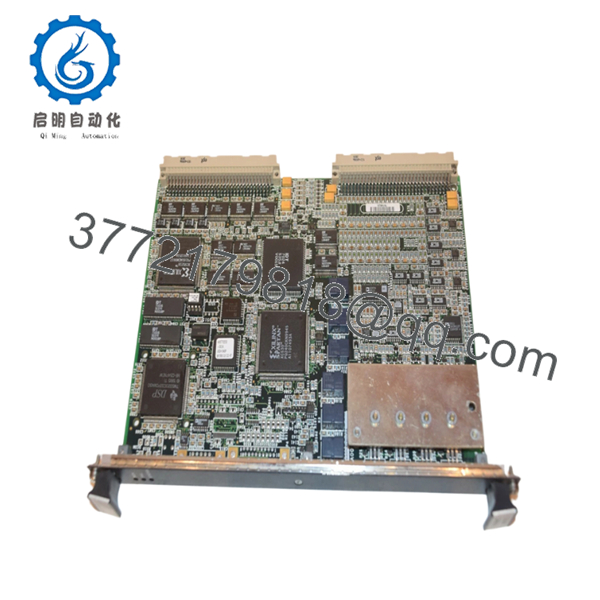
The GE IS200VAICH1C is a high-density VME Analog Input Board developed for the Speedtronic Mark VI turbine control framework. The VAIC module functions as the core interface for processing critical analog sensor telemetry across the turbine asset, managing up to 20 analog inputs and providing 4 analog outputs. It accepts a versatile range of voltage and current inputs—including \pm10 V signals and standard 4-20 mA loops—and uses high-accuracy 16-bit analog-to-digital (A/D) converters to deliver low-latency telemetry directly to the control rack backplane.
From a supply chain lifecycle perspective, stocking the IS200VAICH1C as a New Surplus unit is a critical investment in asset availability. Because this high-density board is an obsolete legacy component, lead time variability via conventional industrial channels can stretch into months, impacting your plant’s inventory turnover and stock-out metrics. Opting for a certified New Surplus unit eliminates the severe risk of hidden component degradation—such as dried-out electrolytic filtering capacitors or degraded A/D converters—frequently found in unverified refurbished hardware. Having a zero-hour backup card directly on-site provides immediate security, minimizing Total Cost of Ownership (TCO) and guarding against the extreme financial losses caused by an unexpected sensor loop failure.

- IS200VAICH1C
5. Installation & Configuration Guide
Stage 1: Pre-Installation (Prep & Safety)
- Completely isolate control power going to the active Mark VI VME control rack by strictly carrying out plant lock-out/tag-out (LOTO) protocols.
- Put on a grounded static-dissipative wrist strap and confirm it is locked onto an unpainted metal section of the grounding busbar.
- Check adjacent slot layouts and take detailed reference photos of the front terminal blocks, ribbon cables, and status arrays before making alterations.
Stage 2: Removal
- Unplug the external interface cables and terminal blocks linked to the front faceplate of the active VAIC board.
- Unfasten the top and bottom card retention injector/ejector handles securing the VAIC faceplate to the VME rack structure.
- Pull the module straight out along its guide tracks using firm, balanced horizontal traction. Do not angle, wiggle, or force the card during this phase, as doing so can irreparably distort the high-density backplane connection pins.
Stage 3: Installation (Clone & Seat)
- Place the old card and your New Surplus IS200VAICH1C module next to each other on an ESD-safe workspace mat.
- Confirm that any custom jumper blocks on the legacy board match the new board precisely. Standard VAIC modules utilize software-driven configurations, but hardware jumpers must be checked against your system print.
- Slide the new card cleanly down the slot guide rails. Push it fully home using the injector handles until the rear DIN connectors plug flush into the backplane, then secure the faceplate screws.
Stage 4: Power-On & Testing
- Re-engage all interface cables, terminal blocks, and locking connectors into their designated positions on the card layout.
- Restore rack control power and carefully observe the front-panel diagnostic LEDs.
- Verify that the green RUN LED illuminates constantly, and ensure no solid amber or red fault lamps appear. Check the central HMI to confirm that all 20 analog input channels are reading live, calibrated field telemetry without noise or drops.
6. Firmware/Software Versions & Upgrade Notes
The IS200VAICH1C functions within a tightly synchronized VME bus environment, where its onboard configuration tables are initialized directly by the master controller during the system boot sequence. The “H1C” suffix identifies its structural classification as a Group 1 component featuring the “C” hardware artwork revision.
Because this module utilizes a combination of flash memory and hardware logic, ensuring software compatibility in Toolbox or ToolboxST is mandatory. When swapping an older “H1B” or “H1A” board with this “H1C” revision, you must verify that the block configuration settings in your system logic match the newer hardware revision profile. Failure to align the software configuration with the physical board revision can cause immediate VME bus initialization errors, invalid configuration faults, or signal attenuation across your analog inputs during startup.
7. Frequently Asked Questions (FAQ)
Q: What is the exact difference between your New Surplus IS200VAICH1C cards and refurbished ones?
A: This product is a Brand New Surplus unit. It is not used, not pulled from a decommissioned plant, and not refurbished. Refurbished boards are typically repaired after a component failure, meaning the remaining legacy components on the board still carry thousands of operational hours. Our New Surplus units have zero runtime wear, ensuring long-term reliability and complete compliance with OEM technical parameters.
Q: Does the VAIC card handle onboard diagnostics for the 4-20 mA loops?
A: Yes. The IS200VAICH1C contains dedicated hardware diagnostics that continuously monitor each of the 20 inputs for out-of-limits parameters, open circuits, and hardware faults. If a field wire breaks, the card detects the drop below 4 mA instantly and flags a diagnostic alarm to the master controller.
Q: Can we perform a hot-swap on this analog input card while the turbine is online?
A: No. The VAIC board connects directly to the core VME control backplane. Pulling or inserting this module while the rack is energized can introduce localized arcs and voltage fluctuations. This can damage the internal 16-bit A/D converters or corrupt data packets on the VME bus, which can instantly trigger a false system trip.
Q: How does this card handle input isolation against field electrical noise?
A: The board utilizes differential input circuitry and group optical isolation to separate sensitive digital backplane logic from high-frequency field noise and ground loop potentials. This ensures stable, noise-free telemetry processing even in harsh electromagnetic environments.
Q: Why does a New Surplus VAIC board carry a price premium over refurbished alternatives?
A: Our pricing reflects the strategic market value of securing uncompromised, zero-hour legacy components. Refurbished analog cards often feature internal drift or degraded capacitors on input filter circuits that fail under thermal cycling. A certified New Surplus card eliminates those unpredictable failure vectors, protecting your facility against thousands of dollars in lost generation.
Q: What type of warranty coverage comes standard with this module?
A: Every IS200VAICH1C card includes a full 1-year functional warranty starting from the day it arrives at your plant, providing your engineering team with comprehensive operational assurance.