 WhatsApp: +86 16626708626
 Email:
  Phone: +86 16626708626
Description
3. Key Technical Specifications
| Parameter | Value |
| Number of Channels | 12 Differential RTD Inputs |
| RTD Types Supported | 100 Ohm Platinum (PT100), 10 Ohm Copper, 120 Ohm Nickel |
| A/D Conversion | 14-Bit Resolution |
| Scan Rate | 25 Hz (40 ms) for all channels |
| Common Mode Rejection | -110 dB at 60 Hz |
| Input Filter | Hardware-based low pass + digital filtering |
| Power Consumption | 10.5 Watts (Nominal) |
| Interface Slot | VME64 Standard |
| Operating Temperature | 0 to 60°C (32 to 140°F) |
| Calibration | Auto-calibration with internal precision resistors |
4. Product Introduction & Supply Chain Strategy
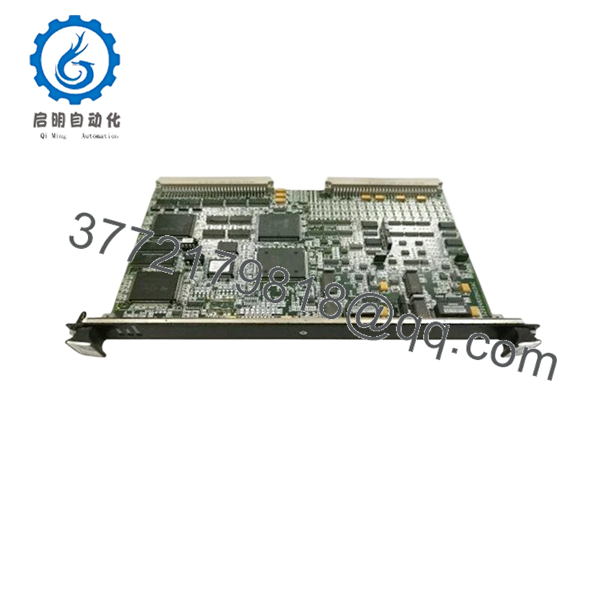
The GE IS200VRTDH1D is a high-density RTD input board designed specifically for the Mark VI Speedtronic turbine control system. It acts as the primary interface between field temperature sensors and the controller, providing precision monitoring of bearing temperatures, exhaust gases, and stator windings. By converting low-voltage resistance signals into digital data, it ensures the turbine operates within safe thermal limits.
From a supply chain perspective, procurement of the IS200VRTDH1D as a “New Surplus” unit is a vital risk-mitigation move. As the Mark VI series moves deeper into its legacy lifecycle, OEM lead times often stretch into months, or parts become entirely unavailable. Relying on refurbished boards introduces unacceptable Total Cost of Ownership (TCO) risks, such as capacitor dry-out or latent signal drift. Securing New Surplus inventory provides the 10–15 year reliability window required for heavy industrial assets while avoiding the 10x cost multiplier associated with unplanned emergency shutdowns.

- IS200VRTDH1D
5. Installation & Configuration Guide
Stage 1: Pre-Installation (Prep & Safety)
Begin by performing a full system backup and implementing lock-out/tag-out (LOTO) procedures on the turbine control panel. Ensure you are wearing a grounded ESD wrist strap before handling the IS200VRTDH1D. Carefully document the firmware version of the existing board through the Toolbox software and take high-resolution photos of the terminal board wiring and any hardware jumpers.
Stage 2: Removal
Loosen the top and bottom captive screws on the existing VME card. Using the ejector tabs, apply even pressure to unseat the board from the backplane. Pull the card straight out to prevent bending any of the high-density P1/P2 connector pins. Place the old unit in an anti-static bag immediately.
Stage 3: Installation (Clone & Seat)
Verify that the jumpers on the new IS200VRTDH1D match your documented configuration exactly. Align the new board with the rack guides and slide it in until the connectors touch the backplane. Use the ejector handles to firmly seat the module into the socket. Tighten the captive screws to ensure a solid ground connection.
Stage 4: Power-On & Testing
Restore power to the VME rack. Observe the front-panel LEDs; the “RUN” light should illuminate steady green after the self-test, while “FAULT” should remain off. Use the Mark VI diagnostic tools to verify that all 12 RTD channels are reporting accurate, stable resistance values without “bad quality” flags.
6. Firmware/Software Versions & Upgrade Notes
- Standard Version: The IS200VRTDH1D typically ships with firmware compatible with GE Toolbox V8.0 or higher.
- Compatibility Warning: Ensure your I/O Configuration (IOCFG) files match the revision letter of this board. A hardware mismatch between a “D” revision and an earlier “B” revision may cause configuration download failures.
- Upgrade Risks: We advise against flashing firmware in the field unless specifically instructed by a GE Service Bulletin. Downgrading firmware on a new surplus board to match an older system can lead to “bricking” the module if the bootloader versions are incompatible.
7. Frequently Asked Questions (FAQ)
Q: If this is “New Surplus,” why is it priced lower than GE’s factory list price?
A: We acquire these units from cancelled projects, excess corporate spares, and plant upgrades. You receive the same genuine OEM quality and reliability as a factory-direct part, but without the high overhead and long lead times associated with official distribution channels.
Q: Are these boards actually new, or just cleaned-up used parts?
A: These are strictly New Surplus. They have never been installed in a running rack or exposed to the heat and vibration of a plant environment. We have zero tolerance for refurbished or “pulled” hardware because the secondary costs of a failure far outweigh the initial savings.
Q: Can I hot-swap the IS200VRTDH1D while the turbine is running?
A: No. The Mark VI VME backplane is not designed for hot-swapping I/O modules. Removing or inserting this board while the rack is energized can cause electrical arcing, potentially damaging the backplane or triggering a full turbine trip.
Q: Does this board require manual calibration before use?
A: The IS200VRTDH1D features internal precision reference resistors and performs an auto-calibration routine upon power-up. However, you should always verify the readings against a known resistance standard during your next scheduled maintenance outage.
Q: What is the warranty on a legacy board like this?
A: Despite being a legacy component, we provide a full 2-year warranty on all New Surplus inventory. This covers any functional defects, providing the same peace of mind you would expect from the original manufacturer.