 WhatsApp: +86 16626708626
 Email:
  Phone: +86 16626708626
Description
3. Key Technical Specifications
| Parameter | Value |
| Number of Channels | 14 Inputs (Seismic or Proximity) |
| A/D Conversion | 24-Bit Sigma-Delta Converters |
| Transducer Types | Accelerometers, Velometers, Proximitors |
| Frequency Response | 0.5 Hz to 20 kHz (Application Dependent) |
| Interface Port | VME64 Standard |
| Input Voltage Range | -24 V DC to +24 V DC |
| Power Consumption | 12 Watts (Nominal) |
| Isolation | Channel-to-channel and channel-to-ground |
| LED Indicators | Run, Fail, Status (Front Panel) |
| Operating Temp | 0 to 60°C (32 to 140°F) |
4. Product Introduction & Supply Chain Strategy
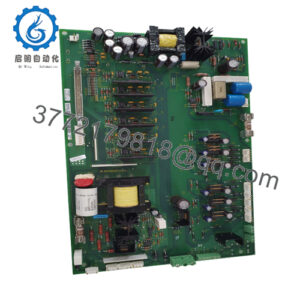
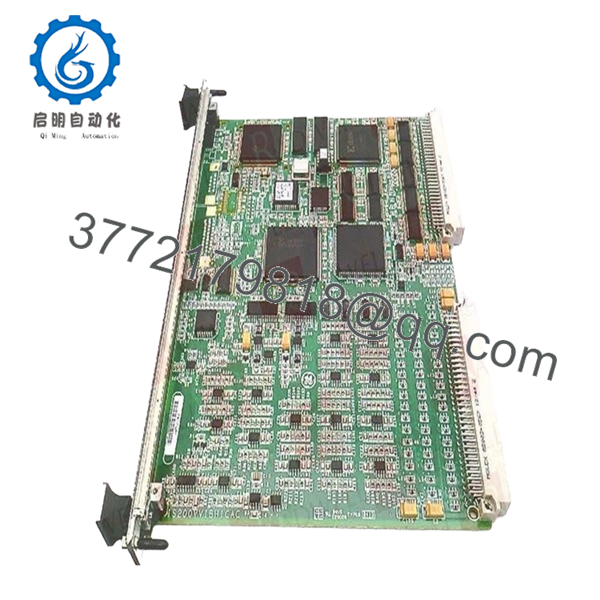
The GE IS200VVIBH1C is a specialized vibration monitor board utilized within the Mark VI Speedtronic control system to safeguard rotating machinery. It captures high-speed analog signals from seismic and proximity probes, processing them into actionable data for vibration protection and diagnostic analysis. This module is essential for detecting mechanical imbalances, bearing wear, or shaft misalignments before they escalate into catastrophic failures.
Procuring this module as “New Surplus” is a calculated strategy to maintain plant uptime without the risks inherent in used hardware. Because vibration cards manage high-frequency signals, the integrity of their internal high-resolution converters is paramount. Refurbished units often suffer from signal “noise” or drift due to aging components, which can lead to false trips or, worse, missed vibration alarms. Stocking a New Surplus IS200VVIBH1C ensures that your critical machinery remains protected by components with zero operational hours and full OEM-spec reliability.
5. Installation & Configuration Guide
Stage 1: Pre-Installation (Prep & Safety)
Perform a controlled shutdown of the vibration monitoring logic in the HMI. Utilize a grounded ESD wrist strap and ESD-safe matting. Before extraction, use the GE Toolbox software to document the current configuration of the “VVIB” card, specifically noting gain settings and filter corner frequencies.
Stage 2: Removal
Unscrew the top and bottom retaining screws on the VME rack. Use the card ejector handles to break the connection with the backplane gently. Slide the board out of the rack guides, ensuring no contact is made with adjacent modules.
Stage 3: Installation (Clone & Seat)
Inspect the P1 and P2 connectors on the new IS200VVIBH1C for any debris or bent pins. Verify that any hardware jumpers on the “C” revision match the board you are replacing. Slide the module into the designated VME slot and apply firm, even pressure to the ejector handles to seat the connectors fully.
Stage 4: Power-On & Testing
Re-energize the VME rack. The “RUN” LED should flash and then turn solid green. In the Toolbox software, verify that the board is communicating on the VMEbus. Perform a loop check by simulating a vibration signal at the terminal board to ensure the IS200VVIBH1C accurately reflects the values in the control logic.

- IS200VVIBH1C
6. Firmware/Software Versions & Upgrade Notes
- Revision Matching: The “H1C” suffix denotes the hardware revision. Ensure your Mark VI software environment supports the “C” revision metadata to avoid “Board Mismatch” errors during the configuration download.
- Firmware Consistency: This board typically runs on firmware V3.0 or higher. If you are replacing a much older revision, a firmware alignment may be necessary to ensure compatibility with the existing controller’s instruction set.
- Warning: Do not attempt to downgrade firmware on a New Surplus board to match a legacy system without first consulting technical documentation, as this may lead to permanent hardware incompatibility.
7. Frequently Asked Questions (FAQ)
Q: Why should I pay more for this New Surplus board than a refurbished one?
A: Vibration monitoring is an “insurance policy” for your turbine. A refurbished board may have degraded capacitors that cause signal inaccuracies. If a refurbished board fails to trip during a real vibration event, the resulting mechanical damage could cost millions. Our New Surplus units provide the reliability of a brand-new part.
Q: Does the IS200VVIBH1C support both proximity probes and accelerometers?
A: Yes, the board is designed to interface with various transducer types, though specific channel configuration is handled via the software and jumper settings on the terminal board.
Q: What is the significance of the “C” at the end of the model number?
A: This is the revision level. “C” indicates a specific iteration of the hardware design. It is generally backward compatible with earlier “H1” versions, but always check your Mark VI configuration files to ensure the software recognizes the newer revision.
Q: Are these units tested before shipping?
A: Absolutely. Every IS200VVIBH1C undergoes a rigorous Quality Control (QC) process, including power-on self-tests and communication handshakes in a live VME environment, ensuring it arrives ready for immediate installation.
Q: How do you handle the obsolescence of this part?
A: As these boards are no longer in active production by the OEM, we maintain a global network to secure New Surplus inventory. We recommend a “Min/Max” stocking level of at least one spare unit on-site to mitigate the long lead times associated with sourcing legacy Mark VI hardware.