 WhatsApp: +86 16626708626
 Email:
  Phone: +86 16626708626
Description
3. Key Technical Specifications
| Parameter | Value |
| Manufacturer | General Electric (GE / GE Vernova) |
| Part Number | IS420UCSEH2B |
| Processor Type | Intel i7 1186-GRE Dual-Core |
| Processor Clock Speed | 1.2 GHz |
| System Memory | 8 GB DDR4-3200 with In-Band ECC |
| Operating System | QNX Neutrino Real-Time OS (Version 7.1) |
| Ethernet Port Count | 8 independent communication interfaces |
| Local Console Interface | Integrated USB-C to Serial configuration port |
| Input Voltage Range | 18 to 50 V DC (with 50 V reverse polarity protection) |
| Power Consumption | 23 to 37 Watts (36 W absolute maximum) |
| Cooling Mechanism | Natural Convection Cooling (no internal fan assembly) |
| Operating Temperature | −40 to +58 °C (−40 to 136.4 °F) |
| Circuit Board Protection | Full conformal coating across base PCB |
4. Product Introduction & Supply Chain Strategy
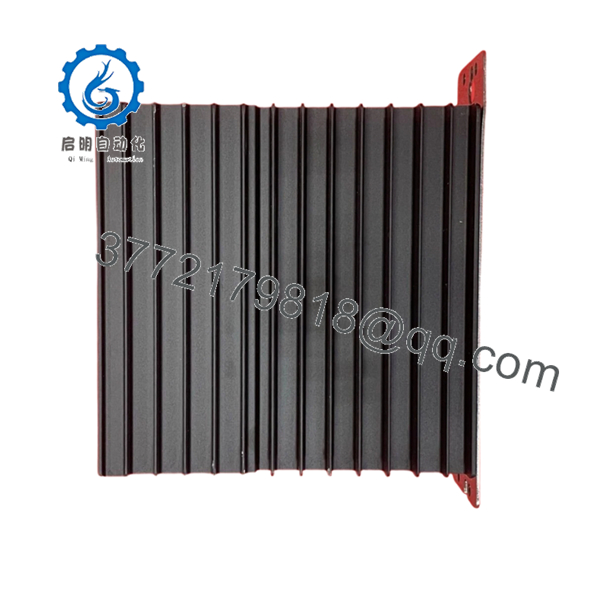
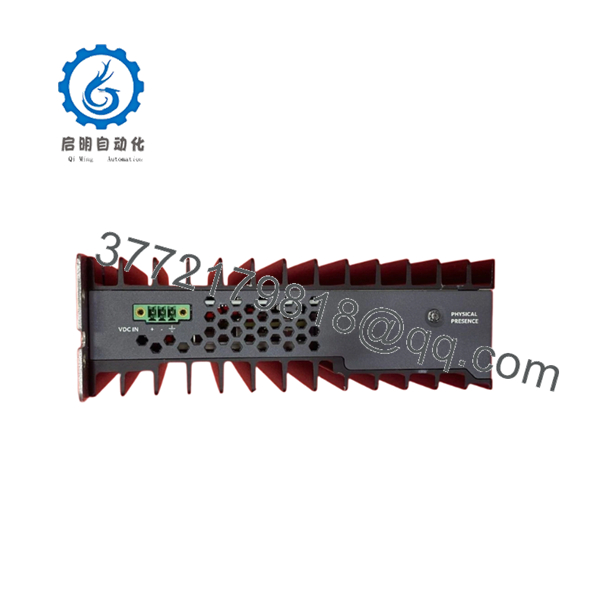
The GE IS420UCSEH2B is a stand-alone, dual-core modular controller built for the Mark VIe and Mark VIeS control architectures. Running on a QNX Neutrino real-time, multitasking operating system, this processing unit executes application-specific system logic for high-speed gas, steam, and wind turbine configurations, as well as complex Balance of Plant (BoP) networks. Driven by an Intel i7 1186-GRE processor and featuring eight onboard Ethernet paths, it manages inputs and outputs across localized IONet fields with deterministic accuracy.
Adopting a New Surplus sourcing framework for this processor provides critical protection against capital infrastructure risk. Given that high-reliability turbine controls suffer high lead time variability through traditional channels, maintaining 1–2 units of the H2B revision on-site serves as an essential supply chain insurance policy. Choosing a factory-sealed surplus unit eliminates the significant breakdown costs associated with refurbished processors—where hidden cosmetic aging or degraded solder loops can trigger unexpected processing failures and costly emergency plant shutdowns.

- IS420UCSEH2B
- IS420UCSEH2B
5. Installation & Configuration Guide
Stage 1: Pre-Installation (Prep & Safety)
Isolate the power distribution block servicing the controller enclosure and complete a comprehensive lock-out/tag-out (LOTO) procedure. Fasten an ESD-safe grounded wrist strap to your arm and clamp the wire end to the bare metal chassis frame. Using a digital camera, document the network cabling sequence connected to the 8 Ethernet ports and record the exact physical orientation of the existing modular controller frame.
Stage 2: Removal
Unscrew the structural hardware securing the mounting bracket frame to the subpanel. Gently unplug all network cables and the primary 24 V DC power connector plug from the interface housing. Slide the controller module directly out of its structural track, taking care not to place stress on adjacent IONet connections or auxiliary junction wires, and transfer it into an anti-static enclosure bag.
Stage 3: Installation (Clone & Seat)
Verify that the physical profile of the new IS420UCSEH2B matches the old hardware footprint. This H2B hardware variant features a modular form factor that can be rotated to match UCSB dimensions if needed. Align the mounting base with the internal cabinet panel rails, position the unit firmly onto its bracket standoffs, and torque the assembly screws to spec. Re-attach the power link and return all 8 Ethernet connections to their original mapped ports.
Stage 4: Power-On & Testing
Perform an electrical check on the input power lines to ensure the 18–50 V DC input is stable and within bounds. Apply primary power to re-energize the controller module. Observe the diagnostic status sequence during the QNX OS boot layer; a clean launch occurs when the system completes its initialization pass, illuminates the green status indicator, and clears all local network faults across the IONet layout.
6. Firmware/Software Versions & Upgrade Notes
The IS420UCSEH2B relies on QNX Neutrino Version 7.1 to manage its underlying multitasking application loops. During a hardware changeout, the control application blockware and firmware matrices are held centrally and downloaded directly from the master engineering configuration workspace to the module.
Do not attempt to perform manual logic changes or disrupt power while the firmware synchronization routine is active. Running mismatched application revisions or forcing an unexpected firmware downgrade during a live unit swap can break blockware dependencies, resulting in protocol execution failures or continuous boot-looping on the underlying Intel i7 framework.
7. Frequently Asked Questions (FAQ)
- What makes the H2B revision distinct from the older H2A hardware version? The H2B revision features an updated mechanical housing design that can be rotated for layout compatibility with alternative UCSB processing footprints. Physically, the H2B operates at a lower power threshold (23–37 W versus the H2A’s 42–61 W), does not feature native PROFINET protocols, and uses an optimized Intel i7 processor topology balanced for convection-cooled settings.
- Why does this New Surplus controller cost more than a standard rebuilt assembly? Our New Surplus pricing represents the baseline cost of acquiring completely clean, unused hardware from verified industrial assets. Rebuilt or refurbished modules present a high risk of failure because standard component cleaning cannot repair latent component fatigue or logic degredation. This new card guarantees an authentic 10–15 year operating lifespan to secure your plant’s uptime.
- Does this stand-alone processing board require an internal backup battery? No, the GE Mark VIe UCSE controller series is engineered with a modern architecture that requires no internal backup battery or physical jumper configurations. All application-specific logic, network configurations, and calibration files are written directly into non-volatile solid-state memory structures, preventing memory loss during long power interruptions.
- How does your technical team confirm the authenticity of this processor? Every single IS420UCSEH2B undergoes a rigorous inbound trace validation protocol. We inspect the integrity of the manufacturer’s anti-static packaging, confirm the factory conformal coating layer is intact, read the internal serial numbers, and verify that the electrical contacts show no evidence of backplane mounting or previous wear.
- What type of warranty coverage is provided with this New Surplus controller? This module comes backed by a complete 1-year warranty that matches original OEM coverage terms. If any hardware defect or component abnormality arises under standard operating parameters, we provide a rapid repair or direct replacement unit to minimize your site’s stock-out exposure.