 WhatsApp: +86 16626708626
 Email:
 Phone: +86 16626708626
Description
Core Product Summary (Brand / Model / Key Attributes)
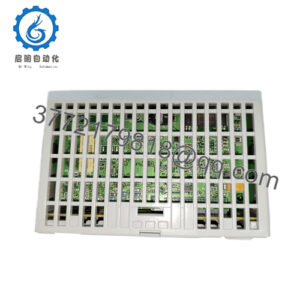
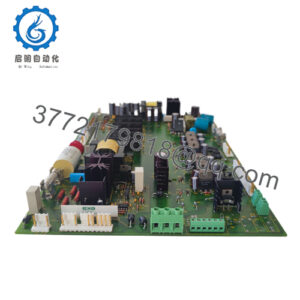
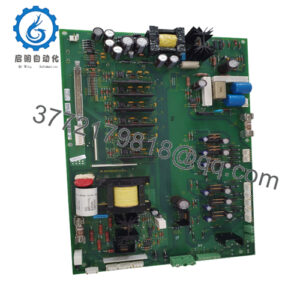
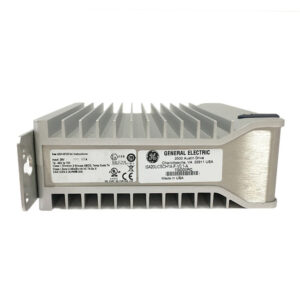
The GE Power Conversion P110-6053 is a high-performance industrial controller belonging to the Advanced Micro Controller 2 (AMC2) platform, originally developed by Converteam. It serves as a high-capacity processing hub designed for complex industrial automation, high-speed drive systems, power generation control, and marine dynamic positioning architectures.
Powered by an upgraded Intel Pentium-M processor core operating at 1.40 GHz, the controller delivers rapid instruction execution speed for demanding multi-loop control loops. It features five integrated RJ45 Ethernet communication ports for extensive multi-network segmentation, allowing isolated control networks, plant-wide SCADA data links, and redundant host connections. Built with a fanless thermal design for passive cooling and a solid-state CompactFlash storage architecture, the unit operates reliably under heavy physical vibration up to 15 g mechanical shock per IEC 61131-2 standards. It runs on a nominal 24 V DC input power supply and is engineered for continuous operation inside enclosed industrial panels.
Key Technical Specifications
| Technical Parameter | Verified Specification |
| Manufacturer / Series | GE Power Conversion (formerly Converteam) / AMC2 Series |
| Model / Order Number | P110-6053 |
| Processor Core | Intel Pentium-M (1.40 GHz) |
| Communication Interfaces | 5 × integrated RJ45 Ethernet ports |
| Storage Architecture | Industrial CompactFlash |
| Input Power Supply | 24 V DC (tolerated range: 18 V DC to 36 V DC) |
| Nominal Current Consumption | ~1.2 A @ 24 V DC |
| Cooling Design | Industrial fanless thermal design (passive convection) |
| Mechanical Shock Tolerance | Up to 15 g per IEC 61131-2 |
Detailed Product Overview
The GE P110-6053 controller operates as a core processing and coordination node within advanced industrial automation, power conversion, and marine drive configurations. By implementing a high-frequency Intel Pentium-M 1.40 GHz processor core, the module handles intensive real-time computation tasks, multi-loop feedback algorithms, and deterministic control logic required by heavy industrial machinery and variable frequency drive (VFD) systems.
The physical architecture utilizes a passive, fanless cooling layout that eliminates mechanical cooling fans to maximize reliability in harsh operating environments. System software, configuration files, and boot routines are hosted on industrial CompactFlash storage, providing resistance against data corruption caused by continuous mechanical vibration and shock up to 15 g. Five onboard Ethernet interfaces allow engineers to isolate control sub-networks, interface with local human-machine interfaces (HMIs), and connect upstream supervisory control and data acquisition (SCADA) networks without requiring external switch hardware expansion for basic multi-port routing topologies.
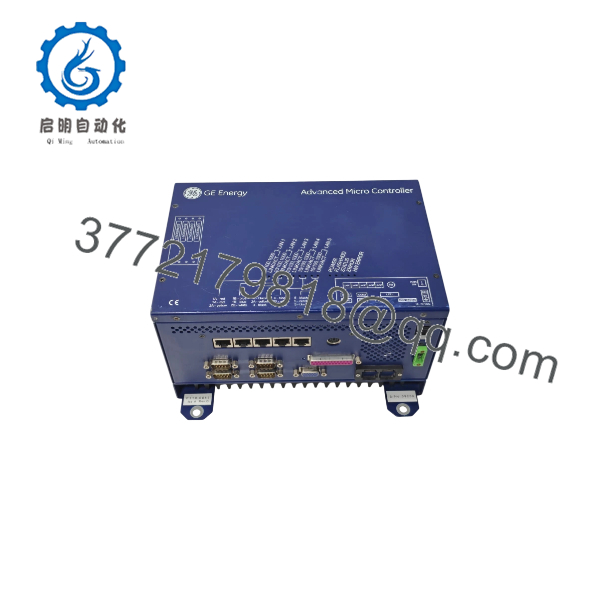
P110-6053
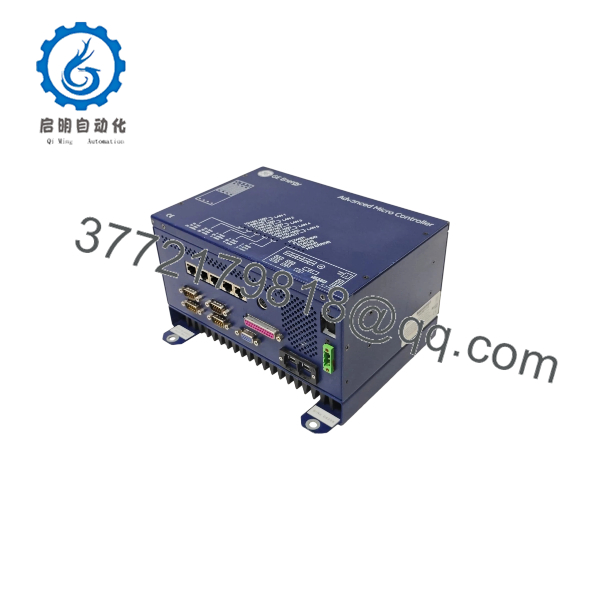
P110-6053
Engineering Selection Highlights
- Processor Performance: Utilizes an Intel Pentium-M 1.40 GHz core, providing higher instruction throughput than baseline Celeron-M variants for intensive multi-loop automation tasks.
- Network Segmentation: Equips five physical RJ45 Ethernet ports, enabling clean separation between field-level control networks, supervisory links, and redundant architectures.
- Thermal and Mechanical Resilience: Features a fanless cooling profile and 15 g shock rating (IEC 61131-2), suited for high-vibration panels, marine vessels, and heavy industrial skids.
- Solid-State Boot Operation: Relies on industrial CompactFlash media for operating system storage, removing mechanical hard drives and increasing uptime in harsh environments.
System Compatibility & Integration Requirements
| Item / Dependency | Verified Compatibility or Requirement | Practical Note |
| System Family | AMC2 (Advanced Micro Controller 2) platform | Designed for integration into AMC2-based control racks and subpanels. |
| Power Supply | Regulated 24 V DC (18 V to 36 V DC range) | Requires a stable power source matching the input tolerance limits. |
| Storage Media | Industrial CompactFlash card | Essential for system boot execution and parameter storage; must be transferred during hardware replacement. |
| Network Cabling | Standard RJ45 Ethernet cables | Plug into LAN1–LAN5 ports based on network configuration maps. |
Dimensions, Mounting & Connection Notes
- Enclosure Dimensions: 234 mm × 206 mm × 120 mm (W × H × D).
- Mounting Method: Flange-mount brackets designed for direct attachment to a clean, flat, grounded metal subpanel inside an industrial cabinet.
- Thermal Clearances: Maintain a minimum of 50 mm (2 inches) of unobstructed clearance above and below the unit housing to facilitate continuous thermal convection across the passive heatsink fins.
- Power Wiring: Connect a regulated 24 V DC power source to the designated primary input terminal strip.
- Grounding Requirements: Secure a heavy, low-impedance Protective Earth (PE) bonding cable from the chassis grounding stud directly to the enclosure ground bus bar to mitigate electrical noise.
FAQ
What is the GE P110-6053?
The GE P110-6053 is a high-performance industrial controller module belonging to the Advanced Micro Controller 2 (AMC2) product family.
Which processor powers the P110-6053 controller?
It is powered by an Intel Pentium-M processor core operating at a clock speed of 1.40 GHz.
What communication ports are available on the module?
The controller features five integrated RJ45 Ethernet communication ports to support network segmentation and system connectivity.
What type of cooling system does the unit use?
It uses an industrial fanless thermal design that relies on passive cooling convection up to 70 °C ambient panel temperatures.
What are the power supply requirements for this controller?
It operates on a primary 24 V DC input power source, with a supported voltage tolerance range between 18 V DC and 36 V DC.
Verification & Troubleshooting Notes
- Power Status Verification: Observe the front-panel Power LED; a solid green light confirms that the input voltage is present and stable within operational parameters.
- Boot Sequence Check: Verify that flashing or steady green states appear on the status LEDs after powering on, which indicate successful POST execution and runtime software initialization.
- Hardware Swapping Precaution: Always isolate input power completely before inserting, removing, or servicing internal components or memory media. When replacing a controller unit, always transplant the original system CompactFlash card and hardware identity keys to ensure configuration continuity.