 WhatsApp: +86 16626708626
 Email:
  Phone: +86 16626708626
Description
3. Key Technical Specifications
| Parameter | Value |
|---|---|
| Part Number | UR9UH / UR-9UH / 12A0-0600-A6 |
| Product Family | GE Multilin Universal Relay (UR) Series |
| Function | Central Processing Unit (CPU) Module |
| Processor Type | High-performance embedded processor |
| Execution | Deterministic real-time processing |
| Relay Architecture | Modular, multi-slot UR chassis |
| Fiber Optic Ports | 2 × 100 Base-FX (LC connector), multimode 1310nm, 62.5/125μm |
| Ethernet Port | 1 × 10/100 Base-T (RJ45) |
| Serial Port | 1 × RS485 |
| Protocols Supported | IEC 61850, DNP3, Modbus RTU/TCP, IEEE C37.118 |
| Response Time | < 5 milliseconds |
| I/O Capacity | Supports up to 120 inputs or 72 contact outputs |
| Display | Integrated full-color graphical interface |
| Operating Temperature | -40 °C to +70 °C |
| Weight | 0.93 kg (930 g) |
| Dimensions | 2.2 cm × 12.4 cm × 12.6 cm |
| Mounting | Horizontal unit, 9U form factor |
| Redundancy Support | Parallel Redundancy Protocol (PRP), IEEE 1588 |
| Lifecycle Status | DISCONTINUED BY MANUFACTURER |
4. Product Introduction & Supply Chain Strategy
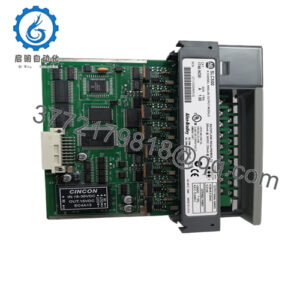
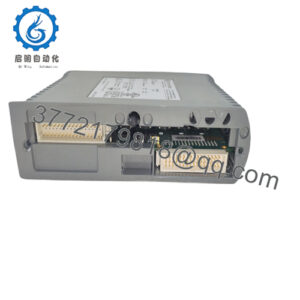
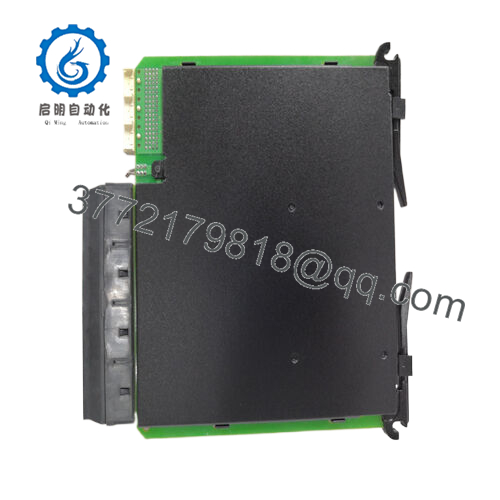
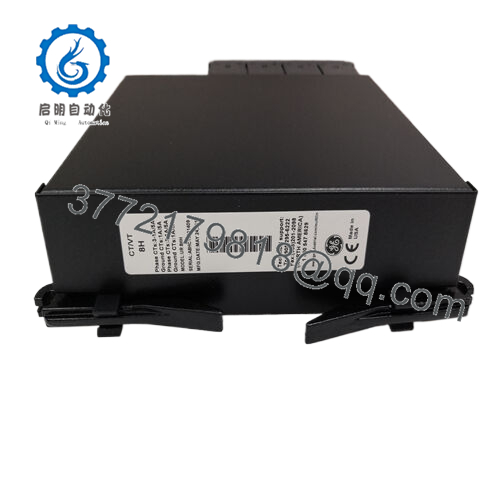
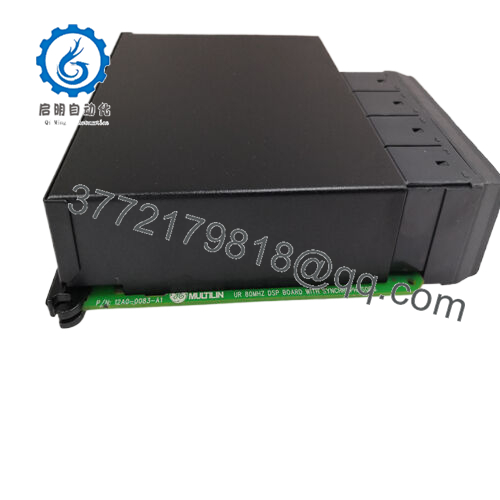
The GE UR9UH is a Central Processing Unit (CPU) Module for the Multilin Universal Relay (UR) Series, serving as the core processing engine for protection, control, and automation functions in power system applications. It provides deterministic real-time processing for complex protection algorithms, manages high-speed data acquisition, and handles multi-protocol communication including IEC 61850, DNP3, and Modbus. The module features dual 100 Base-FX fiber optic ports and 10/100 Base-T Ethernet for redundant, high-speed substation communication, along with RS485 serial connectivity for legacy device integration.From a supply-chain perspective, the UR9UH represents a critical-path, high-risk spare part. GE has officially discontinued this module, marking it as End-of-Life (EOL). The UR9UH serves as the “brain” of the UR relay platform—without functional CPU modules, entire protection schemes fail, leaving transformers, generators, and transmission lines unprotected. Refurbished units dominate secondary markets, but these carry severe hidden liabilities: thermally stressed processors, degraded memory modules, and prior operational damage from harsh substation environments. Our New Surplus inventory eliminates these risks—genuine OEM modules sourced from authorized channels, preserved in original anti-static packaging with factory test certificates. The Total Cost of Ownership (TCO) heavily favors new surplus: a 25-35% premium over refurbished buys 10-15 years of reliable service versus 3-5 years of elevated failure risk, eliminating the $500,000+ exposure of an unprotected transformer fault or generator trip during peak demand.
5. Installation & Configuration Guide
Stage 1: Pre-Installation (Prep & Safety)
- Lock-out/Tag-out: Isolate the UR relay chassis and verify zero energy state on all power supplies. The CPU module interfaces with critical protection circuits—lethal voltages may be present on connected I/O modules.
- ESD Protection: Wear a grounded wrist strap (1 MΩ resistor). The UR9UH contains sensitive high-performance processors and memory modules; static discharge can destroy the CPU or corrupt firmware.
- Documentation: Photograph the existing UR9UH module before removal. Record fiber optic cable routing (LC connectors), Ethernet connections, and RS485 wiring. Document the existing firmware revision and configuration file location.
- Backup: Export the complete relay configuration via EnerVista UR software before CPU replacement. The CPU module stores critical protection settings and event records.
- Tools Required: Non-magnetic screwdriver set, ESD mat, flashlight, fiber optic cleaning kit, multimeter for power verification.
Stage 2: Removal
- Power Isolation: Confirm control power is de-energized and locked out at the distribution panel. Verify with multimeter at the power supply module.
- Cable Disconnection: Remove fiber optic cables from the 100 Base-FX LC connectors—use dust caps to protect fiber ends. Disconnect the RJ45 Ethernet cable. Remove RS485 serial connections. Label all cables before removal.
- Module Extraction: Release the retention mechanisms securing the UR9UH to the UR chassis (typically slide locks or thumb screws). Pull straight out with equal pressure; do not rock the module—bent backplane pins compromise the entire CPU slot and can damage adjacent CT/VT or I/O modules.
Stage 3: Installation (Clone & Seat)
- Inspection: Verify the replacement UR9UH has no bent backplane pins, no fiber optic port damage, intact Ethernet jack, and clean memory module contacts.
- Firmware Verification: Confirm the replacement module has compatible firmware revision. CPU modules determine available software features—mismatched firmware can disable IEC 61850 or redundancy functions.
- Seating: Align the module with the chassis guides. Press down evenly until retention mechanisms engage. The module should seat flush with adjacent modules—no visible gaps at the rear backplane interface.
Stage 4: Power-On & Testing
- Power Verification: Before full power-up, measure backplane voltages at test points. Confirm 24/125/250 VDC (depending on power supply configuration) is within ±5% tolerance.
- Boot Sequence: Apply control power and observe the integrated graphical display. The UR9UH should boot to the main menu within 30-60 seconds. Verify no hardware mismatch alarms appear.
- Communication Testing: Test 100 Base-FX fiber links to adjacent relays or switches—verify link LEDs illuminate. Test Ethernet connectivity to the substation LAN. Verify RS485 communication to legacy devices.
- Configuration Upload: Download the saved configuration via EnerVista UR software. Verify all protection elements, FlexLogic™ programming, and communication mappings restore correctly.
- Functional Testing: Execute injection tests through the relay test set. Verify protection schemes operate correctly with < 5 ms response time. Check event recording and fault reporting functions.
6. Firmware/Software Versions & Upgrade Notes
| Firmware/Configuration | Details |
|---|---|
| CPU Firmware | Embedded firmware determines available protection functions and communication protocols |
| Software Platform | EnerVista UR Setup software for configuration, monitoring, and firmware management |
| Protocol Support | IEC 61850 Ed. 1/Ed. 2, DNP3 (serial & TCP/IP), Modbus RTU/TCP, IEEE C37.118 (synchrophasor), Ethernet Global Data (EGD) |
| Redundancy Features | Parallel Redundancy Protocol (PRP), IEEE 1588 time synchronization (requires compatible firmware) |
| High-Density I/O | Firmware 7.6x or later required for 120 input/72 output capacity |
| Cyber Security | CyberSentry UR features require FW 7.xx or later |
Critical Warning: The UR9UH contains embedded firmware specific to the protection application. Always:
- Document the existing firmware revision (e.g., FW 7.6x, 7.7x, 7.8x, 7.9x) before module replacement
- Verify the replacement module has identical or compatible firmware—feature availability varies by revision
- Never downgrade firmware during replacement—newer protection functions may be lost
- Use secured firmware upgrade procedures (FW file hash code authentication) for CyberSentry compliance
- Backup and restore the complete relay configuration including FlexLogic™ programming, as CPU replacement may reset to factory defaults

- UR9UH
7. Frequently Asked Questions (FAQ)
Q1: Why is your New Surplus UR9UH priced higher than refurbished options?Our pricing reflects the cost of securing genuine, factory-new surplus inventory from authorized GE channels before discontinuation. Refurbished CPU modules—often pulled from decommissioned substations—contain thermally stressed processors, degraded memory modules, and potential firmware corruption. A 1,000 “savings” on a refurbished unit can trigger a 500,000+ transformer fault when the CPU fails during a through-fault condition. Our New Surplus units offer verified < 5 ms response time and full 12-month warranty coverage. Given GE’s discontinuation notice, genuine new surplus is now a finite resource.
Q2: How do I verify this UR9UH is genuinely new and not refurbished?We provide OEM packing slips, serial number traceability, and factory test certificates. Each module ships in original anti-static packaging with GE Multilin labeling intact. Zero backplane pin wear, zero fiber optic port scratches, pristine RJ45 jack, and clean memory module contacts—physical evidence that refurbished vendors cannot replicate. All units include factory test reports verifying processor operation, communication port functionality, and < 5 ms response time validation.
Q3: Is the UR9UH still supported by GE? What is its lifecycle status?GE has officially discontinued the UR9UH. This is an End-of-Life (EOL) critical spare. While GE may provide technical support for existing deployments, new production has ceased. For plants running UR series relays with UR9UH CPU modules, this represents a strategic insurance policy—maintain 1-2 spare units on-site per critical protection scheme. Once our New Surplus inventory is exhausted, only refurbished or used options will remain, with significantly elevated failure risks.
Q4: Can I upgrade to UR9EH or UR9CH instead of buying UR9UH?Only with engineering review and potential system modifications. The UR9EH and UR9CH are different CPU module variants with distinct features:
- UR9UH: 100 Base-FX fiber (2 ports), 10/100 Base-T (1 port), RS485
- UR9EH: Enhanced processing, different communication configuration
- UR9CH: Alternative CPU with specific protocol support
Substituting CPU modules may change available protection functions, communication protocols, and I/O capacity. Always verify compatibility with your specific UR relay model and application requirements before substitution.Q5: What are the most common failure modes for this CPU module?Primary failure mechanisms include:
- Processor thermal fatigue: High-performance embedded processor suffers solder joint fatigue from thermal cycling in substation environments
- Memory module degradation: Flash memory wear from repeated write cycles corrupts firmware and configuration
- Fiber optic port damage: LC connectors degrade from repeated mating/unmating or contamination
- Ethernet PHY failure: Network transceiver damage from electrical transients on substation LAN
- Backplane pin corrosion: Environmental exposure causes intermittent contact resistance
Refurbished units often hide these latent defects. New Surplus eliminates these risks entirely.
Q6: What happens if my UR9UH fails and I have no spare?Without a functional CPU module, the UR relay cannot execute protection algorithms, communicate with the substation SCADA, or respond to fault conditions. The protected asset (transformer, generator, motor, transmission line) operates unprotected or must be removed from service. Given GE’s discontinuation, procurement of replacement UR9UH modules will depend on refurbished stock availability at elevated prices and uncertain quality. Strategic stocking of New Surplus units now prevents forced outages later.
Q7: What warranty and technical support do you provide?All New Surplus UR9UH units carry a 12-month replacement warranty covering manufacturing defects and DOA. We provide 24/7 technical phone support for installation guidance, firmware verification, EnerVista configuration assistance, and troubleshooting. Our engineering team includes former GE Multilin protection specialists with direct UR series commissioning and protection scheme design experience. Extended warranty options and site-specific consignment programs available for utility substation deployments. Given the discontinued status, our technical support becomes even more critical for long-term operational continuity.