 WhatsApp: +86 16626708626
 Email:
  Phone: +86 16626708626
Description
3. Key Technical Specifications
| Parameter | Value |
|---|---|
| Processor | Intel Pentium M (up to 1.5 GHz) |
| L2 Cache | 512 KB transfer cache |
| Memory | Up to 1.5 GB DDR SDRAM |
| Form Factor | 6U VME, dual-slot |
| VMEbus Standard | VITA 31.1 compliant |
| Ethernet Ports | 2× Gigabit Ethernet (10/100/1000 Mbps) |
| PCI Bus | PCI-X, 66 MHz |
| PMC Slot | 66 MHz PMC expansion slot |
| Operating Temperature | 0 to +55°C (typical industrial) |
| Power Supply | +5V, +3.3V, +12V (VMEbus backplane) |
| Power Consumption | ~25-35 W (typical load) |
| Storage | CompactFlash or hard disk (via PMC/PCI) |
| BIOS | Award or AMI BIOS, user-configurable |
| Interrupts | VMEbus A16/A24/A32 interrupt levels |
| DMA Channels | VMEbus DMA support |
| Weight | ~0.6 kg |
| Operating System Support | Windows XP Embedded, Linux, VxWorks, QNX |
4. Product Introduction
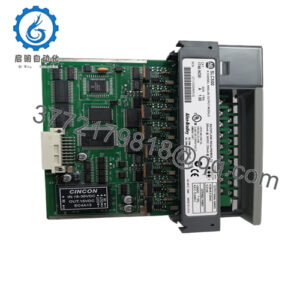
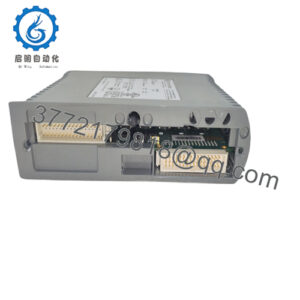
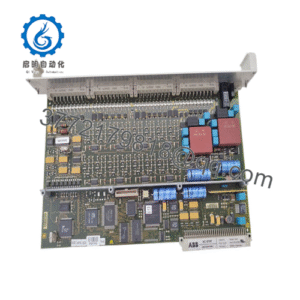
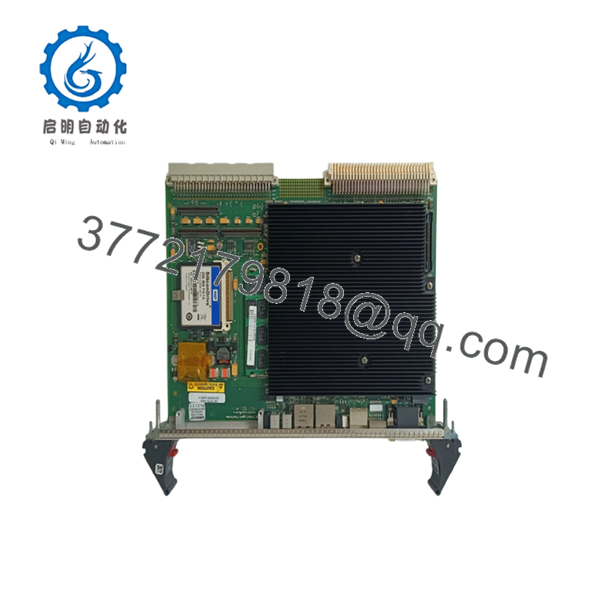
The GE VME-7807RC-424001 350-93007807-424001 is a dual-slot 6U VMEbus single-board computer (SBC) built around the Intel Pentium M processor, delivering up to 1.5 GHz clock speed with 512 KB L2 cache and up to 1.5 GB DDR SDRAM. It conforms to VITA 31.1 for industrial VMEbus environments and targets demanding automation, defense, and real-time control applications.
This board stands out for its dual Gigabit Ethernet ports, PCI-X bus, and 66 MHz PMC expansion slot, which provide substantial I/O bandwidth for data acquisition, communication gateways, or edge computing in VME-based systems. The Pentium M architecture offers significantly better performance-per-watt than earlier Pentium III VME SBCs, making it suitable for thermal-constrained rack deployments.

- VME-7807RC-424001 350-93007807-424001
5. Troubleshooting Quick Reference
| Symptom | Possible Cause | Relevance to this Part | Quick Check Method | Recommendation |
|---|---|---|---|---|
| No power LED on board | VMEbus backplane power failure or incorrect slot | ❌ Low | Measure +5V and +3.3V at backplane connector with multimeter | Check crate power; verify board is seated in correct dual-slot pair |
| Board not detected by master CPU | Slot address misconfiguration or VMEbus timeout | ⚠️ High | Check VME bus controller diagnostic buffer; verify board presence register | Confirm board is in primary slot (typically slot 2 for dual-slot SBC); reseat connectors |
| System fails POST or boots | Memory not detected or BIOS corruption | ⚠️ High | Listen for beep codes; try removing/reseating DRAM modules | Reseat or replace DIMMs; clear CMOS jumpers; verify memory is registered DDR |
| Network interfaces not working | Ethernet PHY driver missing or cable fault | ⚠️ High | Check OS network interface list; ping test with known-good cable | Verify driver loaded; try both Ethernet ports; check link LED status |
| PMC card not recognized | PMC slot power or configuration issue | ⚠️ Medium | Measure +3.3V/+5V on PMC edge connector; check slot presence | Verify PMC is seated; check for bent pins; ensure PMC is 66 MHz compatible |
| Overheating / thermal shutdown | Insufficient airflow or fan failure | ⚠️ High | Feel board temperature; check rack airflow with anemometer | Ensure 200+ CFM airflow across board; verify forced air duct is installed |
| Random lockups under load | Memory timing issue or power instability | ⚠️ High | Run memory test (MemTest86); monitor +5V rail under load | Test with known-good memory; check backplane power quality; reduce clock if overclocked |
Note: If diagnostics are inconclusive, contact technical support with photos of the board, diagnostic logs, and system configuration. Test videos available upon request.
6. Frequently Asked Questions (FAQ)
Q: Is this VME-7807RC SBC still manufactured by GE?
A: No, this is an obsolete model. GE Fanuc automation operations were absorbed into GE Electrification, and VMIC VME SBCs are no longer in active production. What we stock is New Surplus (never used, original packaging) or Professionally Refurbished units. Lead times depend on available inventory.
Q: What’s the difference between Pentium III and Pentium M versions of the 7807RC?
A: Early VME-7807RC revisions used Pentium III (up to 1.26 GHz), while later revisions (like this -424001 variant) use Intel Pentium M with better performance-per-watt and lower thermal output. The Pentium M version supports up to 1.5 GHz and 1.5 GB DDR SDRAM, versus Pentium III’s 512 MB limit. If your system has thermal constraints, Pentium M is the better choice. Verify your chassis airflow matches the processor generation.
Q: Can I hot-swap this SBC in a running VME crate?
A: No, it’s not hot-swappable. The VITA 31.1 standard for this board does not support hot-plug. Power down the entire crate before inserting or removing the board. The Pentium M processor and memory can be damaged by hot-plug transients. I’ve seen a board let the magic smoke out because someone tried a “quick swap” without powering down. Kill the power first.
Q: What’s the maximum memory I can install, and what type?
A: Officially, this board supports up to 1.5 GB DDR SDRAM (typically 3× 512 MB registered DIMMs). Do not use unbuffered desktop DDR—the board expects registered ECC memory for industrial reliability. Mismatched memory types will cause boot failures or random crashes. Before ordering memory, verify the exact DIMM part number from your system’s memory configuration sheet.
Q: Does this come with an operating system installed?
A: Most surplus units come with no OS installed (blank flash or CF card), as the appropriate OS depends on your application. The board supports Windows XP Embedded, Linux (various distros), VxWorks, and QNX. We can pre-install an OS if you specify the version and provide license media. State your OS requirements when ordering.
Q: What’s the warranty, and what does it cover?
A: All units come with a 1-Year Warranty covering functional failures under normal operating conditions. It does not cover damage from improper installation, overvoltage, ESD mishandling, or software issues. Every board is tested on an in-house VME test rack with full load testing (>24 hr continuous run). Test reports with photos are available upon request.
Q: Why is this cheaper than buying from the OEM factory?
A: Because the OEM no longer manufactures it. You’re buying surplus stock from closed production lines or decommissioned systems. The price reflects obsolete status, not compromised quality. Every unit undergoes our full inspection SOP: inbound traceability, live VMEbus functional testing, electrical parameter verification, firmware documentation, and ESD-safe packaging. Test videos are available if you ask.
Q: Will this fit in my existing VME chassis from another manufacturer?
A: Yes, as long as your chassis follows the ANSI/VITA 1 VMEbus mechanical standard and supports dual-slot 6U boards. The VME-7807RC requires a dual-slot contiguous pair (typically slots 2-3 or 3-4). Verify your backplane provides adequate airflow (200+ CFM) and that the power supply can handle the board’s ~35 W draw. Don’t wire from memory—check your chassis manual for the exact slot pairing.