 WhatsApp: +86 16626708626
 Email:
  Phone: +86 16626708626
Description
What This Product Solves
In the world of high-performance computing and real-time simulation, the ability to process complex mathematical algorithms with zero jitter is the difference between a high-fidelity model and a system failure. Many industrial automation environments require more processing power than a standard PLC can provide, particularly when handling advanced signal processing, Fourier transforms, or high-speed motion control laws. The GE VMIC-WSPRO is a specialized processor module designed to bridge the gap between general-purpose VMEbus controllers and dedicated digital signal processing (DSP) hardware.
Engineers often face the challenge of integrating high-speed data acquisition with real-time analysis without overloading the main system CPU. The GE VMIC-WSPRO addresses this by acting as a dedicated “math engine” or coprocessor within the VME chassis. It identifies and solves the problem of computational latency in process control environments where sensor data must be analyzed and acted upon in microseconds. Whether it is monitoring the harmonic distortion in a power grid or calculating the flight dynamics for a simulated aircraft, this module provides the deterministic performance and high reliability required for mission-critical tasks. By offloading these intensive cycles to the GE VMIC-WSPRO, the rest of the control system remains responsive and stable, ensuring that the primary logic-solving hardware is never throttled by heavy floating-point calculations.
How the Product Works & Fits into a System
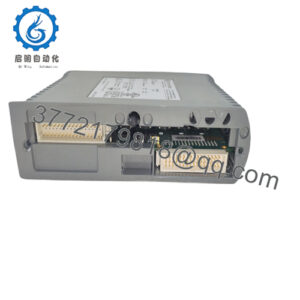
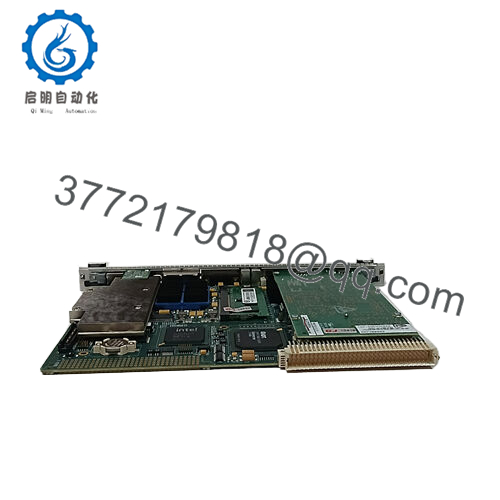
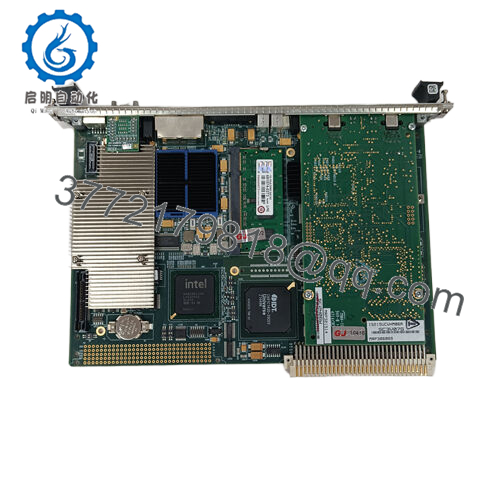
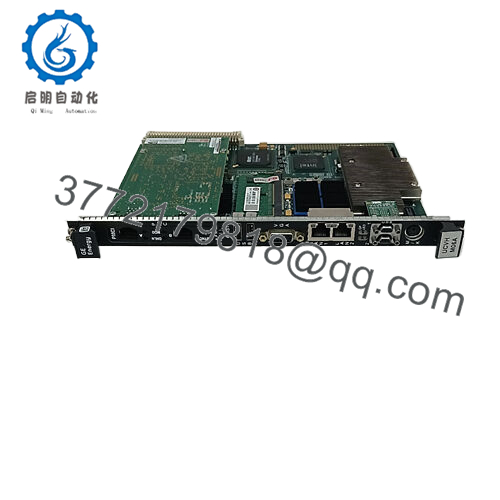
The GE VMIC-WSPRO functions as a high-speed workstation-class processor board tailored for the VMEbus architecture. It typically occupies a single slot in a VME64 or VME64x backplane, where it communicates with other I/O modules, memory boards, and master controllers. Unlike a standard single-board computer (SBC) that might handle user interface or networking tasks, the GE VMIC-WSPRO is often positioned as a slave or a secondary master dedicated to localized, high-speed data crunching. It interacts with the automation stack by pulling raw data from the bus, performing the necessary algorithmic transformations, and pushing the results back to the control registers of the output modules.
The board’s architecture is optimized for real-time operating systems (RTOS), allowing it to handle interrupts with predictable timing—a core requirement for industrial automation. It supports sophisticated diagnostics that allow the system integrator to monitor processor load, memory parity, and bus traffic. Because the GE VMIC-WSPRO is built on a workstation-pro-class platform, it offers a higher level of floating-point performance than standard industrial modules. This makes it an ideal fit for the middle layer of the automation stack, where raw I/O signals are turned into complex control variables. When integrated into a GE Mark VI or similar high-end control system, it provides the “brains” behind the most mathematically demanding portions of the application.

- VMIC-WSPRO
Technical Highlights Summary (Table)
| Specification | Details |
| Model Number | GE VMIC-WSPRO |
| Brand | GE (VMIC Series) |
| Type | Workstation-Pro VME Processor Module |
| Input Voltage | +5V DC (via VME Backplane) |
| Operating Temp Range | 0 to +55°C |
| Mounting Style | VMEbus Slot (6U Form Factor) |
| Dimensions | 160 x 233 mm (Standard 6U VME) |
| Weight | 0.6 kg (approx.) |
| Interface/Bus | VME64 / VME64x |
| Compliance | CE, UL, RoHS |
| Supported Protocols | VME Master/Slave, Ethernet (optional) |
| Typical Power Draw | 15W to 25W (Config. dependent) |
Real-World Benefits
One of the primary benefits of the GE VMIC-WSPRO is its ability to reduce engineering overhead by providing a stable, high-performance platform that is already hardened for industrial use. Instead of trying to adapt consumer-grade hardware or writing highly optimized assembly code for underpowered PLCs, engineers can use standard C or C++ development environments to deploy their algorithms. This ensures long-term performance and maintainability, as the code is easier to document and update over the decade-long lifecycles typical of industrial plants.
Furthermore, the GE VMIC-WSPRO is engineered for the rigors of continuous-duty cycles in harsh environments. While a standard workstation might fail due to vibration or thermal stress, this module is built with industrial-grade components that ensure performance consistency even under heavy load. The benefit to the user is a dramatic increase in system availability; the board’s robust design and built-in error checking prevent the types of “blue screen” or lock-up events that plague less ruggedized hardware. By choosing the GE VMIC-WSPRO, you are ensuring that your process control system has the computational headroom to handle both current demands and future expansion without requiring a complete architectural overhaul.
Typical Use Cases
The GE VMIC-WSPRO is frequently found in high-fidelity simulation environments, such as those used for nuclear reactor operator training or advanced flight simulators. In these cases, the module handles the complex physics engines that must update in real-time to provide an accurate experience. It is also used extensively in process control environments for large-scale steel mills or paper plants, where it monitors high-speed sensor arrays to detect minute deviations in material thickness or quality, allowing the system to make millisecond-level adjustments to the rollers or presses.
In the energy sector, the GE VMIC-WSPRO is deployed in critical system uptime applications like vibration analysis for massive hydroelectric or steam turbines. It processes the raw acoustic and seismic data from the turbine bearings to identify signs of wear or imbalance before they lead to a catastrophic failure. These applications require the fast data cycles and deterministic processing that the workstation-class architecture provides. Whether it is performing complex FFTs or managing high-speed PID loops, the GE VMIC-WSPRO is the preferred choice for engineers managing the world’s most complex industrial systems.
Compatible or Alternative Products
GE VMIVME-7750 – A standard Intel-based VME single-board computer for general control tasks.
GE VMIVME-7807 – A higher-performance Pentium-class VME processor for modern upgrades.
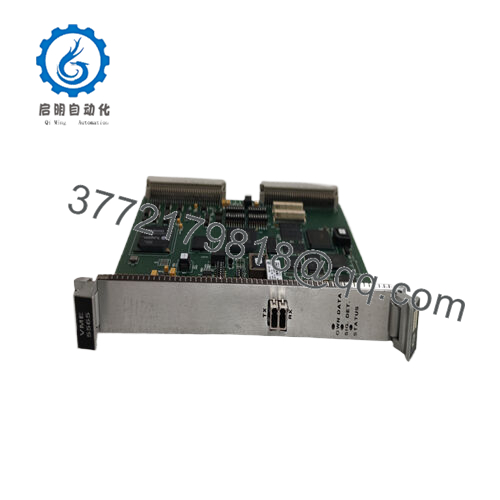
GE VMIC-5565 – Reflective Memory module often used to feed data to the GE VMIC-WSPRO.
GE VMIVME-3122 – High-resolution analog input board to provide raw data for processing.
GE VMIVME-4105 – Analog output board to convert processed math back into field signals.
GE VMIC-BT3 – VME-to-PCI bridge for integrating this module with PC-based systems.
Setup Notes & Maintenance Insights
When setting up the GE VMIC-WSPRO, the most critical factor is the VMEbus jumper configuration. You must ensure that the base memory addresses and interrupt levels do not conflict with other masters on the bus. It is also essential to verify the airflow within the VME chassis; because the GE VMIC-WSPRO is a high-performance processor, it generates more heat than a standard I/O module and requires consistent, forced-air cooling to maintain its specified operating temperature. Ensure that the VME power supply has enough current headroom on the 5V rail to support the processor during peak computational loads.
Ongoing maintenance for the GE VMIC-WSPRO is largely centered on environmental monitoring and software health. Periodically review the system logs for any VME bus errors or parity checks, which can indicate early signs of backplane degradation or electromagnetic interference. It is also a good practice to perform a yearly visual inspection of the board’s edge connectors, cleaning them with an approved contact cleaner if any oxidation is present. Because this is a high-value module, maintaining a consistent, filtered power source will protect the onboard voltage regulators and extend the life of the processor significantly.