 WhatsApp: +86 16626708626
 Email:
  Phone: +86 16626708626
Description
What This Product Solves
In the high-stakes world of real-time industrial automation and simulation, the primary bottleneck is often the latency of data transfer between distributed processing nodes. When multiple controllers or computers need to share a massive common database—such as in a flight simulator, a complex power grid model, or a high-speed manufacturing line—standard Ethernet protocols often introduce too much jitter and overhead. The GE VMICPMC-5664 is a high-performance Reflective Memory interface designed to solve this exact problem by providing a hardware-based “mirrored” memory solution.
By using the GE VMICPMC-5664, engineers can eliminate the complexities of network programming and the delays associated with traditional software-based data sharing. The product addresses the need for deterministic, high-speed data synchronization where every microsecond counts. In environments where system stability depends on all nodes having an identical view of the process data simultaneously, this module becomes essential. It simplifies the architecture of complex process control systems by allowing each node to write to its local memory and having that data automatically broadcast to all other nodes on the ring at fiber-optic speeds. This effectively creates a global shared memory space that is transparent to the application software, ensuring high reliability and reducing the CPU burden typically required for network stack management.
How the Product Works & Fits into a System
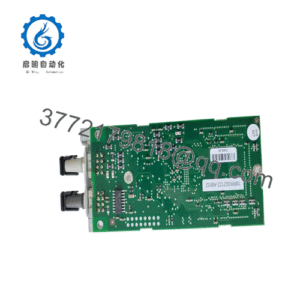
The GE VMICPMC-5664 is a PCI Mezzanine Card (PMC) that functions as a node within a Reflective Memory network. It is typically installed onto a carrier board within a VME, VXS, or CompactPCI rack, or directly onto an embedded single-board computer. Once connected via fiber-optic cabling in a ring or star configuration, the GE VMICPMC-5664 automatically monitors its local onboard RAM. When the local processor writes data to a specific memory address, the hardware on the GE VMICPMC-5664 immediately captures that data and transmits it to the next node in the network.
This interaction happens at the hardware level, bypassing the operating system’s interrupt driven communication layers. Within the automation stack, this module sits at the high-speed data link layer, often positioned between the main control processors and the simulation or supervisory hardware. It supports advanced features such as redundant fiber-optic paths and sophisticated error detection to ensure signal reliability. The GE VMICPMC-5664 also includes diagnostic registers that allow the host system to monitor the status of the fiber link and the integrity of the data transfer in real-time. Because the memory mapping is handled by the hardware, it fits seamlessly into real-time operating systems (RTOS) like VxWorks or high-performance Linux distributions, providing a deterministic I/O signal path for the most demanding applications.
Technical Highlights Summary (Table)
| Specification | Details |
| Model Number | GE VMICPMC-5664 |
| Brand | GE (VMIC Series) |
| Type | Reflective Memory PMC Module |
| Input Voltage | 3.3V or 5V (PCI Signaling) |
| Operating Temp Range | 0 to +65°C (Standard) |
| Mounting Style | PMC Slot (Mezzanine) |
| Dimensions | Standard Single-Width PMC |
| Weight | 0.15 kg (approx.) |
| Interface/Bus | PCI (32-bit/64-bit, 33/66 MHz) |
| Compliance | CE, RoHS, FCC Class A |
| Supported Protocols | Reflective Memory (Fiber Optic) |
| Typical Power Draw | 4.5W to 6.0W |
Real-World Benefits
One of the standout benefits of the GE VMICPMC-5664 is the significant reduction in engineering overhead. Because the hardware handles all data replication, developers do not need to write complex socket-based code or manage message-passing protocols. This “plug-and-play” memory transparency allows teams to scale their systems horizontally by simply adding more nodes to the fiber ring, ensuring long-term performance even as the complexity of the simulation or control task grows.
Furthermore, the GE VMICPMC-5664 is engineered for performance consistency. Traditional networks can suffer from “collisions” or unpredictable delays when traffic increases, but Reflective Memory provides a constant, deterministic transfer rate. This ensures that the control loop remains tight and predictable, which is a requirement for high-speed industrial automation. By offloading the communication tasks to the GE VMICPMC-5664, the host CPU is freed up to focus on complex calculations and logic solving, effectively increasing the overall throughput of the entire control system.
Typical Use Cases
The GE VMICPMC-5664 is a staple in the aerospace industry, specifically used in flight simulators where the cockpit controls, visual systems, and flight dynamics engines must stay perfectly synchronized. It is also frequently deployed in process control environments for large-scale power plant simulators, where thousands of I/O points must be updated across multiple operator stations in real-time to maintain critical system uptime.
In research facilities, the GE VMICPMC-5664 is often used in high-energy physics experiments or large-scale telescope arrays to coordinate data acquisition across dozens of processing nodes. These applications require the harsh-environment reliability and fast data cycles that only fiber-optic Reflective Memory can provide. Whether it is a high-speed turbine test stand or a multi-node industrial drive system, the GE VMICPMC-5664 provides the low-latency backbone necessary for sophisticated, synchronized operations.
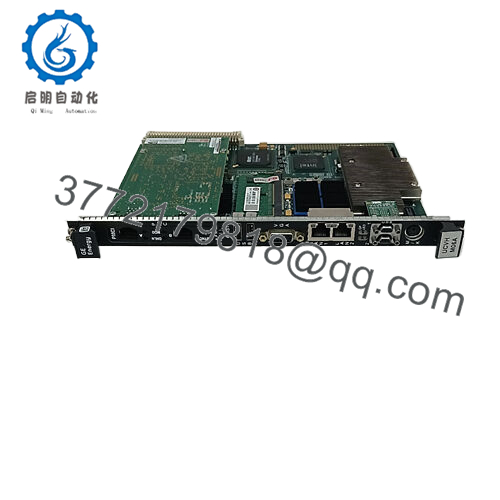
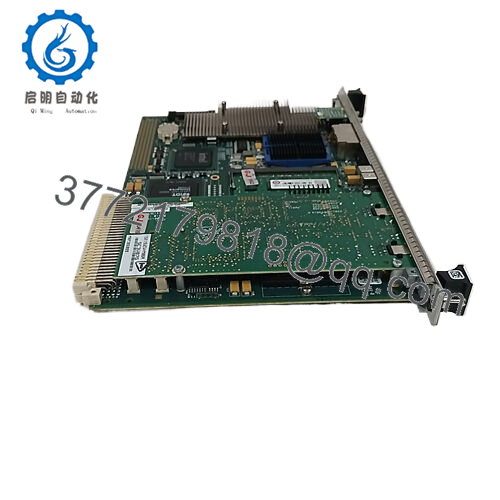
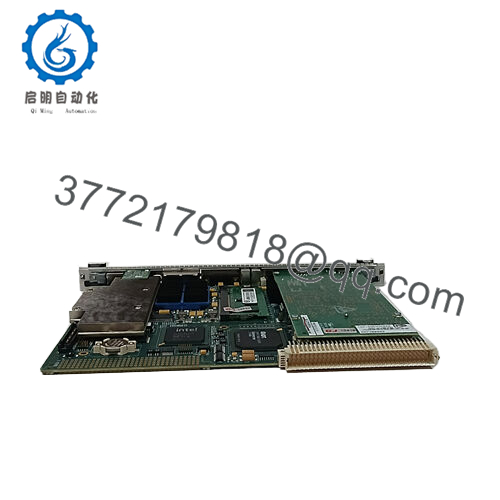
- VMICPMC-5664
Compatible or Alternative Products
GE VMIVME-5565 – The VMEbus version of Reflective Memory for legacy rack systems.
GE VMI-5565 – A PCI/PCI Express version for standard industrial PC integration.
GE VMICPMC-5565 – A newer generation PMC module with higher bandwidth capabilities.
GE ACC-5595 – A managed reflective memory hub for star-topology configurations.
GE VMIPMC-5565RL – A ruggedized version designed for extreme vibration and shock.
GE VMIVME-7750 – A typical VME single-board computer often paired with this PMC module.
Setup Notes & Maintenance Insights
Before installing the GE VMICPMC-5664, it is critical to inspect the fiber-optic connectors for any dust or debris, as even microscopic contaminants can cause signal attenuation. Ensure that the PMC standoffs are properly secured to the carrier board to maintain a reliable PCI bus connection. It is also important to verify the Node ID settings on the board or via software to ensure that each module on the ring has a unique identifier, preventing data collisions or configuration errors.
Ongoing maintenance for the GE VMICPMC-5664 involves monitoring the bit-error rate (BER) through the provided software diagnostic tools. Periodically check the status of the fiber-optic cables for any sharp bends or physical stress that could impact signal reliability. Unlike standard copper-based networking, Reflective Memory modules are sensitive to light-path integrity, so keeping the optical path clean and secure is the best way to ensure the long-term performance of your high-speed data network.