 WhatsApp: +86 16626708626
 Email:
  Phone: +86 16626708626
Description
3. Key Technical Specifications
| Parameter | Value |
|---|---|
| Channels | 64 optically isolated inputs |
| Input Voltage Range | 5 to 60 VDC or 110 to 240 VAC |
| Isolation (Channel-to-Channel) | 1,500 VDC / 1,100 VRMS |
| Isolation (Channel-to-VMEbus) | 1,500 VDC / 1,100 VRMS |
| Measurement Resolution | 1.0 ms |
| Form Factor | VME 6U (dual Eurocard) |
| Change-of-State (COS) Detection | Yes, per channel |
| Sequence of Events (SOE) | Yes, per channel |
| Time Tagging | Yes, with programmable buffer |
| Pulse Accumulation | 0 to 65,535 pulses per channel |
| Debounce Time | Software-controlled, per channel |
| Interrupt Level | User-selectable |
| Access Level | Short/standard, supervisory, non-privileged |
| Surge Protection | ANSI/IEEE STD C37.90.1-1989 (with suppression panel) |
| Operating Temperature | 0 to +55°C (typical) |
| Weight | ~0.45 kg |
4. Product Introduction
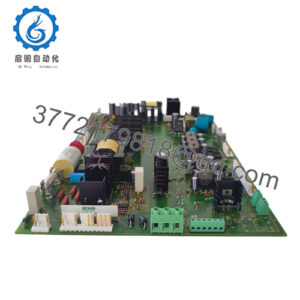
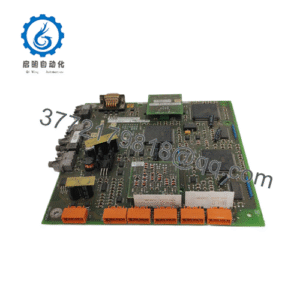
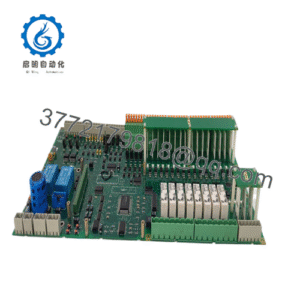
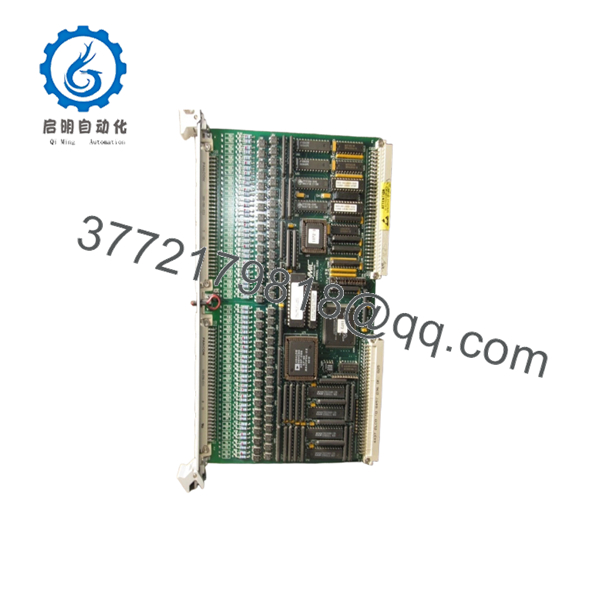
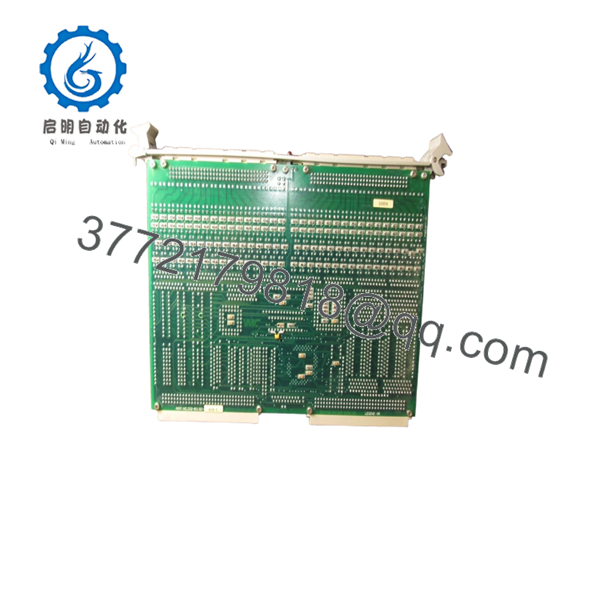
The GE Fanuc VMIVME-1182 (part number 332-011182-030C) is a 64-channel optically isolated digital input board for VMEbus-based industrial control systems. It handles change-of-state (COS) detection, sequence-of-events (SOE) recording, time tagging, and pulse accumulation in power generation, SCADA, and factory automation applications.zcgplc+1
This module stands out for its wide input voltage acceptance (5-60 VDC or 110-240 VAC) and high isolation (1,500 VDC channel-to-channel and channel-to-VMEbus), which protects the backplane from field-side transients. The 1.0 ms measurement resolution and software-configurable debounce per channel make it suitable for high-speed discrete signal monitoring where timing accuracy matters.abaco+1

- 332-011182-030C
- 332-011182-030C
5. Troubleshooting Quick Reference
| Symptom | Possible Cause | Relevance to this Part | Quick Check Method | Recommendation |
|---|---|---|---|---|
| No LEDs on power-up | VMEbus power failure or backplane fault | ❌ Low | Measure +5V, +12V, -12V at backplane connector with multimeter | Check PSU and VME crate power before replacing |
| Module not detected byCPU | Slot address misconfiguration or VME bus timeout | ⚠️ High | Verify VME bus slot address DIP switches; check CPU diagnostic buffer | Match slot address to system config; reseat module |
| Random COS triggers | Field wiring noise or missing surge suppression | ⚠️ High | Oscilloscope on input terminals; check for voltage spikes >60V | Install companion suppression panel (VME-3459); add shielded cable |
| Time tags inconsistent | VMEbus clock sync failure or firmware mismatch | ⚠️ High | Read system time register; compare with master clock | Sync VMEbus clock; verify firmware revision matches existing system |
| Some channels dead | Input circuit damage or optocoupler failure | ⚠️ High | Inject known 24V DC signal to suspect channels; measure response | Isolate bad channels; if >5 fail, replace entire board |
| ERR light flashing | Internal memory or FPGA fault | ✅ High | Read diagnostic buffer via system software | Usually requires hardware replacement; test report available |
Note: If diagnostics are inconclusive, contact technical support with photos of the module, diagnostic buffer logs, and wiring diagrams.
6. Frequently Asked Questions (FAQ)
Q: Is this VMIVME-1182 still being manufactured by GE?
A: No, this is an obsolete model. GE Fanuc automation was absorbed into broader GE Electrification, and VMIC VMEbus boards are no longer in active production. What we stock is New Surplus (never used, original packaging) or Professionally Refurbished (tested per SOP below). Lead times depend on available inventory.
Q: Can I hot-swap this module in a running VMEbackplane?
A: No, it’s not hot-swappable. The VMEbus specification for this board does not support hot-plug. Power down the crate before inserting or removing the module. Doing otherwise can fry the backplane or the board itself. I’ve seen a $1,500 backplane take a dump because someone tried to “quick-swap” without powering down. Kill the power first.
Q: What’s the difference between the -030C suffix and other revisions like -060C?
A: The suffix indicates firmware/hardware revision. The -030C and -060C both provide 64 isolated inputs, but firmware timing and interrupt handling may differ slightly. Before pulling your old board, document the exact suffix and firmware version from the label. Request the same revision when ordering to avoid communication timeout issues with the master CPU.
Q: Does this come with a warranty, and what does it cover?
A: Yes, all units come with a 1-Year Warranty covering functional failures under normal operating conditions. It does not cover damage from improper installation, overvoltage beyond specs, or ESD mishandling. We test every board before shipping (see SOP below), and test reports are available upon request.
Q: Why is this cheaper than buying from the OEM factory?
A: Because the OEM no longer manufactures it. You’re buying surplus stock from closed production lines or refurbished units from decommissioned plants. The price reflects the obsolete status, not compromised quality. Every unit goes through our full inspection and live testing SOP—photos and test videos are available if you ask.
Q: What DIP switches or jumpers do I need to configure before installation?
A: You need to set the VME bus slot address and possibly interrupt level. Take a clear photo of your old module’s switch positions before removal. Mirror that exact configuration on the new unit. It’s the most common rookie mistake—getting the address wrong and wondering why the CPU doesn’t see the board. Seriously, photograph before you touch.
Q: Will this work with my existing VMEbus controller from a different manufacturer?
A: It should, as long as your controller follows the ANSI/VITA 1 VMEbus standard. The VMIVME-1182 is a standard 6U dual Eurocard board. However, verify your backplane supports the power draw (check crate specs) and that your software has drivers for VMIC boards. If you’re running EPICS or a custom VME OS, confirm driver compatibility before installation.