WhatsApp: +86 16626708626
 Email:
 Phone: +86 16626708626
Description
Core Product Summary (Brand / Model / Key Attributes)
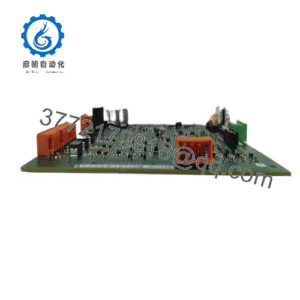
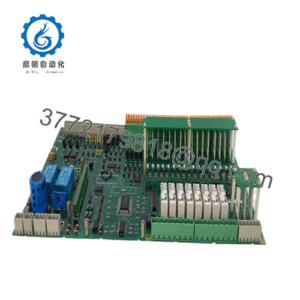
The GE Fanuc / VMIC VMIVME-2536 (also cataloged as VMIVME-2536-000) is a 32-channel, optical-isolated digital input board built for the VMEbus architecture. Originally designed by VMIC and later maintained under the GE Fanuc Automation / GE Intelligent Platforms legacy line, this single-board interface card is built for industrial control, aerospace simulation, power generation, and real-time process monitoring applications requiring high-density discrete signal acquisition with ground isolation.
The board accepts 32 independent digital input channels across wide input voltage ranges (with factory option variations supporting 5 V, 12 V, 24 V, or 48 V nominal levels). Optical isolators on each channel provide up to 1,500 V DC electrical isolation, protecting the host VMEbus backplane and CPU from high voltage surges, field noise, and ground loops. Additionally, the VMIVME-2536 features programmable change-of-state (COS) detection and interrupt generation across all channels, reducing CPU polling overhead in event-driven systems.
Key Technical Specifications
| Parameter | Specification |
| Product Type | 32-Channel Optoisolated Digital Input VME Board |
| Original Manufacturer / Brand | VMIC / GE Fanuc / GE Intelligent Platforms |
| Model / Part Number | VMIVME-2536 (VMIVME-2536-000) |
| Bus Standard | VMEbus (A24/A16 Addressing, D16/D8 Data Width, Slave Interface) |
| Number of Inputs | 32 Independent Optically Isolated Digital Input Channels |
| Isolation Voltage | 1,500 V DC channel-to-bus and channel-to-channel optical isolation |
| Input Voltage Options | Factory options for 5 V, 12 V, 24 V, or 48 V AC/DC nominal inputs |
| Filtering / Debounce | Onboard RC input filters for high-frequency noise suppression |
| Interrupt / COS Capabilities | Programmable Change-of-State (COS) interrupt generation on all channels |
| VMEbus Interrupts | Software-selectable interrupt level (IRQ1 through IRQ7) and vector |
| Form Factor | Single-Slot 6U VMEbus Card |
| Front Panel Connectors | High-density front panel connectors for field wiring (e.g., P3/P4 or P2 routing) |
| Power Requirements | +5 V DC from VMEbus backplane |
Detailed Product Overview
The GE VMIVME-2536 high-density discrete input module allows host VMEbus processors to monitor up to 32 digital field signals safely and reliably. Incorporating optical isolation barriers on every input path, the board isolates the main control logic from field-side voltage transients, severe electromagnetic interference, and ground potential differences often found in industrial environments.
Beyond basic signal isolation, the VMIVME-2536 incorporates onboard Change-of-State (COS) detection circuitry. When enabled, any status transition (low-to-high or high-to-low) on a designated input channel triggers a VMEbus interrupt to the host CPU. This interrupt-driven architecture eliminates the continuous polling cycles required by basic digital input cards, freeing processor capacity for control routines and real-time processing tasks.
Onboard input filtering circuits suppress contact bounce and high-frequency noise on dry contacts or solid-state switches before signals reach the optical isolators. The board operates as a VMEbus A24 or A16 slave module with software-configurable base address registers, allowing straightforward insertion alongside other VMIC I/O cards, single-board computers (SBCs), and controller systems.
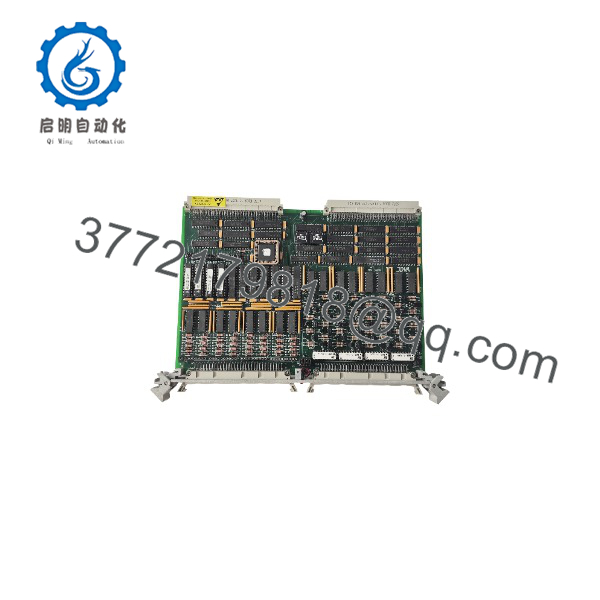
VMIVME-2536
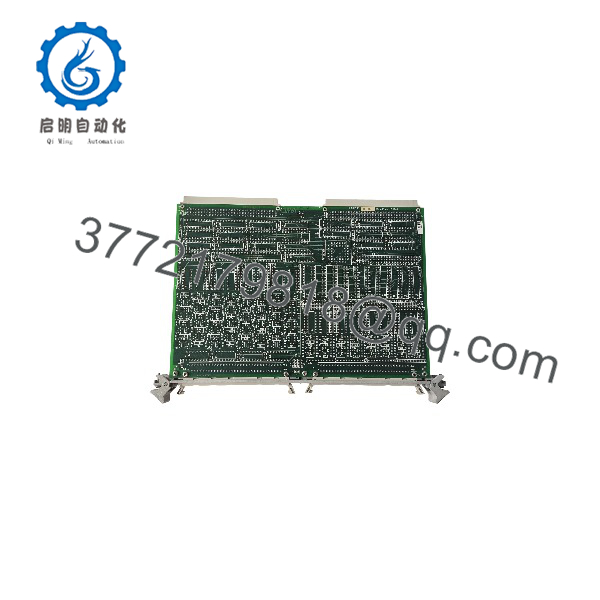
VMIVME-2536
Engineering Selection Highlights
- 32-Channel Optical Isolation: Provides 1,500 V DC isolation between the field inputs and the host VMEbus system to prevent ground loops and shield processing components from electrical transients.
- Change-of-State (COS) Interrupt Engine: Onboard logic monitors inputs for signal transitions and generates real-time VMEbus interrupts, eliminating CPU polling overhead.
- Wide Voltage Range Adaptability: Configurable factory option variants accommodate standard industrial logic levels (5 V, 12 V, 24 V, or 48 V AC/DC).
- Integrated Hardware Noise Filtering: Built-in RC input filters clear contact bounce and high-frequency line interference before signal evaluation.
- Flexible VMEbus Addressing: Supports both A24 (24-bit) and A16 (16-bit) memory mapping with programmable IRQ level and vector selection.
System Compatibility & Integration Requirements
| Item / Dependency | Verified Compatibility or Requirement | Practical Note |
| System Architecture | Standard 6U VMEbus Rack Chassis | Installs in standard 6U VME slot with J1/J2 backplane connection. |
| Host System Controller | VMEbus Single Board Computer / Controller | Requires a VMEbus master capable of handling A24/A16 slave addressing and VME interrupt cycles. |
| Power Supply | +5 V DC VMEbus Backplane Supply | Draws operating logic power directly from the system backplane +5 V rail. |
| Field Wiring Interface | Dedicated Front Panel or P2 Rear I/O Connectors | Requires matching connector cable assemblies to route field signals to the board input terminals. |
Dimensions, Mounting & Connection Notes
- Board Form Factor: Standard 6U VMEbus single-slot board assembly.
- Slot Requirements: 1 Slot (0.8 inches / 20.3 mm width in standard card cage).
- Backplane Interface: Standard 96-pin DIN J1 and J2 VMEbus backplane connectors.
- Field Wiring Connections: Signal lines connect via high-density front panel connectors or P2 rear transition routes depending on the exact assembly model variant.
- Shielding & Grounding: Cable shields should be grounded at the field terminal block or chassis ground point to ensure optimum isolation performance.
FAQ
What is the GE VMIVME-2536?
The VMIVME-2536 (VMIC VMIVME-2536) is a 32-channel optically isolated digital input module built on the 6U VMEbus standard.
What level of electrical isolation does the board provide?
Each of the 32 input channels is optically isolated, providing up to 1,500 V DC isolation between the field inputs and the internal VMEbus logic.
How does Change-of-State (COS) detection benefit system performance?
COS detection monitors all input channels for signal status changes and automatically alerts the host CPU via VMEbus interrupts, eliminating the need for continuous CPU polling.
What power rail does the VMIVME-2536 require from the backplane?
The logic and onboard circuitry operate off the standard +5 V DC power rail provided by the VMEbus backplane.
What field input voltages are supported by the VMIVME-2536?
The board is available in factory option variants designed to handle standard nominal input levels of 5 V, 12 V, 24 V, or 48 V AC/DC.
Verification & Troubleshooting Notes
- Interrupts Not Triggering Host CPU: Verify that the VMEbus interrupt level (IRQ1–IRQ7) and interrupt vector registers on the VMIVME-2536 are configured correctly to match host CPU interrupt handler settings.
- Unresponsive Channel Inputs: Check input signal polarity and voltage level against the specific model’s nominal input range (e.g., 24 V vs. 5 V option). Insufficient voltage will fail to energize the onboard optical isolator LEDs.
- Address Collision / Bus Error: Ensure the base address set via onboard jumpers or switches does not overlap with other VMEbus slave modules in the same A24/A16 address space.
- False Triggers / Noise Interruption: If contact chatter causes multiple unnecessary interrupts, verify that field wiring uses shielded twisted-pair conductors and that line noise does not exceed the RC filter time constants.