WhatsApp: +86 16626708626
 Email:
 Phone: +86 16626708626
Description
Core Product Summary
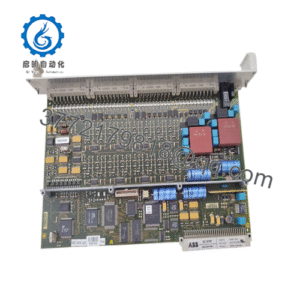
The GE VMIVME-4116 is an 8-channel, 16-bit digital-to-analog converter (DAC) board for VMEbus systems. It provides buffered analog voltage outputs from -10 V to +10 V, with one 16-bit DAC dedicated to each output channel.
The board uses double-buffered data latches and supports jumper-selectable synchronized update control, including an external update input or software-controlled strobe. Its outputs are set to 0.0 V at power-up and are automatically disconnected from the field until the board is initialized. The VMIVME-4116 is a double-height Eurocard module that communicates with the VMEbus through two 96-pin DIN connectors.
Key Technical Specifications
| Parameter | Verified information |
|---|---|
| Manufacturer | GE / VMIC |
| Exact model | VMIVME-4116 |
| Product type | Digital-to-analog converter (DAC) board |
| System family | VMEbus |
| Output channels | 8 analog output channels |
| Resolution | 16 bits |
| DAC configuration | One 16-bit DAC per channel |
| Analog output range | -10 V to +10 V |
| Output type | Buffered voltage output |
| Output drive | ±10 V at 5 mA |
| Resolution per LSB | 305 µV |
| Settling time | 10 µs maximum to ±0.003% of full-scale range; 10 µs to ±1/2 LSB |
| Data latching | Double-buffered data latches |
| Update control | Jumper-selectable synchronized update; external update input or software-controlled strobe |
| Power-up output state | Outputs set to 0.0 V; automatically disconnected from the field |
| Coding | Positive-true offset binary or two’s-complement binary |
| VME address space | A16 short I/O address space |
| Board selection | 12 DIP switches; VMEbus address lines A05 through A15 |
| Form factor | Double-height Eurocard, 6U |
| Board dimensions | 160 mm × 233.35 mm |
| VME connectors | Two 96-pin DIN connectors |
| Power requirement | 2.5 A maximum at +5 V |
| Front-panel indicator | Fail LED |
| Output connector | P3 Panduit male connector, type 120-332-033A |
| Matching cable connector | Female type 120-332-435E |
| Optional test support | AMXbus analog expansion and Built-in-Test bus |
Engineering Selection Highlights
- Eight independent analog outputs: The VMIVME-4116 provides eight 16-bit DAC channels, making it suitable for VME systems that require multiple buffered analog voltage outputs.
- ±10 V output range: The board produces -10 V to +10 V outputs, with 305 µV resolution per 1 LSB change, so it is appropriate for bipolar analog-output applications.
- Fast settling for control loops: Its 10 µs maximum settling time to ±0.003% of full-scale range supports applications where output updates must settle quickly.
- Synchronized update capability: Jumper-selectable synchronized update control allows all DAC outputs to be updated together, using either an external update input or a software-controlled strobe.
- Safe power-up behavior: Outputs are set to 0.0 V at power-up and are automatically disconnected from the field until initialization, reducing the risk of unintended field-drive conditions.
- VMEbus integration: The board is a double-height Eurocard that uses two 96-pin DIN connectors and is memory-mapped in the VMEbus A16 short I/O address space.
- Optional test and isolation support: The VMIVME-4116 supports AMXbus expansion and Built-in-Test functionality, with output isolation available as an option-dependent feature.
System Compatibility & Integration Requirements
| Item / Dependency | Verified Compatibility or Requirement | Practical Note |
|---|---|---|
| Bus platform | VMEbus | The VMIVME-4116 is a VMEbus-compatible analog-output board. |
| Form factor | Double-height Eurocard, 6U | The board is 160 mm × 233.35 mm and uses two 96-pin DIN connectors. |
| Address space | A16 short I/O address space | The DAC and control/status register are memory-mapped in this address space. |
| Board selection | 12 DIP switches; A05 through A15 | The physical board address is selected by DIP-switch configuration. |
| Output interface | P3 front-panel output connector | Uses a Panduit 120-332-033A male connector and 120-332-435E female cable connector. |
| Update control | External update input or software-controlled strobe | Selected through jumper configuration. |
| Coding format | Offset binary or two’s-complement binary | Selected through jumper configuration. |
| Optional expansion | AMXbus analog expansion and Built-in-Test bus | Supported when the applicable board option and backplane arrangement are used. |
| Power supply | +5 VDC, 2.5 A maximum | The board draws its power from the VME backplane. |
Dimensions, Mounting & Connection Notes
The VMIVME-4116 is a double-height Eurocard (6U) VME board measuring 160 mm wide by 233.35 mm high. It uses two 96-pin DIN connectors for the VMEbus interface and is installed in a VME card cage or chassis.
The board’s analog outputs are brought out through the P3 front-panel connector, a Panduit male connector type 120-332-033A. The matching output-cable connector is a female type 120-332-435E, with an output-connector strain relief identified as 100-000-042. The P3 connector provides the eight analog-output channels and analog common.
The board is configured through 12 DIP switches that select its physical VME address by decoding address lines A05 through A15. Jumper settings also select the coding format and update-control method. The board requires up to 2.5 A at +5 V from the VME backplane.

VMIVME-4116
Detailed Product Overview
The GE VMIVME-4116 is an 8-channel, 16-bit digital-to-analog converter (DAC) board for VMEbus systems. It provides eight analog output channels, each driven by its own 16-bit DAC, with buffered voltage outputs from -10 V to +10 V.
The board’s resolution is 16 bits, providing 305 µV of output change for each 1 LSB change in the digital input code. The analog output is calculated from the digital code written by the processor to the selected DAC channel. For bipolar operation, the output equation is -10 V plus the digital code scaled across the 20 V output span.
The VMIVME-4116 uses double-buffered data latches, which separate the data-write operation from the output-update operation. This architecture supports jumper-selectable synchronized update control, allowing all DAC outputs to be updated together. The update can be triggered by an external update-control input or by a software-controlled strobe.
The board’s outputs are set to 0.0 V at power-up and are automatically disconnected from the field until the board is initialized. This power-up behavior is a defined part of the board’s design and should be considered when planning the interface between the VME system and the connected analog devices.
The VMIVME-4116 is a standard double-height Eurocard (6U) board measuring 160 mm by 233.35 mm. It communicates with the VMEbus through two 96-pin DIN connectors and is memory-mapped in the VMEbus A16 short I/O address space. The board’s physical address is selected by 12 DIP switches that decode VMEbus address lines A05 through A15.
The board’s analog outputs are brought out through the P3 front-panel connector, a Panduit male connector type 120-332-033A. The matching output-cable connector is a female type 120-332-435E, with an output-connector strain relief identified as 100-000-042. The P3 connector provides the eight analog-output channels and analog common.
The VMIVME-4116 also supports VMIC’s analog expansion and Built-in-Test bus, known as AMXbus. This support is option-dependent and applies when the appropriate board option and backplane arrangement are used. The AMXbus backplane can be replaced with a standard P2 VME expansion bus and user-supplied jumper wires on the user I/O pins.
Applications & System Role
Within a VMEbus control architecture, the VMIVME-4116 serves as the analog-output interface between the VME-based control system and external analog devices. Its eight 16-bit DAC channels convert digital control values into buffered voltage outputs.
The board is relevant to applications where multiple analog outputs are required from a VME-based controller or processor. Its buffered ±10 V outputs, synchronized update capability, and power-up output-disconnect behavior make it suitable for control-system architectures where analog output timing and safe initialization are important.
FAQ
What is the GE VMIVME-4116?
It is an 8-channel, 16-bit digital-to-analog converter (DAC) board for VMEbus systems.
How many analog output channels does the VMIVME-4116 provide?
It provides eight analog output channels, each driven by its own 16-bit DAC.
What is the analog output range of the VMIVME-4116?
The board provides buffered voltage outputs from -10 V to +10 V.
What is the output resolution of the VMIVME-4116?
The board provides 16-bit resolution, with 305 µV of output change per 1 LSB change.
How fast does the VMIVME-4116 settle?
The buffered output voltage settles to within ±0.003% of full-scale range in 10 µs maximum.
How are the DAC outputs updated?
The board uses double-buffered data latches and supports jumper-selectable synchronized update control through an external update input or software-controlled strobe.
What happens to the outputs at power-up?
The outputs are set to 0.0 V at power-up and are automatically disconnected from the field until the board is initialized.
What form factor does the VMIVME-4116 use?
It is a double-height Eurocard (6U) VME board measuring 160 mm by 233.35 mm, with two 96-pin DIN connectors.