 WhatsApp: +86 16626708626
 Email:
  Phone: +86 16626708626
Description
3. Key Technical Specifications
| Parameter | Value |
|---|---|
| Memory Capacity | 256 MB SDRAM |
| Data Transfer Rate | 2.12 Gb/s fiber-optic |
| Network Topology | Reflective memory ring |
| Latency | <1 µs node-to-node |
| Interface | VMEbus (ANSI/VITA compliant) |
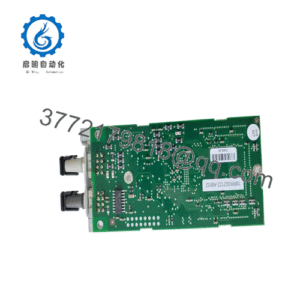
| Fiber Ports | Dual redundant (Tx/Rx) |
| Node Capacity | Up to 256 nodes |
| Error Detection | CRC with automatic retransmission |
| Operating Temperature | 0 to +55°C (standard industrial) |
| Power Requirement | 5 V DC via VME backplane |
| Form Factor | 6U VME module |
4. Product Introduction & Supply Chain Strategy
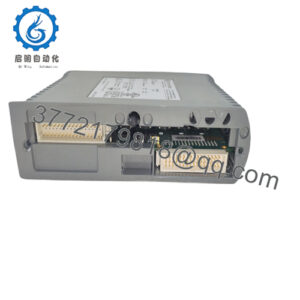
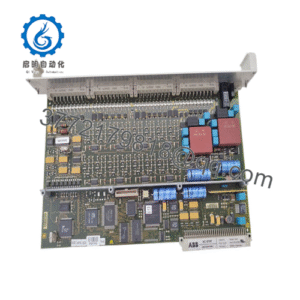
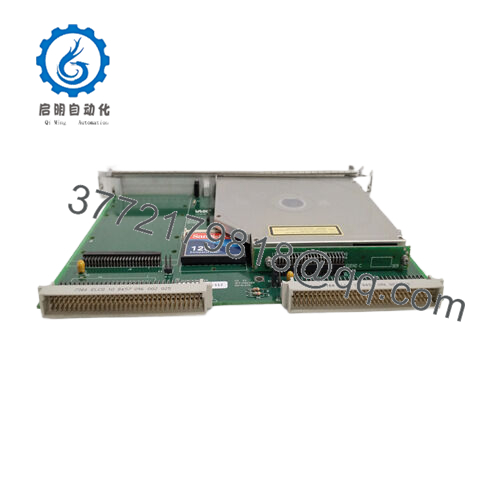
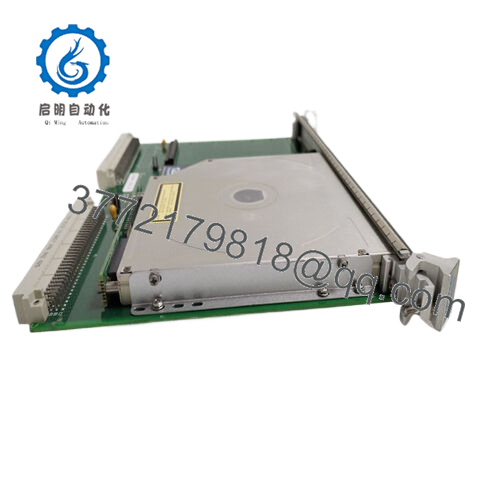
The GE VMIVME-5532S is a VMEbus reflective memory module designed for deterministic, high-speed data sharing across distributed control systems. It mirrors memory data across nodes via fiber optics in real time, making it suitable for turbine control, simulation platforms, and synchronized test systems where latency must remain below microsecond levels.
This product is a Brand New Surplus unit. It is not used, not pulled from a decommissioned plant, and not refurbished. For legacy VME architectures, securing New Surplus inventory is a critical lifecycle strategy. OEM production cycles are limited, and relying on refurbished modules introduces failure risk. A controlled buffer stock reduces stock-out incidents and protects against last-time-buy pressure as platforms approach EOL.

- VMIVME-5532S
5. Installation & Configuration Guide
Stage 1: Pre-Installation (Prep & Safety)
- Execute full lock-out/tag-out on the VME rack.
- Wear a grounded ESD wrist strap.
- Photograph existing module DIP switches and fiber routing.
- Verify backplane power capacity with at least 20% buffer.
Stage 2: Removal
- Release VME ejector handles evenly.
- Pull the module straight out to avoid bending backplane pins.
- Label fiber connections (TX/RX orientation matters).
Stage 3: Installation (Clone & Seat)
- Match DIP switch/node ID settings exactly.
- Insert the VMIVME-5532S firmly into the backplane.
- Lock ejector handles fully to ensure proper bus engagement.
- Reconnect fiber cables with correct polarity.
Stage 4: Power-On & Testing
- Power up and monitor LEDs (RUN = stable, ERR = fault).
- Validate ring integrity and node communication.
- Confirm memory mapping and data propagation across nodes.
6. Firmware/Software Versions & Upgrade Notes
- Recommended Firmware: Match existing system firmware (commonly V2.x baseline for legacy VME systems).
- Compatibility Note: Later firmware revisions may not align with older reflective memory drivers used in legacy DCS environments.
- Critical Warning:
- Upgrading firmware during replacement can introduce timing mismatches.
- Downgrading firmware without proper tools may corrupt configuration registers.
- Best Practice: Always document the original module firmware and maintain identical revision levels across all nodes in the ring.
7. Frequently Asked Questions (FAQ)
Q1: Is this unit truly new, or surplus from used systems?
This is a New Surplus unit. It originates from OEM production channels, retains original components, and shows zero wear on connectors or circuitry. It is not reused hardware.
Q2: Why is the price lower than OEM but higher than refurbished options?
OEM direct pricing includes full production overhead. Refurbished units cut cost by reusing aged components. New Surplus sits in between—lower acquisition cost than OEM, but without the reliability risk of refurbished parts. This reduces Total Cost of Ownership (TCO).
Q3: Is the VMIVME-5532S approaching obsolescence?
Yes, VME reflective memory platforms are in a late lifecycle phase. Lead time variability is increasing. A planned last-time-buy strategy or minimum buffer stock (1–2 units) is recommended for critical systems.
Q4: Can this module be hot-swapped?
No. VME systems typically do not support hot swapping. Removing or inserting under power risks backplane damage and data corruption.
Q5: Does the module retain configuration after power loss?
Yes, configuration is hardware-based (DIP switches and system-level mapping). However, always verify settings before commissioning.
Q6: What is the recommended stocking strategy?
- Critical systems: Maintain 1–2 units on-site as insurance.
- Multi-site operations: Enable cross-site sharing to reduce total inventory.
- Slow-moving spare: Consider vendor consolidation or consignment to reduce carrying cost.
Q7: What warranty is included?
Typically 12 months. Each unit includes QC verification reports, serial traceability, and functional test validation prior to shipment.