 WhatsApp: +86 16626708626
 Email:
  Phone: +86 16626708626
Description
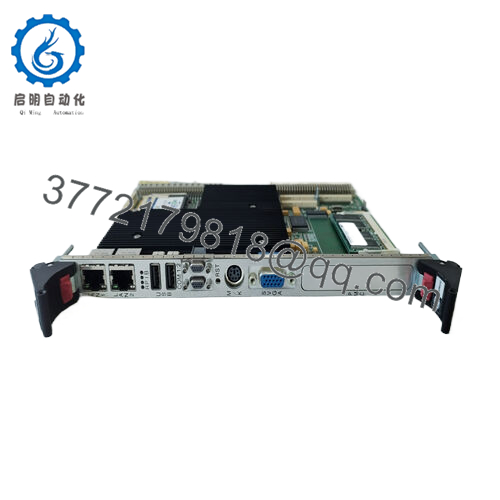
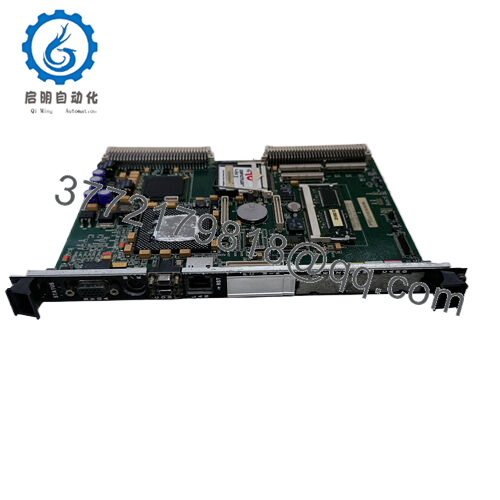
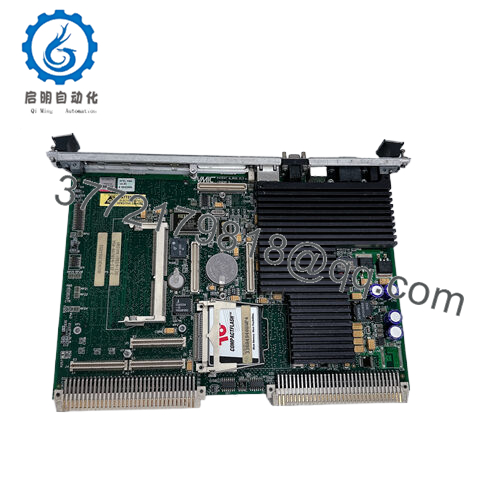
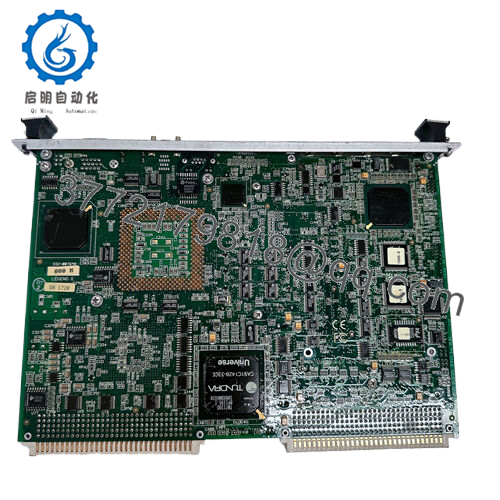
The GE VMIVME-7589A is a high-performance Single Board Computer (SBC) that serves as the primary processing engine for demanding VMEbus systems. In industries ranging from automated semiconductor manufacturing and high-speed rail signaling to sophisticated military radar processing, the need for a reliable, x86-based controller that can survive decades of service is paramount. The GE VMIVME-7589A is frequently deployed in control systems where legacy software must be maintained while simultaneously benefiting from modern processing speeds and expanded memory capacity. In a power plant control room, for instance, the GE VMIVME-7589A might act as the central supervisor, coordinating data from hundreds of I/O modules and executing complex PID loops in real-time. Because it is built on a ruggedized VME64 architecture, the GE VMIVME-7589A is designed to operate in high-vibration environments and extreme temperature fluctuations that would cause standard commercial servers to fail. It is particularly applicable in industrial automation setups that require a deterministic response and a wide array of connectivity options, including dual Ethernet and multiple serial ports, to manage the diverse hardware found on a modern factory floor.
As a member of the VMIC family of embedded computers, the GE VMIVME-7589A is technically defined as a 6U VME Single Board Computer based on the Intel Pentium processor architecture. It acts as the “brain” of the VME chassis, providing the computational power and bus arbitration necessary to manage a full rack of peripheral cards. Within a distributed control architecture, the GE VMIVME-7589A typically hosts the Real-Time Operating System (RTOS)—such as VxWorks, QNX, or a specialized Linux kernel—that ensures every task is completed within a strict microsecond window. For system integrators and engineers, the value of the GE VMIVME-7589A lies in its high degree of peripheral integration; it combines a powerful CPU, substantial DDR RAM, and a variety of on-board I/O into a single-slot solution. This density allows for more complex control logic without occupying additional cabinet space. The GE VMIVME-7589A is positioned as a bridge between traditional VME reliability and the familiar programming environment of the PC world, making it easier for developers to port existing codebases to a ruggedized industrial platform.
The functional performance of the GE VMIVME-7589A is centered on its ability to handle high-interrupt workloads without stalling. Unlike standard PCs, the GE VMIVME-7589A features a sophisticated VMEbus interface that supports master/slave operations and flexible bus arbitration, ensuring that critical data packets from I/O modules always have priority. The hardware design of the GE VMIVME-7589A is remarkably rugged, utilizing high-quality solid-state components and a robust heat-sink arrangement that facilitates natural or forced-air cooling. This thermal efficiency is a key factor in its long-term reliability, as it prevents the CPU throttling that often leads to unpredictable system behavior in hot industrial enclosures.
Compatibility is a core strength of the GE VMIVME-7589A, as it supports a wide range of standard PC interfaces including IDE for storage, VGA for local monitoring, and USB for peripheral expansion. This means that an engineer can connect a keyboard and monitor directly to the GE VMIVME-7589A for onsite troubleshooting or software updates without needing a separate laptop or interface converter. Furthermore, the board includes non-volatile flash memory for BIOS and user application storage, ensuring that the GE VMIVME-7589A can reboot and resume control operations instantly after a power cycle. This combination of PC-like flexibility and industrial-grade stability makes it a “gold standard” for critical infrastructure controllers.
| Parameter | Value |
| Model | GE VMIVME-7589A |
| Brand | GE Automation / VMIC |
| Type | VME Single Board Computer (SBC) |
| Processor | Intel Pentium Class |
| Memory | Up to 512MB DDR RAM (Configuration Dependent) |
| Bus Architecture | VME64 Compliant |
| Form Factor | 6U Single-Slot |
| Power Supply | +5V, +12V, -12V from VME Backplane |
| Operating Temperature | 0 to +55 Degrees Celsius |
| Interfaces | 2 x Ethernet, 2 x Serial, 1 x VGA, 1 x USB |
| Storage | Onboard CompactFlash or IDE Support |
| Environmental Rating | Standard Industrial Ruggedized |

- VMIVME-7589A
VMIVME-7697 – A later generation SBC with a faster processor for high-throughput data tasks.
VMIVME-7750 – A common companion board often used in multi-processor VME clusters.
VMIVME-5565 – A reflective memory module frequently controlled by the GE VMIVME-7589A.
VMIVME-3122 – High-speed analog input card that sends data to this SBC for processing.
VMIACC-0562 – A breakout cable for the serial and VGA ports of the GE VMIVME-7589A.
VMIVME-2536 – A 32-bit digital I/O board often managed by this processor.
Successful commissioning of the GE VMIVME-7589A begins with the correct configuration of the VMEbus system controller jumpers. Only one board in a VME rack can be the “System Controller” (usually located in Slot 1), so ensure the GE VMIVME-7589A is properly set based on its position in your chassis. When installing the module, use the injector/ejector handles to ensure the multi-pin backplane connectors are seated evenly; applying uneven pressure can bend pins and cause permanent damage to the VME backplane. Since the GE VMIVME-7589A generates significant heat during heavy processing, verify that your rack’s fan tray is operational and that there is no obstruction to the vertical airflow between the cards.
Maintenance for the GE VMIVME-7589A involves routine monitoring of the CMOS battery and the integrity of the onboard storage. Like all PC-based boards, the GE VMIVME-7589A uses a small battery to maintain BIOS settings; if the system clock begins to drift or BIOS errors appear at startup, the battery likely needs replacement. We also recommend periodic backups of any data stored on the onboard CompactFlash or IDE drives. If the GE VMIVME-7589A is used in a high-dust environment, use compressed air to clear the heatsink fins every six months to maintain optimal thermal performance. Firmware and BIOS updates should be performed only when necessary to resolve specific compatibility issues with newer VME hardware.