WhatsApp: +86 16626708626
 Email:
  Phone: +86 16626708626
Description
3. Key Technical Specifications
| Parameter | Value |
|---|---|
| Part Number | EABT3 B9302 (also referenced as 997009302) |
| Manufacturer | HIMA |
| Product Type | Slot Rack / Preterminal |
| Compatible Systems | H41q / H51q series |
| Function | Module mounting and interconnection |
| Safety Level Support | Up to SIL 3 applications |
| Country of Origin | Germany |
| Typical Mounting | Rack / panel |
| Application | Safety Instrumented Systems (SIS) |
4. Product Introduction
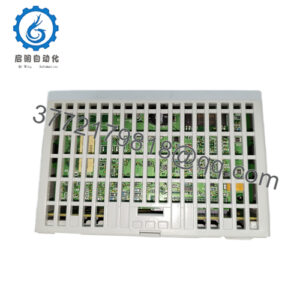
The HIMA EABT3 B9302 is a slot rack designed for use in HIMA H41q and H51q safety systems. It provides the mechanical structure and electrical backplane connections required to mount and interconnect safety modules in high-integrity applications.
This rack is commonly found in safety instrumented systems (SIS) used in process industries such as oil & gas, chemical, and power generation. Because HIMA safety systems are long-lifecycle platforms, the EABT3 B9302 remains an important spare for maintaining existing installations even as newer HIMA platforms become available.
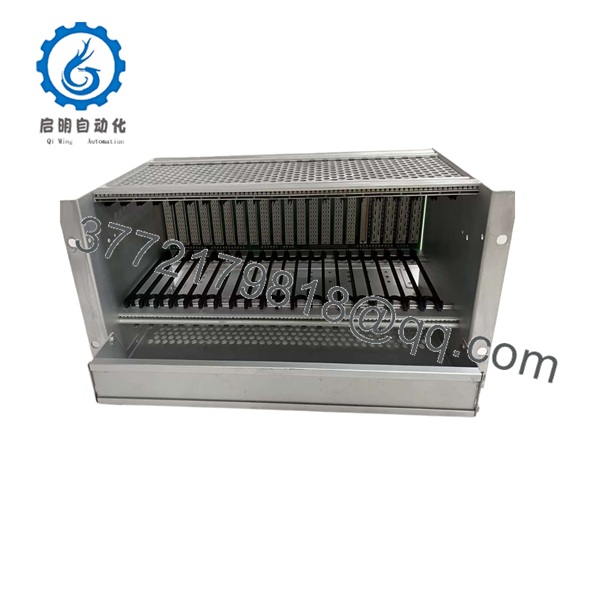
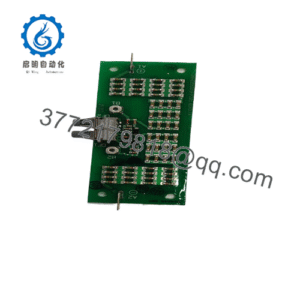
EABT3 B9302
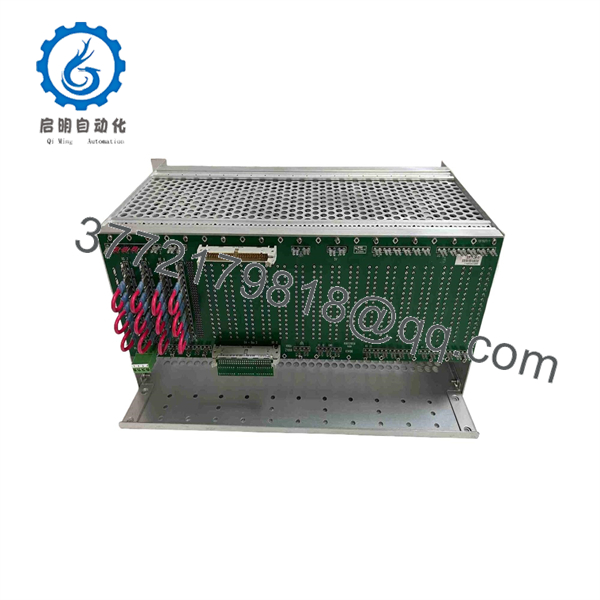
EABT3 B9302
5. Troubleshooting Quick Reference
| Symptom | Possible Cause | Relevance to this Part | Quick Check Method | Recommendation |
|---|---|---|---|---|
| Modules not recognized | Poor contact or damaged rack connectors | ✅ High | Reseat modules; inspect backplane contacts | Clean contacts; replace rack if damaged |
| Intermittent module faults | Loose mounting or worn connectors | ✅ High | Check module seating and rack integrity | Secure mounting; inspect for wear |
| System will not power up | Rack power distribution issue | ✅ Medium | Verify power supply to rack and module slots | Check upstream power; test rack continuity |
| Communication errors between modules | Backplane signal integrity problem | ✅ Medium | Test with known-good modules in different slots | Replace rack if faults follow the chassis |
| Physical damage or corrosion | Environmental exposure | ✅ High | Visual inspection of connectors and frame | Replace rack if corrosion or mechanical damage present |
| Wrong module fit | Incorrect rack variant | ❌ Low | Confirm rack part number matches system documentation | Verify exact HIMA rack model required |
If modules fail consistently in one rack but work in another, photograph the rack labels, connector condition, and any visible damage, then contact support with the system type (H41q/H51q) and module list.
6. Frequently Asked Questions (FAQ)
Q: What is the EABT3 B9302 used for?
A: It is a slot rack that holds and interconnects modules in HIMA H41q and H51q safety PLC systems.
Q: Is this rack still in production?
A: Availability is limited to surplus, refurbished, or secondary-market stock. Confirm current inventory for critical systems.
Q: Can it be used with newer HIMA systems?
A: No. It is specific to the H41q/H51q platform. Newer HIMA systems (such as HIMax or HIQuad X) use different racks and architectures.
Q: Does the rack itself carry a SIL rating?
A: The rack is a mechanical/electrical infrastructure component. The overall SIL rating of the safety system depends on the modules installed, system configuration, and application design.
Q: What should I check before replacing the rack?
A: Note the exact part number and revision, document the module layout, and photograph the existing installation. Ensure replacement modules will seat correctly and that power and communication connections match.
Q: Why are these racks commonly sold as used or refurbished?
A: HIMA safety systems have very long service lives. Original racks are often repaired or sourced from decommissioned systems rather than manufactured new in high volume.
Q: What information should I provide when ordering?
A: System type (H41q or H51q), photos of the existing rack labels, list of modules currently installed, and any observed symptoms (communication faults, seating issues, etc.).