WhatsApp: +86 16626708626
 Email:
  Phone: +86 16626708626
Description
Key Technical Specifications
| Parameter | Value |
|---|---|
| Manufacturer | HIMA Paul Hildebrandt GmbH |
| Model | F3226A |
| Product Type | Safety switching amplifier module |
| System Compatibility | HIMA HIQuad H41q / H51q |
| Channel Count | 2 independent channels |
| Signal Type | Binary safety input signals |
| Input Devices | Mechanical contacts, inductive sensors, optical sensors |
| Isolation Type | Galvanic isolation |
| Safety Integrity Level | SIL 3 according to IEC 61508 |
| Hazardous Area Capability | Intrinsically safe Ex i applications |
| Supply Voltage | 24 VDC ±10% |
| Mounting Method | Plug-in subrack module |
| Module Width | 4 TE |
| Protection Class | IP20 |
| Operating Temperature | -20 °C to +60 °C |
| Humidity Range | 5–95% RH, non-condensing |
| Weight | Approximately 0.38 kg |
| Engineering Software | ELOP II Factory (system dependent) |
Product Introduction
The HIMA F3226A is a SIL 3 safety switching amplifier module designed for HIMA HIQuad H41q and H51q safety systems. It receives binary signals from safety field devices, provides galvanic isolation, and transfers processed signals to the safety controller for applications such as ESD and protective shutdown systems.
The module is commonly installed in process industries where intrinsically safe signal transmission is required. Replacement work requires verification of rack compatibility, hardware revision, field wiring, and safety application configuration before returning the system to operation.
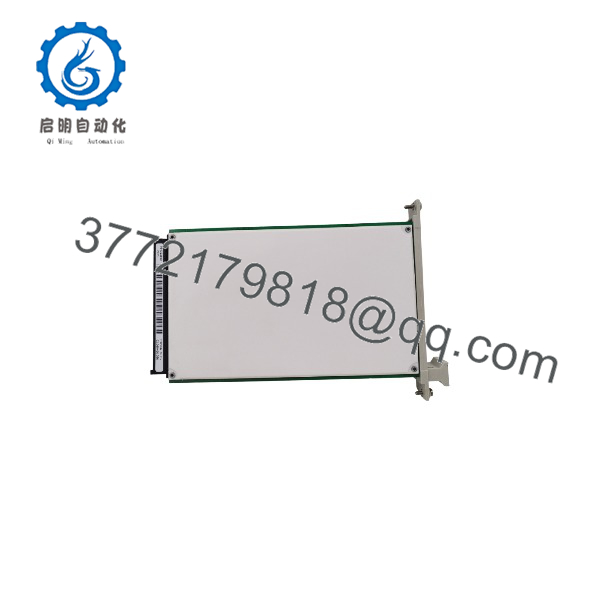
F3226A
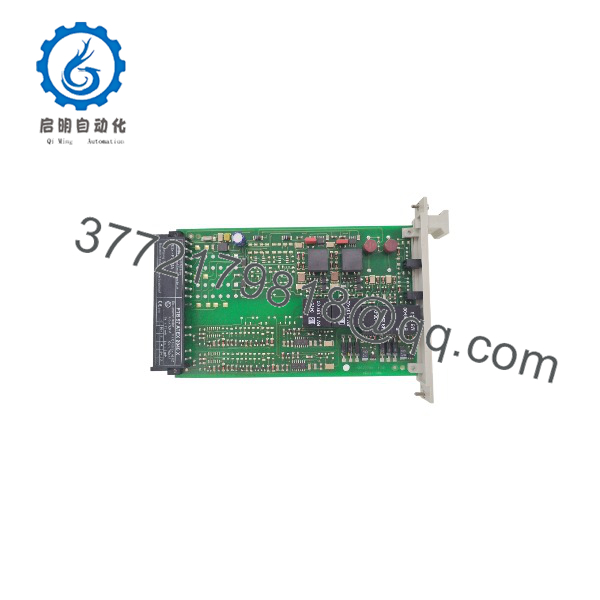
F3226A
Installation & Configuration Guide
Stage 1: Pre-Installation Preparation (Approx. 15 minutes)
⚠️ Safety First
- Notify operations and confirm the safety instrumented system can enter maintenance mode.
- Place the controlled process into a safe condition.
- Apply lockout/tagout procedures to the HIMA cabinet power source.
- Wait at least 5 minutes for stored energy discharge.
- Verify zero voltage before touching field terminals.
Tools Required
- ESD wrist strap
- PH1 screwdriver
- Digital multimeter
- Wire labels
- Smartphone for wiring photos
- HIMA engineering workstation
Data Backup
Before removing the F3226A:
- Save the current safety application configuration.
- Record:
- Rack location
- Slot number
- Module identification
- Hardware revision
- Photograph:
- Field wiring terminals
- Connector arrangement
- LED status
- Record current diagnostic information.
Stage 2: Removing the Old Module (Approx. 10 minutes)
- Remove cabinet access covers if required.
- Label all field wires before disconnecting.
- Disconnect terminal wiring carefully.
- Release the module retaining screws.
- Pull the module straight from the rack.
- Inspect the backplane connector for:
- Bent pins
- Dust contamination
- Oxidation marks
⚠️ Note: Keep the original F3226A available until the replacement has passed functional testing. Legacy HIMA systems often require the old module for configuration comparison.
Stage 3: Installing the New Module (Approx. 15 minutes)
- Wear an ESD strap before handling the replacement module.
- Verify:
- Model: HIMA F3226A
- System: HIQuad H41q/H51q
- Function: Safety switching amplifier
⚠️ Configuration Clone — Critical Step
- Copy the existing installation:
- Channel assignment
- Input device type
- Safety parameters
- Terminal wiring
- Diagnostic settings
- Insert the module into the correct rack slot.
- Ensure the backplane connector is fully seated.
- Tighten retaining screws.
- Reconnect field wiring.
Self-Checklist
- Correct F3226A model verified
- Rack slot confirmed
- Wiring labels matched
- Module secured correctly
- Safety configuration reviewed
Stage 4: Power-On & Testing (Approx. 20 minutes)
Pre-Power Check
- Verify the 24 VDC supply voltage.
- Check field wiring continuity.
- Confirm no short circuits exist.
Power-On Steps
- Energize the HIMA rack.
- Observe module LEDs.
- Connect HIMA engineering software.
- Verify:
- Module recognition
- Diagnostic status
- Safety controller communication
- Hardware compatibility
- Simulate field input signals.
- Confirm correct safety logic response.
⚠️ Troubleshooting Note
- Red fault LED: Check wiring, module diagnostics, and hardware revision.
- Missing field signal: Verify sensor loop continuity and input device compatibility.
- Controller communication fault: Confirm rack configuration and module identification.
Frequently Asked Questions (FAQ)
Can the HIMA be hot-swapped under power?
No. The is a safety-related module used in HIMA HIQuad systems. Remove power before replacement unless a specific approved maintenance procedure allows otherwise. Incorrect handling can affect the safety system state.
What is the main function of the HIMA ?
The works as a safety switching amplifier. It receives binary signals from field devices such as contacts, inductive sensors, or optical sensors and transfers isolated safety signals into the HIMA safety controller.
Is the HIMA obsolete?
The is a legacy HIMA module. Availability depends on remaining industrial inventory. Many plants maintain these modules as spare parts because replacing a complete safety platform requires engineering review, validation, and planned downtime.
Can the replace the older F3226 module directly?
The is an updated variant of the F3226 family, but direct replacement depends on the installed HIMA system configuration, hardware revision, and approved spare-part list. Always verify the OEM documentation before installation.
Will replacing the erase the safety program?
No. The safety application normally resides in the HIMA controller configuration, not inside the switching amplifier module. However, the replacement module must match the approved hardware configuration before commissioning.
Why is this module priced differently from current safety hardware?
Legacy safety modules are often sourced from remaining inventory, New Surplus stock, or tested refurbished channels. Pricing depends on condition, availability, documentation, and inspection records.
What should I check before ordering an ?
Verify:
- HIMA system type: HIQuad H41q/H51q
- Exact model:
- Hardware revision
- Rack compatibility
- Input device type
- Required hazardous-area certification
A physically similar HIMA module may not provide the same safety function.
How should a surplus module be tested before installation?
A proper inspection process should include:
- OEM label and serial number verification.
- Visual inspection for corrosion, damage, or connector defects.
- Installation test on a compatible HIMA rack.
- LED and diagnostic verification.
- Binary signal simulation.
- Functional test report generation.
Test photos and inspection records should be retained for maintenance traceability.