 WhatsApp: +86 16626708626
 Email:
  Phone: +86 16626708626
Description
Key Technical Specifications
- Manufacturer: HIMA
- Model: F3237
- Product Type: Safety-related input module
- Channel Count: 8 channels
- Input Type: Safety proximity switches, NAMUR sensors, resistor-wired sensors
- Sensor Supply Voltage: 8.2 V
- Operating Points: 0 signal 0.35 to 1.2 mA; 1 signal 2.1 to 6.0 mA
- Fault Detection: Wire break ≤ 0.28 mA; short circuit ≥ 6.5 mA
- Line Impedance: ≤ 50 ohm
- Max Line Length: ≤ 1,000 m at 0.5 mm²
- Switching Time: Approx. 10 ms
- Operating Data: 5 V DC 90 mA; 24 V DC 170 mA
Product Introduction
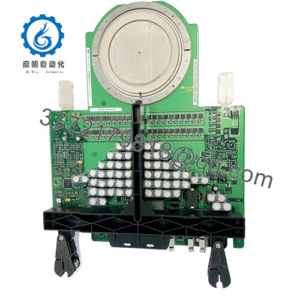
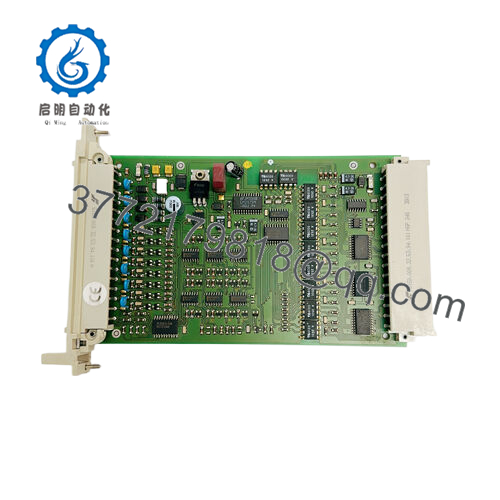
HIMA F3237 is an 8-channel safety-related input module for safety proximity switches, NAMUR sensors, and resistor-wired field devices. It is used in safety-critical control applications where line-break and short-circuit detection matter.
This module is chosen when the system needs a direct NAMUR-style safety input with built-in diagnostics and defined threshold behavior. The usual replacement risk is not the module itself, but matching the exact system revision, wiring, and safety logic before installation.

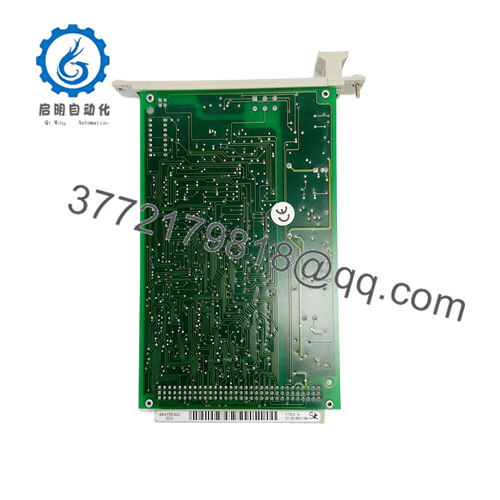
- F3237
Troubleshooting Quick Reference
| Symptom | Possible Cause | Relevance to This Part | Quick Check Method | Recommendation |
|---|---|---|---|---|
| No channel state changes | Missing 8.2 V sensor supply | ✅ High | Measure sensor supply at the module terminals with a multimeter | Check cabinet supply and field wiring before replacing the card |
| Channel stuck at fault | Open circuit, short circuit, or bad sensor | ✅ High | Measure loop current and compare it to the 0.35 to 6.0 mA range | Verify the field device and cable first |
| Multiple channels false trip | Grounding, shielding, or noise problem | ✅ High | Inspect shield termination and check line impedance | Fix wiring practice before condemning the module |
| Inputs slow to respond | Sensor spacing, filtering, or signal timing issue | ✅ Medium | Compare actual switching time with the expected 10 ms behavior | Review application timing and field device behavior |
| One channel dead, others normal | Local wiring fault or damaged input path | ✅ High | Swap the field wire to a known-good channel and retest | If the fault follows the channel, replace the module |
| Module appears dead | Backplane power or rack issue | ✅ Medium | Check rack supply and adjacent module status LEDs | Confirm rack power and slot condition first |
If you get stuck, send technical support photos of the label, rack slot, wiring, and diagnostic logs.
Frequently Asked Questions
Q: What is HIMA F3237?
A: It is an 8-channel safety-related input module for safety proximity switches, NAMUR sensors, and resistor-wired sensors. It is used in safety-critical systems that need fault detection on the field loop.
Q: Is this an analog input module?
A: No. It is commonly mislabeled online, but the technical descriptions identify it as a digital safety input module, not a 4-20 mA analog card.
Q: What voltage does it use?
A: The sensor supply is 8.2 V, and the module operating data listed by sellers includes 5 V DC at 90 mA and 24 V DC at 170 mA. Confirm the exact rack power arrangement before installation.
Q: What kind of sensors can it read?
A: It works with safety-related proximity switches, NAMUR sensors per DIN 19234, and resistor-wired sensors. That makes it a good fit for safety loops that need line-break and short-circuit supervision.
Q: Is it obsolete?
A: Treat it as an older, limited-stock part. That means condition, revision, and test status matter more than price alone.
Q: What should I check before swapping it?
A: Check the exact part number, input wiring, sensor type, line impedance, and the current 8.2 V supply. Also verify the system’s safety logic and channel assignment before power-up.
Q: Can I hot-swap it?
A: Do not assume so. For safety I/O, the safe move is to power down and verify the site procedure first, because a live swap can create false trips or wiring damage.