WhatsApp: +86 16626708626
 Email:
  Phone: +86 16626708626
Description
Key Technical Specifications
| Parameter | Specification |
|---|---|
| Model | H6200 |
| Documented HIMA Designation | H6200A |
| Manufacturer | HIMA Paul Hildebrandt GmbH + Co. KG |
| Product Type | HART analog repeater power supply |
| System Role | Analog instrumentation interface |
| Signal Technology | Analog + HART |
| Application | Safety-related process automation |
| Primary Function | Repeater / transmitter power interface |
| Safety Context | HIMA safety-system architecture |
| Exact Supply Rating | Verify from unit-specific documentation |
| Exact Channel Configuration | Verify from unit-specific documentation |
| Terminal Assignment | Verify from hardware revision/manual |
The available documentation does not provide sufficient evidence to safely specify the exact supply voltage, current rating, channel count, isolation arrangement, or terminal assignment for a generic H6200 designation. Those values should not be inferred from another H6000-series module.
Product Introduction
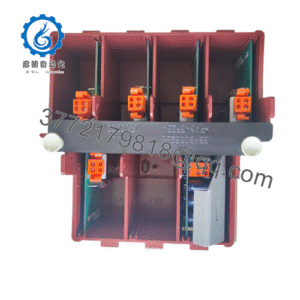
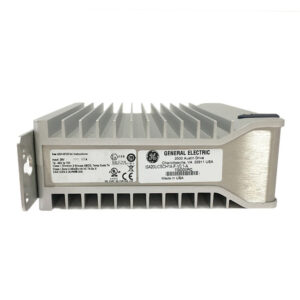
The HIMA H6200/H6200A is a HART analog repeater power supply used at the instrumentation interface level of HIMA safety-related automation systems. It is intended to interface HART-capable analog field instrumentation with the control or safety system.
This module should not be confused with a HIMA safety CPU. Available technical evidence specifically classifies H6200A as a HART analog repeater power supply rather than the primary safety-logic processor.
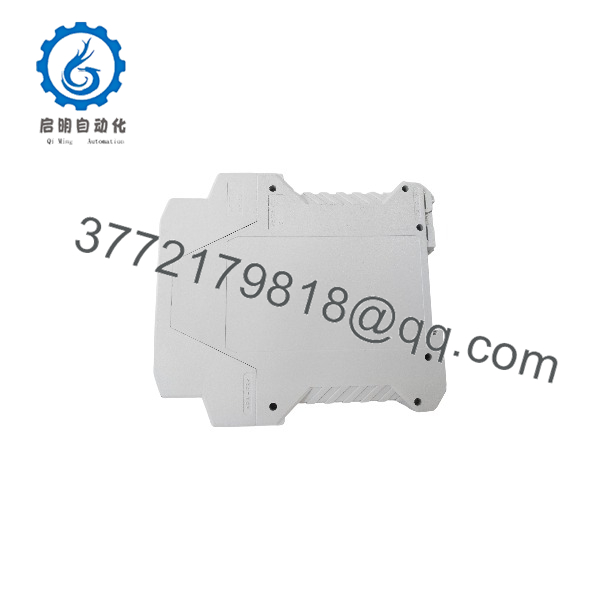
H6200
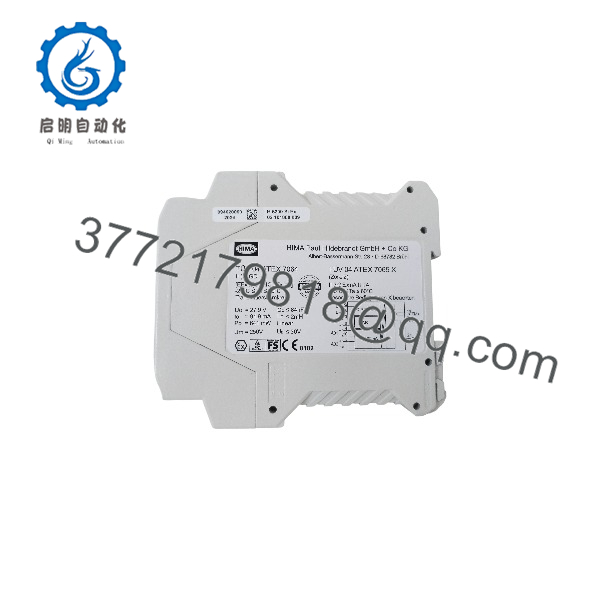
H6200
Installation & Configuration Guide
Step 1 — Verify the Exact Hardware
Before ordering or replacing the module, record:
- H6200/H6200A marking
- Complete HIMA article number
- Hardware revision
- Serial number
- Terminal arrangement
- Existing cabinet position
- Adjacent HIMA modules
Warning: H6200 and H6200A should not automatically be treated as interchangeable. Confirm the complete ordering designation.
Step 2 — Record the Existing Configuration
Before removing the module, document:
- Field transmitter connections.
- Analog signal wiring.
- HART communication connections.
- Power connections.
- Shielding and grounding.
- Any configuration or diagnostic information available from the HIMA system.
Do not assume the replacement contains application-specific configuration data.
Step 3 — Isolate the System
Follow the plant’s approved maintenance procedure and isolate the relevant safety-system power supply.
Verify the absence of hazardous voltage before disconnecting field wiring.
Use ESD precautions when handling the electronic module.
Step 4 — Remove the Existing Module
Label every conductor before removal.
Inspect the terminals and wiring for:
- Loose connections
- Corrosion
- Damaged insulation
- Shielding problems
- Incorrect polarity
- Evidence of overheating
Do not use another H6000-series module as a wiring reference simply because the physical form appears similar.
Step 5 — Install H6200/H6200A
Install the replacement in the approved mounting position and reconnect wiring according to the controlled HIMA documentation for the exact hardware revision.
Verify the electrical ratings before energizing. The exact ratings for the generic designation could not be established reliably from the available public documentation.
Step 6 — Commission and Test
After energization:
- Confirm module diagnostics.
- Verify analog signal transmission.
- Confirm HART communication where applicable.
- Check field transmitter status.
- Verify the corresponding safety-system input.
- Check for diagnostic or channel faults.
- Perform the required proof-test or functional test.
- Record the replacement and test results in the maintenance documentation.
For a safety-related installation, module replacement alone does not establish the required SIL performance. The complete safety function—including transmitter, interface, logic solver, final element, diagnostics, architecture, and proof-testing interval—must be assessed as an engineered system.
FAQ
Is a HIMA safety CPU?
No. The strongest available technical evidence identifies as a HART analog repeater power supply, not the primary safety CPU.
What is the difference between and ?
Public information is insufficient to establish every difference between the designations. Because is the designation supported by the available technical documentation, verify the exact suffix and article number on the physical unit before treating the two as equivalent.
Does support HART?
Yes. is documented as a HART analog repeater power supply, placing it at the analog instrumentation/HART interface layer.
Can be replaced with another HIMA H6000-series module?
Not based on the series number alone. Signal type, electrical ratings, terminal assignment, isolation, system configuration, and hardware revision must match the approved replacement specification.
Is obsolete?
The part appears in current secondary-market listings as a legacy component, but I would not use those listings alone as formal proof of OEM lifecycle status. For a controlled maintenance program, verify lifecycle status against HIMA documentation or the equipment’s approved spare-parts list.
What should be verified before purchasing ?
At minimum, verify the complete HIMA article number, / designation, hardware revision, terminal configuration, electrical ratings, and the exact HIMA system in which the module is installed. This is particularly important because secondary-market sources contain conflicting descriptions of this model.