WhatsApp: +86 16626708626
 Email:
 Phone: +86 16626708626
Description
Key Technical Specifications
| Parameter | Specification / Value |
| Manufacturer | HollySys Automation Technologies |
| Part Number | K-AI01 |
| System Family | HOLLiAS MACS-K Distributed Control System |
| Number of Channels | 8 individually isolated channels |
| Input Signal Range | 4–20 mA DC loop current (supports 0–5V / 0–10V configurations) |
| Analog-to-Digital Resolution | 16-bit A/D conversion |
| Measurement Accuracy | ±0.1% Full Scale @ 25°C |
| Galvanic Isolation | 1,500 VAC channel-to-channel; 2,500 VAC channel-to-backplane |
| Scan Refresh Rate | 2 ms module scan cycle |
| Field Loop Power | Integrated 24 VDC excitation power for 2-wire transmitters |
| Power Consumption | ≤ 3.0 W via backplane bus |
| Operating Temperature | −40°C to +70°C (−40°F to +158°F) |
| Mounting & Dimensions | Standard DIN rail mount; 98 mm (H) × 45 mm (W) × 110 mm (D) |
Product Introduction & Supply Chain Strategy
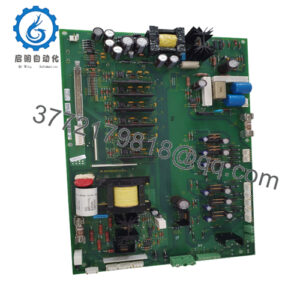
The HollySys K-AI01 is an 8-channel isolated analog input module engineered for the HOLLiAS MACS-K DCS architecture. It converts 4–20 mA field signals—from flow meters, pressure transmitters, level sensors, and temperature loops—into high-precision 16-bit digital values. Built with robust channel-to-channel isolation, it eliminates ground loop interference and protects central processing units across demanding chemical, power generation, and refining operations.
Securing the K-AI01 as New Surplus allows plant engineers to mitigate stock-out risks without paying emergency OEM expediting premiums. Purchasing factory-fresh surplus eliminates the hidden degradation, degraded filter capacitors, and drift issues common to second-hand hardware, ensuring 100% loop uptime, long-term operational integrity, and a low Total Cost of Ownership (TCO).
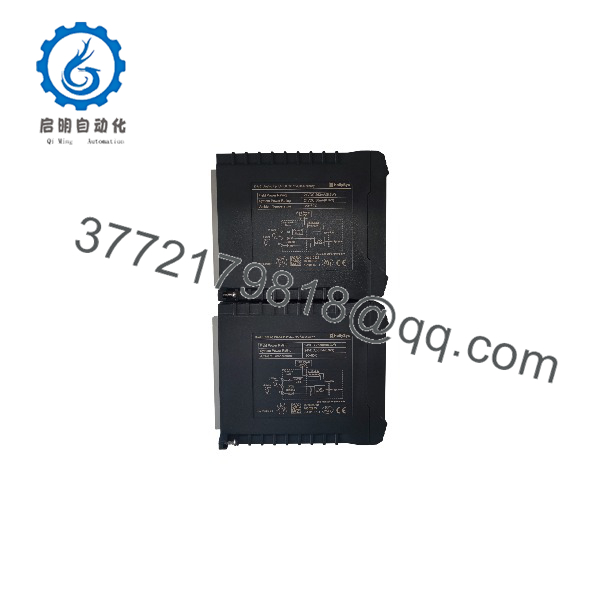
K-AI01
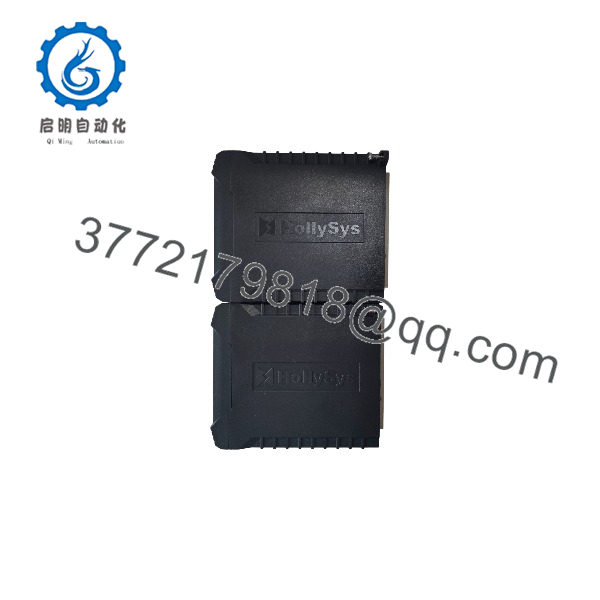
K-AI01
Installation & Configuration Guide
1.Pre-Installation Preparation:Prerequisite & Safety Setup.
Execute full lock-out/tag-out (LOTO) procedures on the target I/O cabinet rack. Wear a grounded wrist strap to prevent ESD damage to sensitive analog conversion circuitry. Photograph the DIP switch configuration and terminal block wiring on the old module to ensure an exact visual reference prior to extraction.
2.Module Removal:Mechanical Extraction.
Unscrew the field terminal wiring block or disconnect the quick-release connector strip. Loosen the upper and lower panel retention screws. Carefully actuate the module release levers to disengage the backplane bus pins without placing lateral torque on the DIN rail guide rails.
3.Configuration and Seating:Address Copy & Insertion.
Match the hardware address DIP switches and jumper configurations on the new K-AI01 module to mirror the old unit exactly. Align the module casing with the MACS-K rack guide tracks. Push the module firmly inward until the backplane connectors seat completely, then tighten the securing screws.
4.Power-On, LED Check, and Diagnostics:Loop Verification & Commissioning.
Reattach the field terminal block. Re-energize the rack’s 24 VDC power supply rail. Verify that the module power LED shines green and the channel status LEDs reflect active loop currents. Open the MACS-K engineering workstation tool to confirm communication synchronization and verify that live process variables display accurately.
Firmware/Software Versions & Upgrade Notes
- System Compatibility: The HollySys K-AI01 operates natively within HOLLiAS MACS-K DCS configurations. Verify that the software project hardware configuration file matches the module hardware index.
- Redundancy Configurations: When deployed in redundant I/O configurations, ensure both master and secondary K-AI01 cards run identical hardware revisions to prevent bus arbitration delays or scan synchronization mismatches.
- Swap Precautions: Avoid modifying base system firmware revisions during a hot-swap or emergency replacement procedure. A mismatch between CPU firmware and module hardware profiles can trigger backplane communication watchdogs, causing signal drops across adjacent I/O modules on the same rack segment.
Frequently Asked Questions (FAQ)
Why is New Surplus preferred over refurbished units for critical DCS loops?
Refurbished analog modules frequently suffer from thermal stress degradation, degraded internal filter capacitors, and drift in reference voltage components. This causes inaccurate process readings or sudden component failure. Our New Surplus K- modules are uninstalled, pristine units stored in ESD-safe packaging, delivering OEM reliability without used-component risks.
How can I verify that this HollySys K- module is authentic and unused?
Every unit undergoes a strict inbound inspection protocol. We verify factory serial numbers, check for zero insertion wear on backplane pin connectors, inspect for original anti-static bags, and perform full functional rack testing before shipment. A full QC test report accompanies each module.
Does the K- provide power to two-wire field transmitters directly?
Yes. The K- includes built-in 24 VDC excitation power on its terminal channels, allowing it to drive passive two-wire current loop transmitters directly without needing an auxiliary power supply module.
Will replacing this module require re-downloading the MACS-K control software?
No. The K- is an input interface card that converts physical currents to digital values. The control logic resides in the central MACS-K controller. As long as the replacement unit’s hardware DIP switch address matches the original module, the CPU will automatically recognize it and resume processing data upon boot-up.
What warranty coverage is provided with this module?
We support this New Surplus HollySys K- module with a comprehensive 1-year functional replacement warranty. In the event of any hardware malfunction under standard operating conditions, we provide a direct unit replacement or full refund to protect your plant maintenance budget.