WhatsApp: +86 16626708626
 Email:
  Phone: +86 16626708626
Description
Key Technical Specifications
| Parameter | Specification |
|---|---|
| Manufacturer | Honeywell Analytics |
| Part Number | 2106B1110 |
| Functional Description | Catalytic Bridge to 4-20 mA Converter |
| Supply Voltage | 18-30 V DC |
| Output Signal | 4-20 mA |
| Sensor Current | 170-300 mA |
| Maximum Sensor Output Voltage | 10 V |
| Zero Adjustment, Wide | ±200 mV bridge offset |
| Zero Adjustment, Narrow | ±30 mV bridge offset |
| High Sensitivity | 15-150 mV bridge voltage for 20 mA |
| Low Sensitivity | 60-600 mV bridge voltage for 20 mA |
| Linearity | Better than ±2% FSD |
| Stability | Better than ±2% FSD |
| Operating Temperature | 0 to 50 °C |
| Enclosure Protection | IP20 |
| Factory Zero Setting | Narrow |
| Factory Sensitivity Setting | Low |
| Factory Output Configuration | Sink |
| Factory Bead Current | 170 mA |
| Mounting | DIN rail |
The technical manual specifies an 18–30 V DC supply, 170–300 mA sensor current, 10 V maximum sensor voltage, and ±2% FSD maximum stated linearity and stability figures.
Product Introduction
The Honeywell Analytics 2106B1110 is a catalytic-bridge signal converter designed to interface a catalytic gas sensor with a 4-20 mA instrumentation loop. It accepts the low-level bridge signal generated by the catalytic sensor and converts it into a current output suitable for connection to compatible monitoring or control equipment.
This is a legacy gas-detection component, not a general-purpose analog signal conditioner. Its sensor excitation, bridge sensitivity, zero adjustment, and sink/source configuration must match the connected detector architecture. Honeywell announced the product’s discontinuation because alternatives were available that incorporated 4-20 mA output without requiring this separate converter.
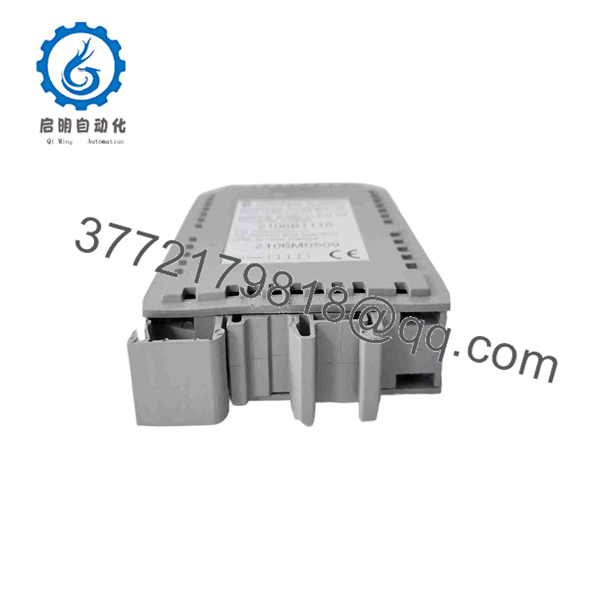
2106B1110
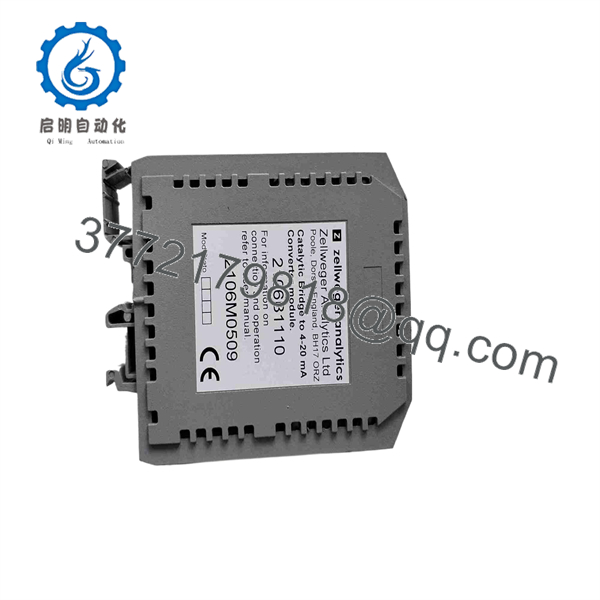
2106B1110
Installation & Configuration Guide
Stage 1: Pre-Installation Preparation — 10–15 Minutes
⚠️ Safety First: Gas-detection equipment can form part of a personnel or plant protection system. Put the affected detection channel into its approved maintenance/bypass state before disconnecting the converter. Follow the site’s LOTO and gas-testing procedures.
Tools Required:
- ESD wrist strap
- Digital multimeter
- Small screwdriver
- Wire labels
- Smartphone/camera
- Approved calibration/test equipment
- Appropriate gas-detection service documentation
Data Backup:
- Record the exact 2106B1110 part number.
- Record the existing detector/sensor model.
- Photograph the complete terminal wiring.
- Record supply voltage.
- Record the 4-20 mA loop configuration.
- Photograph the LK1, LK2, and LK3 jumper/link settings.
- Record the existing bead current.
- Document the connected controller, gas panel, or monitoring system.
- Record calibration information before removal.
⚠️ Critical: The 2106B1110 has configurable link settings. The documented factory defaults are LK1 narrow zero adjustment, LK2 low sensitivity, and LK3 sink output. Do not assume those settings match the installed detector.
Stage 2: Removing the Old Converter — 5–10 Minutes
- Place the gas-detection channel into the approved maintenance state.
- Follow the site’s isolation procedure.
- Verify the DC supply before disconnecting wiring.
- Label every conductor.
- Photograph the terminal arrangement.
- Photograph all jumper/link positions.
- Disconnect the sensor wiring.
- Disconnect the 4-20 mA loop.
- Disconnect the DC supply.
- Release the unit from the DIN rail.
- Inspect the wiring for corrosion, loose terminals, or damaged insulation.
- Retain the original converter until the replacement has been calibrated and verified.
Stage 3: Installing the New Converter — 10–15 Minutes
- Verify the replacement is Honeywell 2106B1110.
- Check the physical condition and terminal markings.
- Mount the unit securely on the DIN rail.
- Confirm the sensor type and detector compatibility.
- Reproduce the original LK1 setting.
- Reproduce the original LK2 sensitivity setting.
- Reproduce the original LK3 sink/source configuration.
- Reconnect the catalytic bridge sensor.
- Reconnect the 4-20 mA loop.
- Reconnect the 18-30 V DC supply.
- Verify polarity before energizing.
- Check that the loop wiring agrees with the receiving controller’s input architecture.
Self-Checklist:
- 2106B1110 verified
- Sensor type verified
- LK1 setting copied
- LK2 setting copied
- LK3 setting copied
- Sensor wiring checked
- 4-20 mA wiring checked
- DC polarity checked
- DIN rail mounting secure
Stage 4: Power-On & Testing — 20–40 Minutes
- Verify the wiring against the original drawing.
- Measure the DC supply before energizing.
- Apply power to the converter.
- Confirm the catalytic sensor receives the expected excitation.
- Check the 4-20 mA loop current.
- Verify the zero condition.
- Perform the manufacturer’s required calibration procedure.
- Apply an appropriate certified test gas where required.
- Verify the expected current response.
- Confirm the receiving gas panel or PLC registers the correct value.
- Check alarm thresholds.
- Restore the detection channel from maintenance/bypass.
- Confirm normal monitoring operation.
⚠️ Do not treat a 4-20 mA reading alone as proof that the gas detector is functional. The sensor bridge, converter, loop, controller input, alarm configuration, and calibration all form part of the measurement chain.
Common Replacement Pitfalls
❗ 1. Wrong Sensitivity Link
LK2 determines the sensitivity range. The manual specifies different bridge-voltage ranges for high- and low-sensitivity settings. Copy the existing setting before removing the old converter.
❗ 2. Incorrect Sink/Source Configuration
The factory LK3 setting is Sink, but the installed system may have a different configuration. Verify the original installation rather than blindly restoring factory defaults.
❗ 3. Incorrect Sensor Current
The specified sensor current is 170-300 mA, with 170 mA documented as the factory bead-current setting. Incorrect excitation can produce an apparently plausible but inaccurate detector signal.
❗ 4. Treating It as a Generic 4-20 mA Converter
It is not. The 2106B1110 is specifically designed around a catalytic bridge sensor. Replacing it with a generic signal conditioner without verifying bridge excitation and sensitivity can produce incorrect gas readings.
❗ 5. Ignoring Its Discontinued Status
Honeywell’s product notice identifies the 2106B1110 as discontinued, with alternatives such as Sensepoint XCD, Series 3000, and XNX Universal Transmitters offering 4-20 mA output without requiring the separate converter.
Frequently Asked Questions (FAQ)
1. What is the Honeywell 2106B1110?
The 2106B1110 is a Honeywell Analytics Catalytic Bridge to 4-20 mA Converter. It interfaces a catalytic gas sensor with a conventional 4-20 mA monitoring loop.
2. What power supply does the 2106B1110 require?
The documented supply range is 18-30 V DC. The sensor section can provide up to 10 V to the sensor, with a specified sensor-current range of 170-300 mA.
3. Is the 2106B1110 still manufactured?
No. Honeywell issued a product notice identifying the 2106B1110 as discontinued. The notice gives April 30, 2017 as the last-order date and July 14, 2017 as the last factory shipment date.
4. Can I replace the 2106B1110 with any 4-20 mA converter?
No. The device is specifically designed for a catalytic bridge sensor. A generic 4-20 mA converter may not provide the required sensor excitation, bridge sensitivity, or calibration behavior.
5. What are the LK1, LK2, and LK3 settings?
The technical manual identifies LK1 as the zero-adjustment range, LK2 as input sensitivity, and LK3 as sink/source configuration. Factory defaults are narrow zero adjustment, low sensitivity, and sink output.
6. What should I verify when buying a surplus 2106B1110?
Verify the exact 2106B1110 part number, physical condition, terminal condition, jumper/link configuration, and functional test results. Because the product is discontinued, also establish whether the supplied unit is factory-new surplus, previously installed, or refurbished. Current secondary-market listings distinguish unused original packaging from refurbished units.
7. Is there a newer replacement for the 2106B1110?
Honeywell’s discontinuation notice identifies Sensepoint XCD, Series 3000, and XNX Universal Transmitters as alternatives that provide a 4-20 mA output without requiring this separate catalytic-bridge converter. These are system-level alternatives rather than automatically interchangeable plug-in replacements, so the sensor, enclosure, hazardous-area certification, wiring, and controller interface must be reviewed before migration.