WhatsApp: +86 16626708626
 Email:
  Phone: +86 16626708626
Description
Key Technical Specifications
- Manufacturer: Honeywell
- Full Model: MC-TDID52
- Part Number: 51304441-275
- Product Type: 24 V DC digital input module / digital input field termination assembly
- System Family: Honeywell Series 8 process I/O; verify exact Experion PKS architecture
- Input Channel Count: 32 digital input channels
- Nominal Field Signal: 24 V DC discrete input
- Listed Input Current: 10 mA per input, subject to OEM confirmation
- Signal Types: Dry-contact status, 24 V DC proximity-switch signal, relay contact, auxiliary contact, and discrete field-state indication
- Primary Use: Transfers field-device ON/OFF status to the Honeywell controller and process-control application
- Field Wiring Requirement: Confirm common reference, polarity, channel grouping, fuse protection, and terminal assignment from the installed drawing
- Termination Hardware: Must match the installed FTA and field wiring arrangement
- Hot-Swap Status: Do not assume hot swapping is allowed; follow site-approved Series 8 maintenance and bypass procedures
- Replacement Requirement: Match MC-TDID52 and 51304441-275; do not substitute similar MC-TDID variants without confirming channel count, field voltage, termination, and system compatibility
Available market records consistently identify 51304441-275 as Honeywell MC-TDID52, a 24 V DC digital input module with 32 input channels. One distributor also lists a 10 mA input-current figure, but verify that value against Honeywell documentation for the exact installed hardware before engineering a circuit around it.
Product Introduction
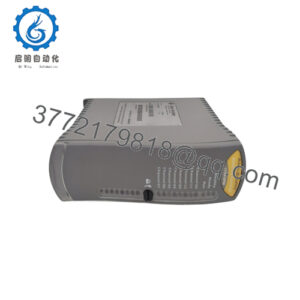
The Honeywell 51304441-275, model MC-TDID52, is a 32-channel 24 V DC digital input module used to bring discrete field-device status signals into a Honeywell process-control system. Typical inputs include limit switches, relay contacts, motor-starter auxiliaries, valve feedbacks, proximity sensors, and alarm contacts.
The MC-TDID52 is selected when an existing installation requires the same channel count, field voltage, and termination arrangement without reworking the controller database or marshalling wiring. Confirm the installed field terminal assembly, input common, channel mapping, and complete part label before ordering. Similar Honeywell digital-input modules can look alike while using different voltage ratings or wiring schemes.
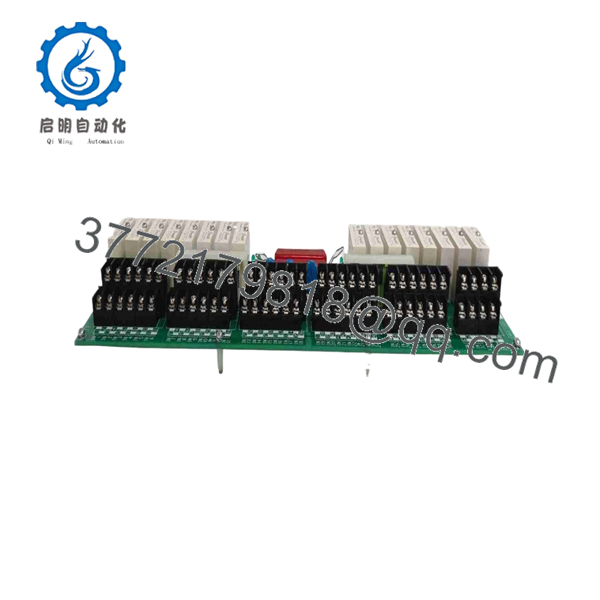
51304441-275 MC-TDID52
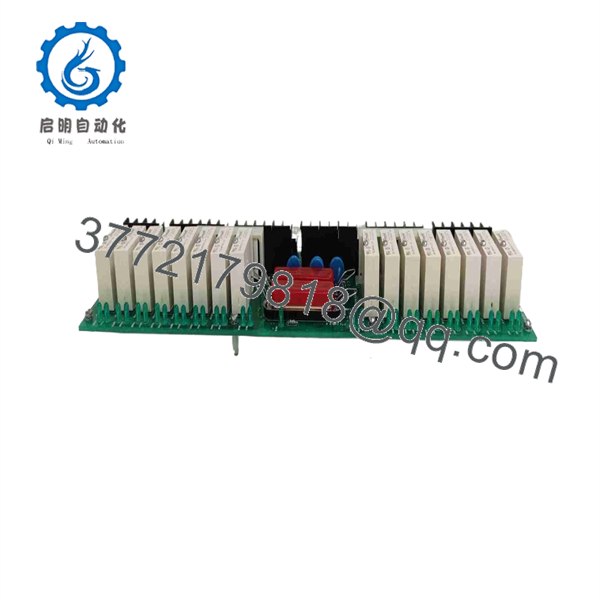
51304441-275 MC-TDID52
Troubleshooting Quick Reference
| Symptom | Possible Cause | Relevance to This Part | Quick Check Method | Recommendation |
|---|---|---|---|---|
| All 32 input points are off | Missing 24 V DC field supply, failed common reference, loose field termination, controller or I/O communication issue | ⚠️ Medium | Measure 24 V DC between the designated field supply and common at the FTA using the approved drawing; check controller and I/O diagnostics | Verify field supply and common wiring before replacing the module |
| One input remains permanently off | Failed limit switch, broken sensor cable, open fuse, loose terminal, failed input channel | ⚠️ Medium | Change the physical field state, then measure the input voltage at the field device and the corresponding FTA terminal | Check the sensor, cable, fuse, and terminal before condemning the input channel |
| One input remains permanently on | Shorted cable, failed proximity sensor, incorrect wiring, wrong common connection, failed input circuit | ⚠️ Medium | Disconnect the field wire under approved procedures and observe the controller point; measure field voltage and inspect cable insulation | Isolate field wiring before replacing the module |
| Several adjacent inputs fail together | Shared fuse open, common connection failure, terminal-strip issue, wiring harness damage, channel-group problem | ✅ High | Identify the affected channel group from the I/O map; inspect shared supply/common terminals and continuity of the associated harness | Check grouped field wiring and FTA connections first |
| Input state chatters or pulses | Loose terminal, mechanical contact bounce, electrical noise, poor sensor supply, VFD interference | ❌ Usually Low | Trend the point in the controller, inspect terminal torque, and measure sensor supply during load changes | Correct field wiring, debounce settings, grounding, or sensor supply before replacement |
| Module fault begins after replacement | Incorrect MC-TDID variant, wrong terminal assembly, miswired common, bent connector contact, incorrect slot assignment | ✅ High | Compare old and replacement labels, connectors, FTA type, field wiring, and hardware configuration; inspect for bent pins | Stop and correct the installation before powering the system |
| Controller shows I/O communication fault | I/O link issue, controller interface problem, loose module seating, backplane fault, failed module | ⚠️ Medium | Check adjacent I/O modules, network or I/O link diagnostics, module seating, and controller fault logs | Diagnose the I/O subsystem before replacing the MC-TDID52 |
| Input changes at the FTA but not in the controller | Failed module channel, incorrect database assignment, point inhibited, scan/configuration issue | ✅ High | Measure 24 V DC at the correct FTA point while monitoring the assigned controller tag and channel mapping | Verify configuration first; replace the module if the field signal is proven at the correct terminal |
Field warning: A digital-input module is often blamed for faults caused by the field circuit. A broken proximity sensor cable, blown field fuse, failed relay auxiliary, poor common connection, or a miswired contact can produce the exact same “bad channel” symptom. Measure the signal at the FTA before removing the MC-.
❗ Do not confuse MC- with other MC-TDID models: Honeywell uses closely related digital-input identifiers. One listing identifies MC-TDID12 as a 24 V DC FTA with 32 inputs, while 51304441-275 is repeatedly identified as MC-. Match the exact installed model and full part number, not just the “TDID” family name.
❗ Photograph the terminal block first: Before disconnecting any field wiring, take high-resolution photos showing terminal labels, wire numbers, jumper links, common terminals, fuse locations, and cable shields. It is the most common rookie mistake, but it happens constantly. Take a picture before you touch anything. Seriously.
❗ Check the input common: A missing or incorrect common can disable multiple inputs at once. Do not assume every 24 V DC digital input uses the same sourcing/sinking convention. Use the Honeywell wiring drawing for the installed FTA and confirm polarity at the actual terminals.
❗ Do not wire from memory: A 24 V DC indication point may be sourced through a relay contact, transistor sensor, dry contact with external wetting supply, or an auxiliary contact. Verify the approved loop drawing and field-device specification before applying a test voltage.
❗ ESD protection: Wear a grounded wrist strap when handling the module and keep it in antistatic packaging until installation. I have seen a technician swap a healthy card after a field-wiring fault, then create a second intermittent issue through poor ESD handling. Use the strap.
Keep these checks in mind and you will save yourself 90% of typical rework time. If the problem remains unclear, provide technical support with photos of the module and FTA labels, the affected terminal points, controller diagnostics, point trends, and measured field voltages.
Frequently Asked Questions
What is Honeywell MC- 51304441-275?
Honeywell MC-, part number 51304441-275, is a 24 V DC digital input module identified in supplier records as having 32 input channels. It collects discrete field states and transfers them to the Honeywell control system for logic, alarms, permissives, sequences, and operator display.
How many input channels does the MC- have?
Available listings specify 32 digital input channels. Confirm the actual channel assignment, wiring groups, common-reference arrangement, and controller database mapping in the installed Honeywell system before using the module as a direct replacement.
Does MC- use 24 V AC or 24 V DC inputs?
It is identified as a 24 V DC digital input module. Do not apply 24 V AC or another voltage based on appearance or a generic terminal label. Verify the field supply and input-circuit details from the exact Honeywell wiring documentation before testing an input.
Can I hot-swap the Honeywell 51304441-275 module?
Do not assume it is hot-swappable. Whether replacement can occur under power depends on the installed Honeywell I/O architecture, termination assembly, process risk, current output states, bypass requirements, and your site’s approved maintenance procedure. For a live process, isolate the correct supply and follow the approved bypass-management and lockout/tagout process.
Will I lose point configuration when replacing MC-?
Usually, point configuration resides in the Honeywell controller database or engineering project, but you should not rely on that assumption. Before removal, record channel assignments, tag names, alarm behavior, forcing status, point inhibition, input debounce, and logic dependencies. Back up the engineering database through the approved site process.
Can I replace MC- with MC-TDID12?
Not without documentation confirming the interchangeability of the exact installed hardware. Both identifiers appear in market listings as 24 V DC, 32-input digital termination products, but that does not establish identical internal wiring, connector assignment, controller support, or field termination. Match the exact unit installed in your cabinet.
Is Honeywell 51304441-275 obsolete?
Treat it as a legacy Honeywell process-I/O spare. It remains available through independent distributors and surplus suppliers, but actual availability, condition, lead time, and revision status change with inventory. Confirm photographs of the offered unit, full part number, condition, and warranty before issuing a purchase order.
Why is a New Surplus unit less expensive than a factory order?
New Surplus means unused inventory that may have come from cancelled projects, plant maintenance stock, equipment decommissioning, or warehouse liquidation. It may be new but not factory sealed. The lower price can reflect storage age, packaging condition, and supply-chain origin. Require label photos, storage-history information, connector inspection, test evidence, ESD-safe packing, and a stated warranty.
What testing should a supplier perform?
For an MC- digital-input module, request testing tied to the actual offered unit:
- Verify the exact Honeywell MC- / 51304441-275 labels and visible revision markings
- Inspect the housing, connectors, pins, terminal assembly interface, latches, and mounting features
- Check for corrosion, bent contacts, cracked plastic, rework marks, contamination, and damaged labels
- Install the unit in a compatible Honeywell test station, when available
- Apply controlled 24 V DC test signals to each applicable input channel
- Confirm each channel changes state correctly in the test system
- Check for channel-to-channel interaction, intermittent response, and abnormal current draw
- Run the module long enough to verify stable communication and thermal behavior
- Provide test results, QC sign-off, actual-unit photos or video, ESD-safe packaging, and written warranty terms
Test videos and photos should be available upon request. For a process-control spare, “powers on” is not a functional test; the supplier should verify input-state recognition across the relevant channels.