WhatsApp: +86 16626708626
 Email:
  Phone: +86 16626708626
Description
Key Technical Specifications
- Manufacturer: Honeywell
- Part Number: 51304542-100
- Known Board Identification: KLCN-I/O_CA
- Product Type: I/O control board / LCN A cable interface converter board
- System Family: Honeywell TDC 3000 Local Control Network architecture
- Primary Application: KLCN dual-node chassis connection to the LCN
- Communication Medium: Coaxial cable interface
- System Role: Provides the LCN-side cable connection for a separate KLCN node
- Associated Hardware: KLCN chassis and related node-interface assembly
- Known Revision Example: 51304542-100 Rev. E
- Known Companion Board Example: 51304541-100 Rev. B
- Installation Requirement: Confirm the complete board label, revision, companion-board relationship, and installed chassis position
- Connector Requirement: Inspect coax connectors, center contacts, shielding, and retention hardware before installation
- Interchangeability: Do not assume different revisions or KLCN board variants are interchangeable without Honeywell documentation
- Condition Note: Available units may be New Surplus, Refurbished, or Used Removed From Working Equipment; inspect the specific offered unit
Supplier records consistently identify 51304542-100 as a Honeywell KLCN I/O control board or LCN A cable-interface board. One detailed listing identifies a Rev. E 51304542-100 used with a Rev. B 51304541-100 companion board, while another describes it as the coaxial connection used in a dual-node chassis to connect a separate node to the LCN.
Product Introduction
The Honeywell 51304542-100 is a KLCN-I/O_CA control board used in Honeywell TDC 3000 Local Control Network installations. It provides the coaxial LCN interface associated with KLCN dual-node chassis hardware, allowing the separate node to connect to the system communication network. It is a network-interface board, not a standard 24 V DC digital-input card.
This board is normally sourced as an exact legacy spare when a KLCN node loses network communication or requires replacement during maintenance. Match the installed board revision, companion hardware, coax connector type, chassis location, and network architecture before ordering. A board that physically fits but uses an incompatible revision can prevent the node from joining the LCN.
Troubleshooting Quick Reference
| Symptom | Possible Cause | Relevance to This Part | Quick Check Method | Recommendation |
|---|---|---|---|---|
| KLCN node is offline from the LCN | Failed KLCN interface board, loose coax connection, damaged coax cable, node power loss, chassis fault | ✅ High | Check node and chassis diagnostics, then inspect both coax ends for full engagement, damaged center contact, loose connector shell, and cable damage | Verify power and coax integrity before replacing the board |
| Intermittent LCN communication alarms | Loose coax connector, poor shield connection, cable damage, connector oxidation, network termination issue | ✅ High | Review alarm timestamps; inspect cable routing and connector retention; check for vibration-related changes during an approved outage | Reseat and inspect connectors; replace damaged coax cable before replacing the board |
| Node fails after replacement board installation | Wrong board revision, incompatible companion board, incorrect chassis slot, bent connector pin, disturbed coax cable | ✅ High | Compare the removed and replacement boards: part number, revision, connector type, board layout, jumpers, and companion-board identifiers | Stop commissioning until all differences are explained |
| Multiple nodes show communication faults | LCN trunk fault, power-system issue, network termination fault, master/network equipment issue | ❌ Usually Low | Compare diagnostics across nodes; inspect common LCN infrastructure and power-system status | Troubleshoot the shared LCN path before replacing a single 51304542-100 board |
| One node powers up but does not communicate | Incorrect node configuration, failed interface board, damaged coax port, connector issue | ⚠️ Medium | Confirm node configuration against the approved network records; inspect the board’s coax interface and test cable continuity as permitted | Confirm network configuration and cable condition before replacement |
| Communication fault begins after cabinet work | Coax disturbed, connector not tightened, shield damaged, board not fully seated | ✅ High | Inspect recent work area, connector seating, board guides, and cable routing; compare with pre-maintenance photos | Restore cable routing and connector engagement before further troubleshooting |
| No board indication or node diagnostics available | Missing chassis supply, failed power distribution, improper board seating, board failure | ⚠️ Medium | Measure approved chassis supply rails at documented test points and inspect backplane contacts under controlled isolation | Repair supply or seating issue before replacing the board |
| Visible corrosion around coax interface | Moisture ingress, contaminated cabinet, long-term oxidation, damaged connector plating | ✅ High | Inspect under magnification for corrosion, bent center contacts, residue, or shield damage | Remove from service and correct the cabinet-environment issue before installing a replacement |
Field warning: A KLCN network fault is not automatically a failed 51304542-100 board. Coax connectors, cable shields, trunk connections, node power, termination, and shared LCN infrastructure fail more often than technicians expect. Start at the connector and network diagnostics before pulling a board.
❗ Do not mistake this for a digital-input module: Some generic reseller descriptions classify 51304542-100 as a digital-input or PLC module. The more specific KLCN and LCN cable-interface records identify it as a KLCN-I/O_CA network-interface board. Do not apply 24 V DC input test signals or field I/O wiring to it.
❗ Revision and companion-board matching: Record the entire label set before removal. A documented used assembly included 51304542-100 Rev. E with companion board 51304541-100 Rev. B. That does not establish universal pairing, but it proves that revision-level identification matters.
❗ Coaxial connector care: Do not twist, pull, or force coax cable connectors. Inspect the center pin, socket, braid/shield termination, locking hardware, and cable bend radius. A damaged center contact can look acceptable from a distance and still cause intermittent LCN faults.
❗ Network changes require control: Photograph every cable before touching it. Label both ends, record the chassis position, and retain the original routing. It is the most common rookie mistake, but it happens constantly. Take a picture before you touch anything. Seriously.
❗ Do not replace hardware during an unexplained network event: If several LCN nodes fault together, investigate common network infrastructure, shared power, and trunk integrity. Replacing one KLCN board in that situation may create additional downtime without addressing the root cause.
❗ ESD precautions: Wear a grounded wrist strap, use an ESD-safe work surface, and transport the board in protective packaging. Network-interface electronics can be damaged without visible evidence, then fail only after being returned to service.
Keep these checks in mind and you will save yourself 90% of typical rework time. If you are stuck, provide technical support with front-and-back board photos, complete revision labels, companion-board details, coax connector photos, node diagnostics, and a diagram of the affected LCN segment.
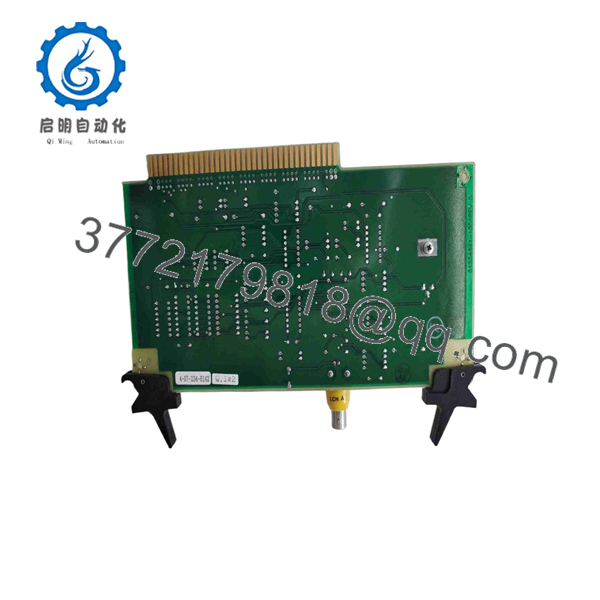
51304542-100
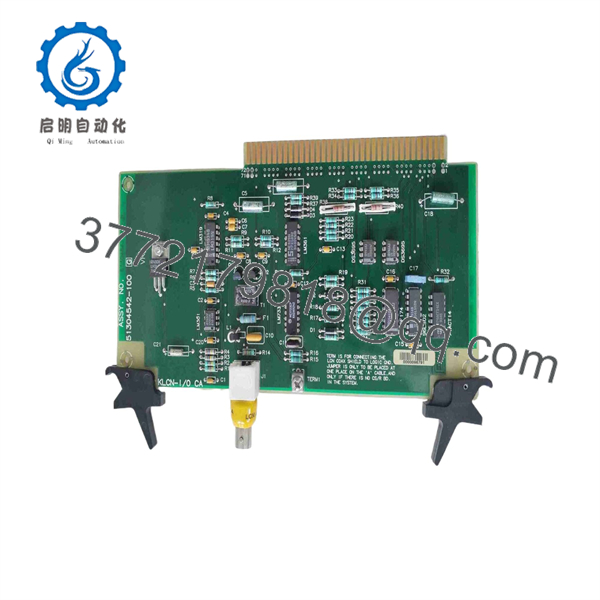
51304542-100
Frequently Asked Questions
What is Honeywell 51304542-100?
Honeywell 51304542-100 is a KLCN-I/O_CA control board or LCN A cable-interface board used in Honeywell TDC 3000 Local Control Network installations. Supplier records describe it as the coaxial cable connection used in KLCN dual-node chassis hardware to connect a separate node to the LCN.
Is 51304542-100 a standard digital-input module?
No. Do not rely on generic listings that call it a digital-input module. The specific KLCN-I/O_CA and LCN A cable-interface descriptions identify it as a communications-interface board for the Local Control Network, not as a field digital-input card.
What does KLCN-I/O_CA mean?
KLCN-I/O_CA is the board identification used in market listings for 51304542-100. The available descriptions associate it with KLCN hardware and an LCN A coaxial cable interface. Confirm the exact Honeywell system drawing for the installed node, because the full architecture, slot location, and companion-board arrangement are site-specific.
Can I replace 51304542-100 without shutting down the network?
Do not assume hot replacement is permitted. This board supports communication between a KLCN node and the LCN. Pulling it while active can take a node offline, create process alarms, interrupt operator functions, or affect redundant-node operation. Follow the approved Honeywell maintenance procedure, bypass-management process, and site change-control requirements.
Can I use a different revision of the 51304542-100 board?
Only after verifying compatibility. One documented resale listing identifies 51304542-100 Rev. E with 51304541-100 Rev. B, but that is only an example of an installed or offered hardware combination. Match the old board’s revision, companion board, firmware markings, connector arrangement, and hardware configuration whenever possible.
How do I confirm compatibility before ordering?
Provide clear photos of both sides of the original board, including every label, revision marking, barcode, jumper, coax connector, and board-edge connector. Also provide the KLCN chassis model, node position, companion-board part number, LCN cable type, and a description or screenshot of the network diagnostics.
Is Honeywell 51304542-100 obsolete?
Yes. Treat it as a legacy TDC 3000 / KLCN spare. Public availability appears to be through surplus and independent industrial suppliers, including listings for used Rev. E hardware. Actual stock, condition, revision, and warranty vary by seller.
Why is a New Surplus board cheaper than a factory replacement?
New Surplus inventory typically comes from unused maintenance stock, system upgrades, cancelled projects, or warehouse liquidation. It may be unused but not factory sealed. With legacy LCN hardware, the relevant questions are label accuracy, revision match, connector condition, storage environment, test method, warranty, and return terms—not just the appearance of the board.
What testing should a supplier perform before shipment?
For a Honeywell KLCN-I/O_CA board, request evidence tied to the exact offered unit:
- Verify the full 51304542-100 identification and visible revision markings
- Photograph the front, rear, coax interface, board-edge connector, jumpers, and any companion-board labels
- Inspect for corrosion, bent or recessed coax contacts, cracked solder joints, damaged connector housings, contamination, and prior rework
- Test board seating and communications only in a compatible Honeywell KLCN/LCN test setup where available
- Confirm stable node communication over the correct coax interface during an extended run
- Check for communication errors, link loss, abnormal heating, and intermittent response
- Document the test configuration, board revision, duration, observed diagnostics, and results
- Seal the board in ESD-safe packaging with connector protection, foam support, heavy-duty boxing, QC sign-off, and written warranty terms
Test photos and videos should be available upon request. A supplier should identify the offered condition plainly as New Original / New Surplus, Refurbished (tested), or Used Removed From Working Equipment.