WhatsApp: +86 16626708626
 Email:
 Phone: +86 16626708626
Description
Core Product Summary
The Honeywell Alerton VLC-16160 is a BACtalk field controller from the Alerton VisualLogic controller family for building automation. It is a fully programmable logic controller providing sixteen universal inputs and sixteen binary outputs, aimed at central plant systems, lighting panels, and other applications with numerous control points. As a native BACnet controller, it communicates on a BACnet MS/TP LAN at up to 76.8 Kbps and can also operate as a stand-alone controller.
The sixteen inputs offer 10-bit resolution and are software configurable per point to accept thermistor or dry contact, 1–5 VDC, or 4–20 mA signals; input 0 can host an Alerton Microset wall sensor. Each of the sixteen triac binary outputs is rated 24 VAC at 0.47 A with a common fused 24 VAC connection, and up to 100 mA of 24 VDC auxiliary power is available for transducers. The controller runs an internal logic loop of 100 ms, stores all programming in nonvolatile flash memory, and is listed to UL Standard 916 for Open Energy Management Equipment with BTL-tested ASC-level BACnet conformance.
Key Technical Specifications
| Parameter | Value |
|---|---|
| Product type | Fully programmable BACnet field controller (DDC) |
| Family | Honeywell Alerton BACtalk VisualLogic controllers |
| Inputs | 16 universal inputs, 10-bit resolution, software configurable: thermistor/dry contact, 1–5 VDC, or 4–20 mA |
| Wall sensor support | Input 0 usable for BACtalk Microset, Microset II, and Microtouch intelligent wall sensors |
| Binary outputs | 16 hot-switched triac outputs, each rated 24 VAC, 0.47 A, common connection to the fused 24 VAC supply |
| Auxiliary power output | Up to 100 mA of 24 VDC for transducers or other devices |
| Processor | Motorola AZ60 |
| Memory | On-board nonvolatile flash memory for program and data storage; supports encrypted program updates |
| Logic scan | Internal logic loop of 100 ms; programmable timer resolution of 100 ms |
| Communications | BACnet MS/TP LAN, up to 76.8 Kbps |
| BACnet conformance | ASC level device; tested and approved by BTL (see PICS) |
| Power | 24 VAC at 20 VA minimum, plus binary output loads (220 VA maximum); half-wave rectifier allows one transformer to power multiple VLCs; one leg of 24 VAC connects to earth (panel) ground |
| Terminations | Removable header-type screw terminals, 14–24 AWG wire |
| Dimensions | 6.98 in (178 mm) H × 4.85 in (124 mm) W × 1.50 in (39 mm) D |
| Operating environment | 0–158 °F (-17 to 70 °C); 0–95% RH non-condensing |
| Listings | UL listed for Open Energy Management Equipment (PAZX) under UL 916, including Canadian certification; CE mark per EMC Directive 89/336/EEC; FCC Part 15 Subpart J Class A |
| Programming | Alerton VisualLogic graphical programming language; control logic field-modifiable |
Engineering Selection Highlights
- 16 universal inputs with 10-bit resolution — thermistor, dry contact, 1–5 VDC, and 4–20 mA signal types are selected per point in software, so mixed-signal panels can be built on one controller without add-on input cards.
- 16 binary outputs at 24 VAC, 0.47 A each — triac outputs share a common fused 24 VAC supply leg; per-point load and total panel power (220 VA maximum including outputs) must both be checked when driving contactor coils and pilot devices.
- Native BACnet MS/TP at up to 76.8 Kbps — as a BACnet ASC-level device tested by BTL, the controller interoperates directly with BACnet building management systems without a protocol gateway, or runs stand-alone.
- 100 ms logic loop and timer resolution — fast enough for typical central plant sequencing and interlock logic where sub-100 ms response is not required.
- 24 VAC, 20 VA minimum, half-wave rectifier power — the half-wave design allows a single transformer to power multiple VLC controllers; one leg must be tied to earth/panel ground, so transformer sizing and panel grounding practice matter at installation.
- 100 mA of 24 VDC auxiliary output — powers transducers and similar devices locally, reducing the need for a separate DC supply in small panels.
- Nonvolatile flash memory — programs and setup data survive power loss, and encrypted field updates support future program revisions.
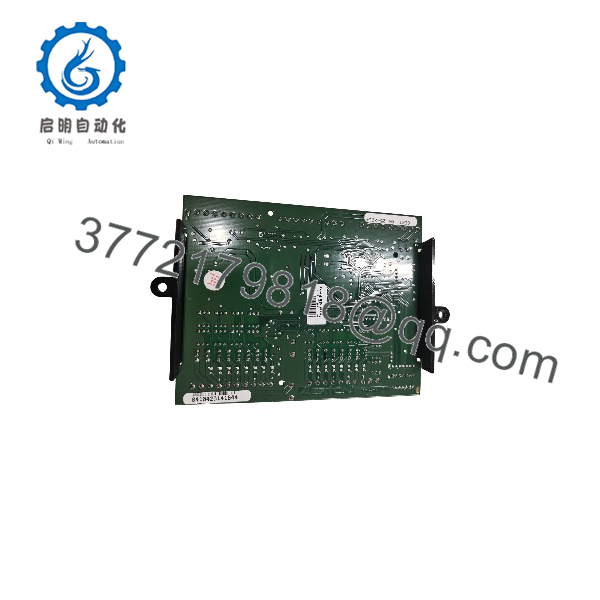
VLC-16160
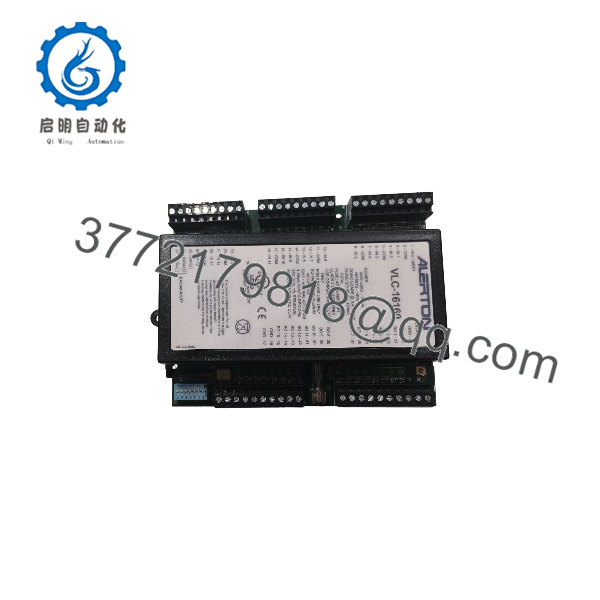
VLC-16160
System Compatibility & Integration Requirements
| Item / Dependency | Verified Compatibility or Requirement | Practical Note |
|---|---|---|
| Protocol | BACnet MS/TP LAN, up to 76.8 Kbps | Native BACnet controller; can also operate as a stand-alone controller without a supervisory system. |
| BACnet conformance | ASC level, BTL tested and approved | Detailed conformance is documented in the product’s Protocol Implementation Conformance Statement (PICS). |
| Programming | Alerton VisualLogic graphical programming language | Control logic is fully programmable and can be field-modified; program data is held in flash memory. |
| Wall sensors | Alerton Microset, Microset II, and Microtouch intelligent wall sensors | Input 0 is used for the sensor, providing data display, setpoint adjustment, and technician access to setup parameters. |
| Power | 24 VAC, 20 VA minimum plus output loads (220 VA maximum) | Half-wave rectifier permits one transformer for multiple VLCs; one leg of the 24 VAC supply connects to earth (panel) ground. |
| Field wiring | Removable header-type screw terminals, 14–24 AWG | Allows pre-wiring and easier controller replacement. |
| Output power | Common fused 24 VAC supply for all triac outputs | Output loads are powered from the same 24 VAC supply leg. |
| Order variants | VLC-16160 (standard); VLC-16160-C (factory custom DDC program) | The -C variant ships with a custom direct digital control program. |
Dimensions, Mounting & Connection Notes
- Dimensions: 6.98 in (178 mm) high × 4.85 in (124 mm) wide × 1.50 in (39 mm) deep.
- Field terminations use removable header-type screw terminals accepting 14–24 AWG wire, supporting pre-wired panels and faster controller swaps.
- Power: 24 VAC at 20 VA minimum plus binary output loads, 220 VA maximum total; one leg of the 24 VAC supply connects to earth (panel) ground.
- All sixteen outputs share a common connection to the fused 24 VAC supply.
- Environmental limits: -17 to 70 °C (0–158 °F), 0–95% RH non-condensing.
- Regulatory: UL 916 (PAZX) listing including Canadian certification, CE mark per EMC Directive 89/336/EEC, and FCC Part 15 Subpart J Class A.
Detailed Product Overview
The VLC-16160 belongs to Alerton’s VisualLogic controller line — the “VLC” series of BACtalk field controllers, a brand within Honeywell’s building management portfolio. Within that line, this model is the high-point-count member: sixteen universal inputs and sixteen binary outputs on one chassis, which distinguishes it from the smaller VLC variants intended for zone-level and unitary equipment. That point count is what makes it suited to central plant and lighting panel work, where many interlocks, status points, and commanded loads converge in one enclosure.
The input architecture is worth understanding when planning a panel. Every input is universal and software-configured: the same terminal accepts a thermistor, a dry contact, a 1–5 VDC signal, or a 4–20 mA loop, resolved at 10 bits. In practice this means mixed applications can be wired directly to the controller without signal conditioners, and an input’s type can be changed as the sequence of operations evolves. Input 0 doubles as the connection point for Alerton’s Microset, Microset II, or Microtouch intelligent wall sensors, adding local display, setpoint adjustment, and technician access to equipment setup parameters.
On the output side, the sixteen binary outputs are hot-switched triacs rated 24 VAC at 0.47 A each, all sharing a common connection to the fused 24 VAC supply. This is a practical design for driving 24 VAC coils and pilot devices, but it imposes two design checks: each point’s load must respect the 0.47 A rating, and the panel’s total power — 20 VA minimum for the controller itself, 220 VA maximum including output loads — must be covered by the transformer. The half-wave rectifier power input is a deliberate feature: one transformer can power multiple VLC controllers, with one leg of the 24 VAC tied to earth (panel) ground, which simplifies power distribution in a BACtalk panel.
Processing is handled by a Motorola AZ60 processor executing the control logic on a 100 ms internal loop, with programmable timers also resolved at 100 ms. Programs are written in Alerton’s VisualLogic graphical language, and program plus setup data reside in nonvolatile flash memory — so a power outage never costs the controller its logic, and the flash supports encrypted updates for future enhancements. As a network citizen, the controller speaks native BACnet over MS/TP at up to 76.8 Kbps, holds ASC-level conformance tested and approved by BTL, and can run sequences without any supervisory connection.
For procurement and maintenance, the removable screw-terminal headers allow the controller to be swapped without unwiring field terminations, and the two order variants cover both approaches to commissioning: the standard VLC-16160 for site-specific VisualLogic programming, and the VLC-16160-C for applications delivered with a factory custom DDC program.
Applications & System Role
The VLC-16160 sits at the field-control layer of an Alerton BACtalk building automation system. Its role is direct digital control of equipment with a large number of points: the manufacturer positions it specifically for central plant systems, lighting panels, and other applications with numerous control points. In a typical configuration, it reads mixed analog and binary field points — thermistors, dry contacts, voltage, and current signals — executes the programmed control logic at its 100 ms loop rate, and drives 24 VAC loads such as contactor coils, relay coils, and damper or valve actuator inputs through its sixteen triac outputs.
Because it is a native BACnet device, it can either participate in a supervised BACnet MS/TP network alongside other BACtalk controllers and a supervisory front end, or run a control sequence entirely on its own as a stand-alone controller. The Microset/Microtouch wall sensor option gives occupants and technicians local display and setpoint access, which fits applications such as plant rooms or equipment panels where a local interface is useful without a full operator workstation.
FAQ
What is the Honeywell Alerton VLC-16160?
It is a BACtalk field controller from the Honeywell Alerton VisualLogic family — a fully programmable BACnet controller with 16 universal inputs and 16 binary outputs for central plant, lighting panel, and other multi-point applications.
Which system does it belong to?
It belongs to the Alerton BACtalk building automation product line and operates as a native BACnet device on an MS/TP LAN at up to 76.8 Kbps, or as a stand-alone controller.
What input signal types does it accept?
All 16 inputs are software configurable for thermistor or dry contact, 1–5 VDC, or 4–20 mA signals, with 10-bit resolution; input 0 can alternatively host a Microset, Microset II, or Microtouch wall sensor.
What are the output ratings?
The 16 binary outputs are hot-switched triacs, each rated 24 VAC at 0.47 A, with a common connection to the fused 24 VAC supply.
How is it powered?
It requires 24 VAC at 20 VA minimum plus binary output loads, with a maximum of 220 VA; the half-wave rectifier design allows one transformer to power multiple VLCs, and one leg of the 24 VAC connects to earth (panel) ground.
How is it programmed?
Control logic is written in Alerton’s VisualLogic graphical programming language and stored in nonvolatile flash memory; the logic can be modified in the field, and the VLC-16160-C variant ships with a factory custom DDC program.
What are its environmental and regulatory ratings?
It operates from -17 to 70 °C at 0–95% RH non-condensing, and carries a UL 916 (PAZX) listing including Canadian certification, CE marking per the EMC Directive, and FCC Part 15 Class A compliance.
How fast is its control loop?
The internal logic loop runs at 100 ms, and programmable timers maintain 100 ms resolution.