WhatsApp: +86 16626708626
 Email:
  Phone: +86 16626708626
Description
3. Key Technical Specifications
| Parameter | Value |
|---|---|
| Input / Output Model | CC-PAIH02 – High-Level Analog Input with HART |
| Input Channels | 16 (12 single-ended / 4 differential typical) |
| Input Type | Voltage or current (2-wire or self-powered transmitters) |
| Input Ranges | 0–5 V, 1–5 V, 0.4–2 V, 4–20 mA (through 250 Ω) |
| A/D Converter Resolution | 16 bits |
| Hardware Accuracy (@ CMV = 0 V) | ±0.075 % of full-scale (23.5 °C ±2 °C); ±0.15 % of full-scale (0–60 °C) |
| Input Scan Rate | 50 ms |
| Common Mode Rejection Ratio (dc–60 Hz, 500 Ω imbalance) | 70 dB |
| Common Mode Voltage (dc–60 Hz) | –6 to +5 V peak |
| Normal Mode Rejection Ratio (60 Hz) | 19 dB |
| Normal Mode Filter | Single-pole RC, –3 dB @ 6.5 Hz |
| Maximum Normal Mode Input (no damage) | ±30 V |
| Crosstalk (dc–60 Hz, channel-to-channel) | –60 dB |
| Input Impedance (voltage) | >10 MΩ (powered) |
| Transmitter Field Power | Individually protected current-limiting circuits; Class 1 Div 2 non-incendive |
| Compatible IOTA (examples) | Non-redundant: CC-TAIX01, CC-GAIX21, CC-TAID01; Redundant: CC-TAIX11, CC-GAIX11, CC-TAID11 |
| Mounting | Plugs into Series C IOTA |
Exact channel configuration (single-ended vs. differential) and IOTA pairing must be verified against the system configuration and Honeywell documentation before installation.
4. Product Introduction
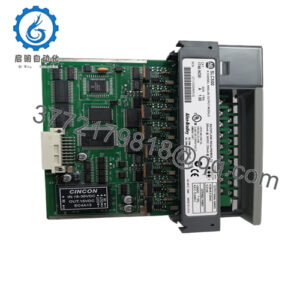
The Honeywell CC-PAIH02 is a high-level analog input module with integrated HART capability for the Experion PKS Series C / C300 platform. It accepts up to 16 channels of voltage or current signals from field transmitters (including 2-wire loop-powered devices) and provides both the primary process variable and HART diagnostic data to the controller.
Engineers specify the CC-PAIH02 when accurate, high-density analog acquisition with smart-device support is required. The module plugs into a matching Series C IOTA, supports optional redundancy, includes open-wire detection, and supplies non-incendive field power. It remains a common spare for existing Experion installations where full migration to newer I/O families is not yet planned.
5. Installation & Configuration Guide
Stage 1: Pre-Installation Preparation (10–15 min)
⚠️ Safety First: Place the process in a safe state. Notify operations of the planned I/O outage. Lock-out/tag-out power to the Series C cabinet or IOTA. Wait for residual energy to dissipate.
Tools Required: ESD wrist strap, PH1 or equivalent screwdriver, multimeter, wire labels, smartphone for photos of existing IOTA wiring and module labeling.
Data Backup: Export or photograph the current channel configuration, HART device tags, and any open-wire or range settings in Experion. Record the exact IOTA model and slot location.
Stage 2: Removing the Old Module (5–10 min)
- Confirm the IOTA is powered down or the module is isolated.
- Release the module locking mechanism and withdraw it straight from the IOTA.
- Inspect the IOTA connectors for bent pins, corrosion, or debris.
⚠️ Keep the old module available until the new unit is online and all channels report healthy.
Stage 3: Installing the New Module (10–15 min)
- Verify the part number is CC-PAIH02 and that the conformal coating (if present) matches site requirements.
- Align the module with the IOTA guides and insert fully until the lock engages.
- Reconnect or verify field wiring on the IOTA terminals (polarity and shield grounding are critical for 4–20 mA and HART).
- Confirm any redundant partner module (if used) is correctly paired.
Self-Checklist: [ ] Module fully seated [ ] Lock engaged [ ] Field wiring verified [ ] No bent pins.
Stage 4: Power-On & Testing (15–25 min)
Pre-Power Check: Multimeter check for shorts on field power and signal terminals.
- Restore power to the IOTA/cabinet. Observe module power and status LEDs.
- In Experion, verify the module is recognized and channels come online.
- Check live values against known good transmitters; confirm HART secondary variables and diagnostics where applicable.
- Perform open-wire and over-range tests if safe to do so.
⚠️ Troubleshooting: Module not recognized usually indicates seating or IOTA mismatch. Bad PV or open-wire alarms often trace to field wiring or incorrect range configuration. HART communication failure may require verifying the 250 Ω load and loop power settings.
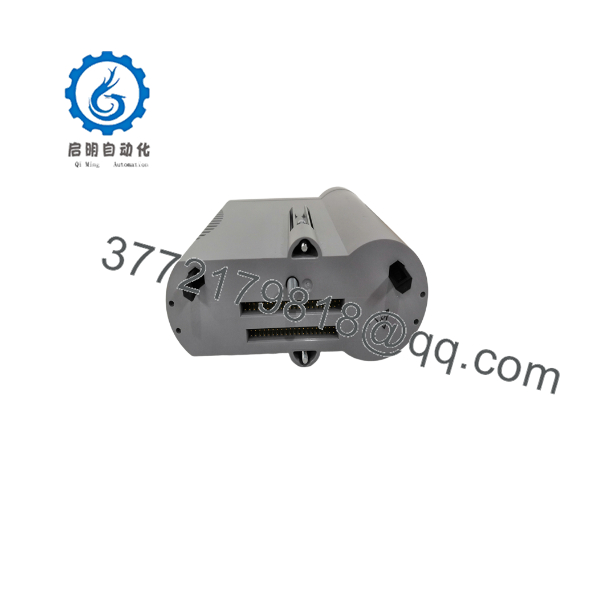
CC-PAIH02
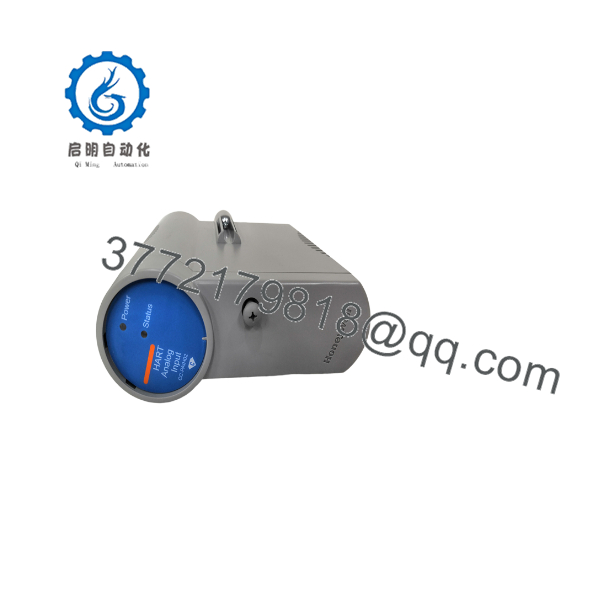
CC-PAIH02
6. Frequently Asked Questions (FAQ)
Q: Can the CC-PAIH02 be hot-swapped?
A: Series C modules support controlled replacement under specific conditions, but best practice is to take the associated IOTA or cabinet section offline. Always follow site procedures and confirm redundancy status before removal.
Q: Is the CC-PAIH02 still in active production?
A: Honeywell continues to support the Series C family, but individual modules such as the CC- are frequently supplied from surplus or remaining authorized stock. Verify current availability and revision with the supplier.
Q: What IOTA is required?
A: Common non-redundant IOTAs include CC-TAIX01, CC-GAIX21, and CC-TAID01. Redundant pairings use CC-TAIX11, CC-GAIX11, or CC-TAID11. Match the exact IOTA to the system design and redundancy requirements.
Q: Will I lose channel configuration when I replace the module?
A: Configuration resides in the Experion database and IOTA, not permanently on the IOM. After replacement, the controller downloads the existing configuration. Always verify ranges, HART enablement, and open-wire settings after the swap.
Q: Why is the price lower than current Honeywell list pricing?
A: Many units available on the secondary market are new surplus from project overruns or authorized excess inventory. Pricing reflects that availability rather than full factory list price for current production.
Q: Does it support HART 7 or multivariable transmitters?
A: The module provides HART pass-through. Exact HART revision support and multivariable variable mapping depend on the Experion software release and transmitter capability. Confirm against the system documentation.
Q: What testing is performed before shipment?
A: Visual and coating inspection, power-on self-test, channel accuracy checks under simulated 4–20 mA / voltage inputs, and basic HART communication verification where a test rack is available. Test reports and photos are available on request.