WhatsApp: +86 16626708626
 Email:
  Phone: +86 16626708626
Description
Key Technical Specifications
| Parameter | Specification |
| Output Channels | 32 Channels |
| Output Type | Sink (Open Drain) / Bussed 24V DC Output |
| Operating Voltage Range | 15 V DC to 30 V DC |
| Max Current Per Channel | 100 mA (0.1 A) continuously |
| Module Current Consumption | 80 mA @ 24 V DC (System side backplane) |
| Galvanic Isolation | 1000 V AC RMS (Field-to-System isolation with external supply) |
| Off-State Leakage Current | 100 µA Maximum |
| Turn-On / Turn-Off Time | 10 ms Maximum |
| Compatible IOTA Units | CC-TDOD51 (Non-Redundant, 9″), CC-TDOD61 (Redundant, 12″) |
| Safe-State Configuration | Per-channel FAILOPT (Hold Last Value or Shed to Safe Value) |
| Conformal Coating | Standard factory ISA S71.04 G3 compliant coating |
| Operating Temperature | 0°C to +60°C (32°F to 140°F) |
Product Introduction
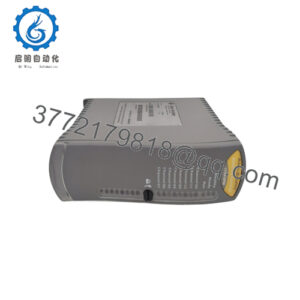
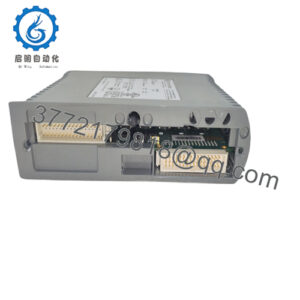
The Honeywell CC-PDOD51 (51454408-175) is a 32-channel, 24V DC digital output module designed for the Experion PKS Series C architecture. Operating on the C300 controller platform, this module mounts directly onto a standard Input Output Terminal Assembly (IOTA) to drive field-level discrete components like solenoid valves, pilot lights, interposing relays, and alarm indicators.
Featuring open-drain SINK outputs, 1000 V AC RMS system-to-field galvanic isolation, and per-channel FAILOPT safe-state settings, the CC-PDOD51 provides high-density signal control for process plants. Its high channel density reduces control cabinet footprints while integrated electronic protection shields system backplanes from field-side fault propagation.
Standard Operating Procedure (SOP) Quality Control
Every CC-PDOD51 unit in our inventory passes a 5-step engineering bench test before entering anti-static inventory:
- Inbound Inspection & Traceability: Physical audit verifying OEM serial tags, yellowing-free conformal coating, clean backplane edge pins, and matching 51454408-175 hardware revision labels against OEM packing manifests.
- Live Functional Bench Test: Mounted onto a genuine Honeywell CC-TDOD51 IOTA wired to an active Experion C300 test rack running Control Builder R511. We execute a 24-hour continuous cycling test toggling all 32 output channels into load banks under 100 mA full rated current while monitoring thermal rise via FLIR infrared imaging.
- Electrical Parameter Testing: High-potential test applied between field common ground and system backplane to confirm galvanic breakdown resistance exceeds 1000 V AC RMS. Off-state leakage checked with a Fluke 87V to ensure current stays well under 100 µA across all channels.
- Firmware & Parameter Verification: Module parameters, hardware version, and diagnostic registers are read via Experion System Management. FAILOPT state configurations (Hold Last Value vs. Shed to 0) are verified for instant EEPROM retention.
- ESD Packaging & Pass Certification: Signed off by an lead QC engineer, sealed in ESD-shielded vacuum packaging with desiccant, protected by thick-walled corrugated boxes, and marked with a dated QC Passed label. Test photos and software logs available upon request.
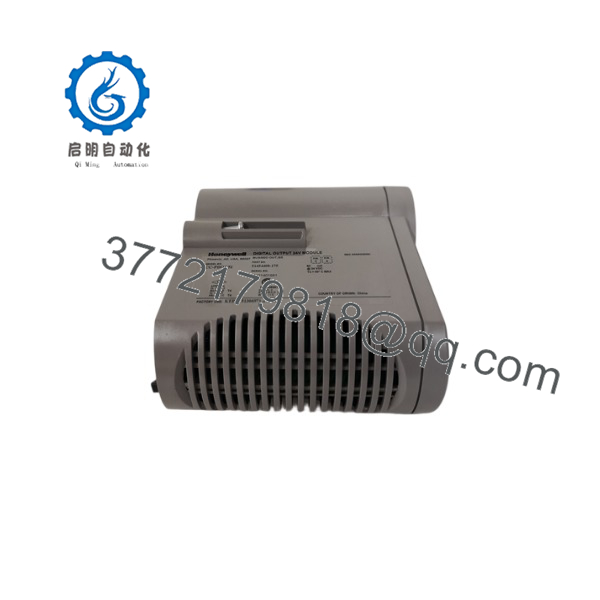
CC-PDOD51
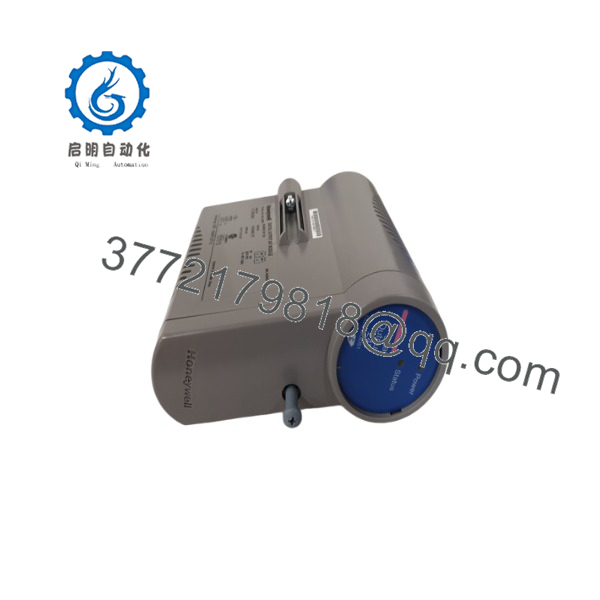
CC-PDOD51
Technical Pitfall & Field Survival Guide
❗ Firmware Mismatch Issues: Match your C300 controller software release (e.g., R410 vs. R511). Inserting a newer hardware revision module into an older I/O tree can cause Control Builder to drop communication or throw a hardware mismatch error. Check your C300 system logs before hot-swapping.
❗ Current Limitations & Interposing Relays: This module is rated for 100 mA (0.1 A) max per channel. Do not directly wire heavy inductive loads or large solenoid coils that draw higher surge currents into these pins, or you will blow the solid-state output drivers. Always use interposing relays for high-draw field devices.
❗ SINK vs. SOURCE Wiring Setup: The CC-PDOD51 features SINK outputs (Open Drain). The module switches the ground path of the load, not the 24V DC supply side. Wiring field loads expecting a sourcing card will cause zero output signal and possible power supply short circuits. Verify your loop drawing pinouts before powering up the IOTA.
❗ ESD Handling Protocol: The exposed edge connectors on Series C yellow modules are sensitive to static discharge. Field technicians must wear grounded wrist straps during installation. Handling this board in high-humidity winter environments without ESD protection will damage the logic circuitry before power is even applied.
Troubleshooting Quick Reference
| Symptom | Possible Cause | Relevance to this Part | Quick Check Method | Recommendation |
| Module Status LED Off | Loss of IOTA power or dead module | ❌ Low | Measure 24V DC across terminal block power inputs on the IOTA unit. | Check system power supply or IOTA power connections before replacing card. |
| All Outputs Off / Red Flash | C300 Controller Comm Loss / I/O Bus error | 🟡 Medium | Check C300 controller status and Series C I/O bus cable continuity. | Verify controller state in Control Builder. Re-seat card if bus comms are down. |
| Single Channel Stuck Low (0V) | Blown solid-state output channel | ✅ High | Force output bit ON in software. Measure resistance to ground at channel pin. | Overcurrent likely fried the output driver. Replace CC-PDOD51 module. |
| Channel Loads Won’t Turn Off | Excess leakage or shorted channel transistor | ✅ High | Disconnect field wire. Measure channel current; check for >100 µA leakage. | Replace module. Add flywheel diodes to inductive loads on field wiring. |
| FAILOPT Fault on Swap | Unconfigured safe-state parameters | 🟡 Medium | Open Control Builder module properties; check channel configuration tab. | Re-load module configuration from project database down to the . |
Note: If diagnostic software returns persistent hardware fault codes after checking field wiring and power supplies, contact technical support with your module serial number and system logs.
Frequently Asked Questions (FAQ)
Q: Is the Honeywell CC-PDOD51 module hot-swappable?
A: Yes, Series C modules support live insertion and removal (RIUP) while powered on, provided you are using a compatible IOTA (such as the CC-TDOD51 or CC-TDOD61). However, always ensure your active process loops are switched to manual or bypassed first, as pulling an active DO card will instantly drop all connected field outputs to their safe state or unpowered state.
Q: What is the difference between CC- and DC-?
A: The “CC” prefix designates a standard conformal coated board manufactured for Honeywell Experion PKS Series C systems. The “DC” prefix typically denotes the exact same functional module board manufactured for Honeywell’s Safety Manager or specific OEM-branded variants. Check your system drawing specs—they are hardware-equivalent in most standard applications, but CC is the standard Experion model designation.
Q: Why are your New Surplus CC- modules significantly cheaper than factory list price?
A: We source surplus inventory directly from system integrator project overstocks, plant spares liquidation, and cancelled capital projects. These are authentic, unused Honeywell units stored in climate-controlled environments. We pass those purchasing savings directly to you while covering every unit with our independent 1-year replacement warranty.
Q: Will this module work with both redundant and non-redundant IOTAs?
A: Yes. The CC- card works in both non-redundant configurations using the 9-inch CC-TDOD51 IOTA (requiring 1 module) and redundant configurations using the 12-inch CC-TDOD61 IOTA (requiring 2 CC- modules paired side-by-side).
Q: Do I need to program the module’s safe-state behavior before putting it in service?
A: Yes. In Control Builder, you must configure the per-channel FAILOPT setting. You can set channels to either “Hold Last Value” or “Shed to Safe Value” (usually 0/OFF) in the event that the controller loses communication with the I/O rack. If left unconfigured, the system defaults to shedding all outputs to 0V DC for safety.