WhatsApp: +86 16626708626
 Email:
  Phone: +86 16626708626
Description
Key Technical Specifications
| Parameter | Value |
|---|---|
| Model | CC-PDOD51 |
| Manufacturer | Honeywell |
| System | Experion PKS Series C |
| Module Type | 24 VDC Digital Output |
| Output Channels | 32 |
| Output Type | SINK / Open Drain |
| Output Configuration | Bussed, field-isolated |
| Load Voltage | 15–30 VDC |
| Maximum Load Voltage | 30 VDC |
| Maximum Load Current | 0.1 A per channel |
| Galvanic Isolation | 1,000 VAC RMS system-to-field |
| On-State Voltage | 0 VDC at 0.1 A maximum load |
| Off-State Voltage | 24 VDC typical |
| Off-State Leakage Current | 100 µA maximum |
| Turn-On/Turn-Off Time | 10 ms maximum |
| Non-Redundant IOTA | CC-TDOD51 |
| Redundant IOTA | CC-TDOD61 |
| Redundancy Switchover Gap | 0 ms |
| Field Power | Internal or external excitation |
| Diagnostics | Internal diagnostics, electronic overcurrent protection |
| FAILOPT | Hold last value or shed to configured safe value |
These specifications are taken from Honeywell’s Series-C I/O specification, version 1.5.
Honeywell’s Series C user guide also distinguishes CC-PDOD51 from the source-type CC-PDOB01: CC-PDOD51 uses sink/open-drain outputs and supports up to 100 mA per channel, while the alternative module supports source outputs and a higher load-current rating.
Product Introduction
The Honeywell CC-PDOD51 is a 32-channel, 24 VDC sink-type digital output module for Experion PKS Series C I/O. It switches discrete loads such as solenoid valves, interposing relays, and other process equipment through open-drain outputs. The module supports field isolation, electronic overcurrent protection, configurable FAILOPT behavior, and optional redundancy.
The key replacement issue is the sink-output architecture. CC-PDOD51 is not a drop-in substitute for every Series C digital-output module. Verify the IOTA, field-power arrangement, output polarity, load current, and redundancy configuration before installation.
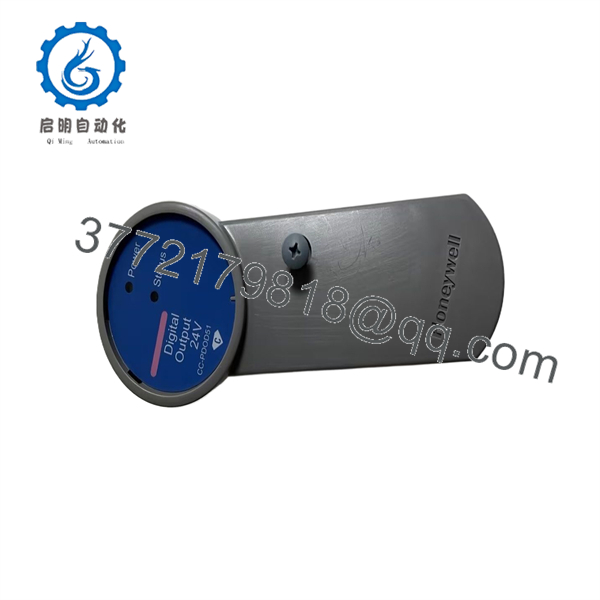
CC-PDOD51
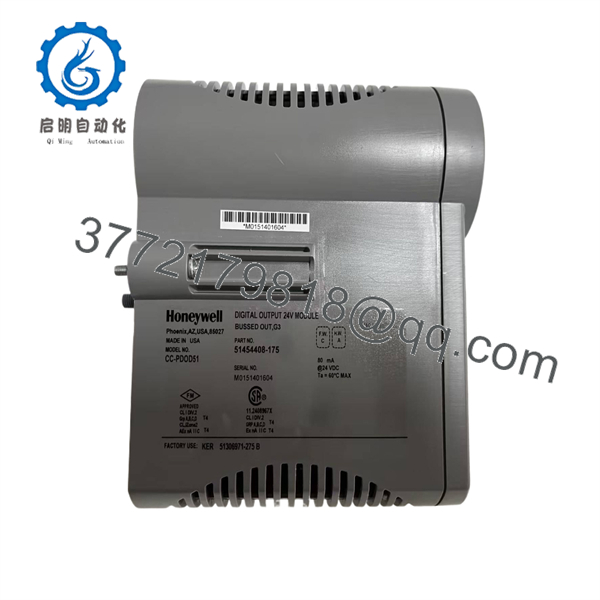
CC-PDOD51
Installation & Configuration Guide
Stage 1: Pre-Installation Preparation — About 5–10 Minutes
⚠️ Safety First: Notify operations, place the affected process in the approved safe state, and follow the site’s LOTO procedure. Do not remove the module under power unless the specific Honeywell installation documentation explicitly permits that procedure.
Tools Required:
- ESD wrist strap
- PH1 screwdriver where applicable
- Calibrated digital multimeter
- Wire labels
- Smartphone/camera
- Approved Honeywell Series C documentation
Data Backup:
- Record the complete module label and ordering number.
- Record the hardware revision.
- Photograph the CC-PDOD51 and its IOTA.
- Photograph every field terminal and cable position.
- Identify whether the installation uses CC-TDOD51 or CC-TDOD61.
- Record whether field power comes from the Series C system or an external 24 VDC source.
- Document configured FAILOPT behavior for critical outputs.
- Save the relevant Experion configuration.
⚠️ Pay particular attention to output polarity. CC- is a sink/open-drain module. Replacing it with a source-output module without reviewing the field circuit can produce an incorrect or nonfunctional circuit. Honeywell explicitly distinguishes the two architectures.
Stage 2: Removing the Old Module — About 5 Minutes
- Confirm the process is in the approved maintenance state.
- Remove the applicable module retaining hardware.
- Photograph the complete installation.
- Label every output conductor.
- Disconnect field wiring without pulling on the conductor.
- Release the module retention mechanism.
- Pull the CC- straight from the IOTA.
- Inspect the IOTA connector for contamination, damaged contacts, or mechanical wear.
⚠️ Keep the old module until commissioning is complete. It is your best physical reference if a field circuit does not behave as expected.
Stage 3: Installing the New Module — About 5 Minutes
- Verify the exact CC- model and complete ordering number.
- Confirm the IOTA matches the existing installation.
- Verify non-redundant versus redundant configuration.
- Attach the grounded ESD wrist strap.
- Inspect the replacement connector.
- Align the module with the IOTA.
- Seat the module evenly. Never force the connector.
- Secure the module using the approved retention mechanism.
- Reconnect all field wiring according to the photographs and drawings.
- Verify the common return and field-power wiring before energizing.
Self-Checklist:
- CC- verified
- Complete ordering number verified
- Sink/open-drain architecture confirmed
- CC-TDOD51 or CC-TDOD61 verified
- Field power source verified
- All 32 channel assignments checked
- FAILOPT settings documented
- Wiring secured
- Module fully seated
Stage 4: Power-On & Testing — About 10–15 Minutes
- Perform a complete visual inspection before applying power.
- Check the field-power circuit for unintended shorts.
- Verify the external field supply, if used, is within the specified range.
- Restore power according to the approved cabinet procedure.
- Observe module status indications and diagnostics.
- Verify that Experion recognizes the I/O module.
- Check channel status and configured output states.
- Test representative outputs one at a time.
- Measure the expected field-side switching behavior.
- Confirm that connected relays, solenoids, or other loads respond correctly.
- Check for overcurrent, field-power, or channel diagnostic alarms.
- Verify FAILOPT behavior before returning the process to normal operation.
Honeywell specifies electronic overcurrent protection and per-channel FAILOPT behavior. FAILOPT can be configured to hold the last value or shed the output to a configured safe value.
Technical Pitfalls Worth Checking
1. ⚠️ Sink vs. Source Output
This is the first electrical check I would make. CC- is a sink/open-drain output. Honeywell’s documentation distinguishes it from CC-PDOB01, which uses source outputs.
2. ⚠️ Exceeding 100 mA Per Channel
The specified maximum load current is 100 mA per channel. Do not assume that a 24 VDC load is acceptable merely because its voltage is correct. Calculate the actual coil or load current, including inrush where applicable.
3. ⚠️ Wrong IOTA
The documented IOTAs are CC-TDOD51 for non-redundant operation and CC-TDOD61 for redundant operation. Verify the IOTA before removing the existing module.
4. ⚠️ Shared Field Return
The outputs are bussed and share a common return. That means a field-power or common-return problem can affect multiple channels at once. Do not troubleshoot a group of failed outputs as 32 separate module failures.
5. ⚠️ FAILOPT Behavior
Do not leave safe-state behavior unverified on a process-critical output. The module supports per-channel FAILOPT, allowing the output to hold its last state or move to a configured safe value. Test the actual configured behavior during commissioning.
Frequently Asked Questions (FAQ)
Can the Honeywell CC- be hot-swapped?
Do not assume it can. Hot replacement depends on the specific Series C cabinet, IOTA arrangement, redundancy design, and approved maintenance procedure. If the site documentation does not explicitly authorize energized replacement, use the controlled shutdown and LOTO procedure.
How many outputs does CC- provide?
CC- provides 32 digital output channels. The outputs use a sink/open-drain architecture and are designed for bussed 24 VDC field applications.
What is the maximum current per CC- channel?
The specified maximum is 0.1 A, or 100 mA, per channel. Check the actual load current before connecting solenoid valves, relays, or other field loads.
What is the difference between CC- and CC-PDOB01?
The distinction matters electrically. CC- uses sink/open-drain outputs and supports 100 mA per channel, while CC-PDOB01 uses source outputs and has a higher specified load-current capability. Honeywell specifically documents these differences.
Which IOTA is required for CC-?
Honeywell specifies CC-TDOD51 for non-redundant installations and CC-TDOD61 for redundant installations. Confirm the existing IOTA rather than selecting one based only on the module model.
Does CC- support a configurable safe state?
Yes. The Series C module supports FAILOPT on a per-channel basis. The configured response can hold the last output value or shed the output to a defined safe value. This should be verified during commissioning for process-critical outputs.
What condition should I specify when purchasing CC-?
Specify Factory Sealed/New Original, New Surplus, or Refurbished/Tested rather than accepting an unspecified “new” description. Also request a photograph of the actual module label and complete ordering number. Some online listings associate 51454408-175 with CC-, but the complete installed part number should be checked against the Honeywell documentation and site configuration before ordering.