WhatsApp: +86 16626708626
 Email:
  Phone: +86 16626708626
Description
Key Technical Specifications
| Parameter | Value |
|---|---|
| Model | CC-TAIX11 |
| Manufacturer | Honeywell |
| System | Experion PKS Series C |
| Product Type | Redundant Analog Input IOTA |
| IOTA Size | 12 inches nominal / 304 mm |
| Channel Capacity | 16 analog input channels |
| Redundancy | Redundant |
| Compatible I/O | CC-PAIH01, CC-PAIH02, CC-PAIX01, CC-PAIX02 |
| Supported Signal Types | 4–20 mA, 1–5 V, 0–5 V, depending on paired I/O module |
| Differential Input Support | Channels 13–16 when used with applicable CC-PAIH02/CC-PAIX02 configurations |
| Field Wiring | Series C I/O termination; field terminals accept up to 14 AWG stranded wire |
| Non-Redundant Counterpart | CC-TAIX01 |
Honeywell’s Series C documentation specifies CC-TAIX11 as a 12-inch redundant AI IOTA. The compatibility matrix distinguishes it from CC-TAID11, which is the dedicated 16-channel differential AI IOTA.
Product Introduction
The Honeywell CC-TAIX11 is a redundant 12-inch I/O termination assembly for compatible Experion PKS Series C high-level analog input modules. It supports 16-channel AI configurations and can be used with CC-PAIH01/02 and CC-PAIX01/02 architectures. Signal capability depends on the installed I/O module, including 4–20 mA and voltage-input configurations.
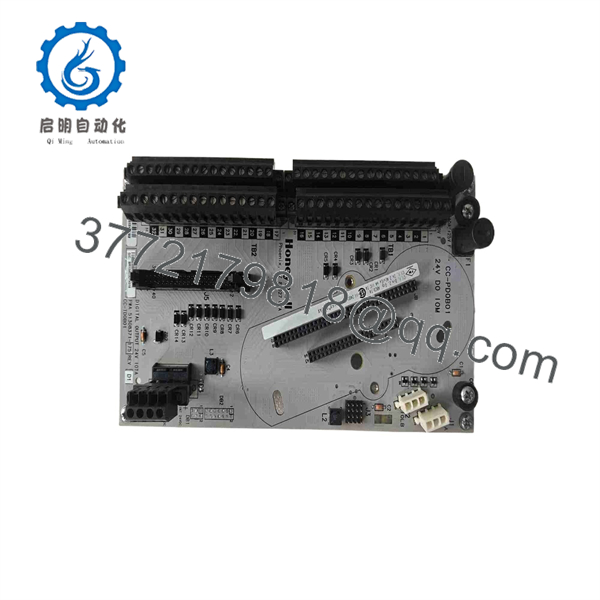
CC-TAIX11
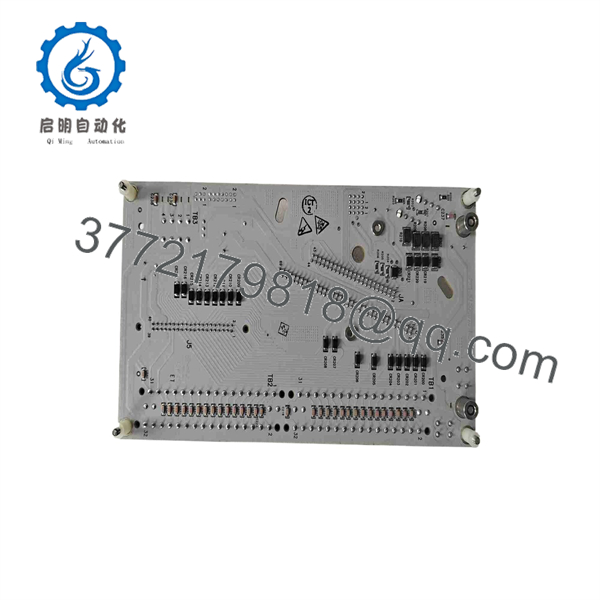
CC-TAIX11
Installation & Configuration Guide
Stage 1 — Pre-Installation
- Confirm the installed I/O module model before ordering or installing CC-TAIX11.
- Verify that the cabinet requires a redundant 12-inch IOTA.
- Confirm the applicable Experion PKS release and Series C I/O compatibility matrix.
- Determine whether the application uses 4–20 mA, 1–5 V, 0–5 V, or a supported differential configuration.
- Back up the controller/I/O configuration and record channel assignments.
- Photograph the existing field wiring and terminal arrangement.
- Record the installed IOTA and I/O module part numbers and revision information.
- ⚠️ Safety: Place the affected loops and control equipment in the approved maintenance state before removing hardware.
- Establish ESD protection before handling the IOTA or I/O module.
Typical preparation time: 15–30 minutes for a documented cabinet.
Stage 2 — Removing Old Module
- Isolate power according to the site’s approved Honeywell maintenance procedure.
- Verify that the applicable field and system circuits are in a safe state.
- Confirm the absence of hazardous voltage before touching terminals.
- Label each field conductor by channel and signal polarity.
- Photograph TB1/TB2 wiring before disconnection.
- Disconnect field wiring carefully to avoid disturbing adjacent I/O circuits.
- Remove the installed I/O module according to the Series C procedure.
- Release the IOTA mounting hardware and remove the existing assembly.
- Place the removed hardware in ESD-safe packaging.
⚠️ Critical: Do not assume that CC-TAIX11 and CC-TAID11 have identical field termination arrangements. Honeywell assigns the two IOTAs to different AI architectures.
Stage 3 — Installing New Module
- Inspect CC-TAIX11 for damaged connectors, corrosion, contamination, or evidence of rework.
- Verify the exact model marking before installation.
- Mount the 12-inch IOTA in the designated Series C cabinet position.
- Secure the IOTA according to the cabinet installation procedure.
- Install the compatible redundant I/O module.
- Reconnect each field conductor using the recorded channel documentation.
- Verify signal polarity and transmitter wiring channel by channel.
- For differential applications, confirm that the selected I/O module and IOTA combination supports the required differential channels.
- Do not substitute CC-TAID11 for CC- solely because both are 12-inch redundant IOTAs.
- Recheck all terminations before restoring power.
Honeywell’s installation guide states that redundantly configured I/O modules must be installed on a redundant IOTA. It also identifies CC- as a redundant IOTA and specifies its nominal length as 12 inches.
Typical replacement time: 30–60 minutes for a documented cabinet.
Stage 4 — Power-On & Testing
- Complete a final visual and wiring inspection.
- Restore power using the approved startup sequence.
- Confirm that the redundant I/O modules are recognized correctly.
- Verify the configured AI channels in Experion.
- Inject representative current or voltage signals where permitted by the maintenance procedure.
- Check both redundant paths and confirm expected diagnostic status.
- Verify engineering-unit scaling and signal quality.
- Check for channel, wiring, redundancy, or I/O diagnostic alarms.
- Compare process values against the pre-maintenance record.
- Return affected loops to normal operation only after operator and control-engineering approval.
- Record the replacement model, revision, serial/traceability information, and test results.
⚠️ Field warning: A common replacement error is matching the IOTA by physical size alone. CC- is a 12-inch redundant AI IOTA, but the exact compatible I/O module and signal configuration still need to be verified against the Honeywell compatibility matrix.
Frequently Asked Questions (FAQ)
Q1: What is Honeywell CC-?
CC- is a 12-inch redundant Analog Input IOTA used in Honeywell Experion PKS Series C systems.
Q2: How many channels does CC- support?
The compatible Series C analog input architecture supports 16 channels. The exact signal capabilities depend on the paired I/O module.
Q3: Which I/O modules are compatible with CC-?
Honeywell documentation identifies CC-PAIH01, CC-PAIH02, CC-PAIX01, and CC-PAIX02 as compatible with the CC-TAIX01/CC- IOTA family, subject to the applicable configuration matrix.
Q4: Is CC- the redundant version of CC-TAIX01?
Yes. Honeywell specifies CC-TAIX01 as the 6-inch non-redundant AI IOTA and CC- as the 12-inch redundant AI IOTA.
Q5: Is CC- interchangeable with CC-TAID11?
Not as a blanket substitution. Both are 12-inch redundant AI IOTAs, but CC-TAID11 is specifically the 16-channel differential AI IOTA, while CC- belongs to the standard AI IOTA architecture.
Q6: Can a non-redundant I/O module be installed on CC-?
Honeywell’s installation guide states that a non-redundant I/O module can be installed on a redundant IOTA, but it must occupy the upper I/O module slot, with the lower slot kept empty or powered off if occupied. Follow the applicable Series C installation procedure.
Q7: What should be verified before purchasing a replacement CC-?
Verify the complete IOTA model, paired I/O module, redundancy architecture, cabinet dimensions, signal type, channel configuration, terminal wiring, revision/traceability information, and supplier-stated condition. Do not use a supplier listing alone to establish interchangeability.