WhatsApp: +86 16626708626
 Email:
  Phone: +86 16626708626
Description
Key Technical Specifications
- Manufacturer: Honeywell
- Model Number: CC-TUI001
- Associated Part Number: 51306854-175
- Product Family: Experion PKS Series C
- Product Category: I/O Termination Assembly (IOTA)
- Primary Role: Provides field-wiring termination for a compatible Honeywell Series C I/O module
- Mounting Location: Series C I/O assembly / cabinet backplane location
- Field Interface: Terminal-based connection between field wiring and installed I/O module
- Controller Interface: Indirect connection through the installed Series C I/O module and I/O Link architecture
- Replacement Requirement: Match the installed I/O module type, redundancy arrangement, terminal configuration, and system documentation
- Installation Requirement: Power-down and ESD-controlled replacement recommended unless the applicable Honeywell procedure explicitly permits otherwise
- Verification Before Purchase: Confirm the complete label, including
CC-TUI001and51306854-175, from the removed unit or cabinet bill of materials
Honeywell documentation distinguishes I/O modules from their matching IOTA assemblies: the I/O module plugs into the termination assembly, while the IOTA carries the field-termination interface. Do not purchase CC-TUI001 as a substitute for an active I/O module unless the cabinet documentation identifies it as the required termination part.
Product Introduction
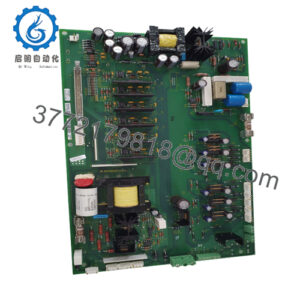
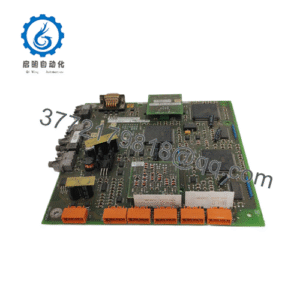
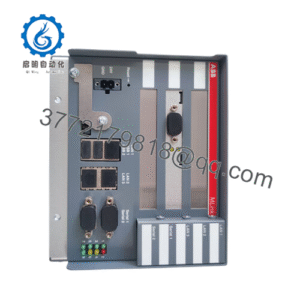
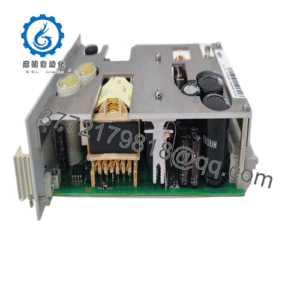
Honeywell CC-TUI001, associated with part number 51306854-175, is a Series C I/O termination assembly used in Honeywell Experion PKS control-system cabinets. It provides the physical field-wiring interface for the matching Series C I/O arrangement, allowing field signals to reach the installed I/O electronics through the correct termination hardware.
This is a replacement part for maintaining an existing Series C installation, not a universal standalone I/O card. The purchase-critical check is the exact I/O module and IOTA pairing, including redundancy and field-terminal arrangement. Honeywell’s Series C architecture uses separate I/O modules and IOTA termination assemblies.
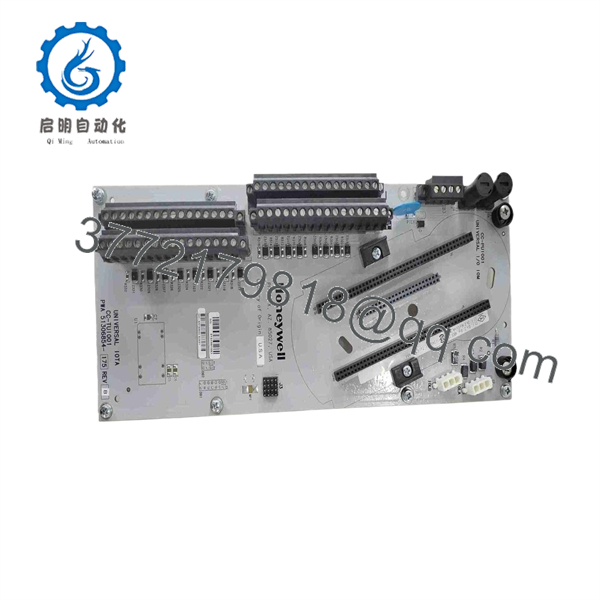
CC-TUI001
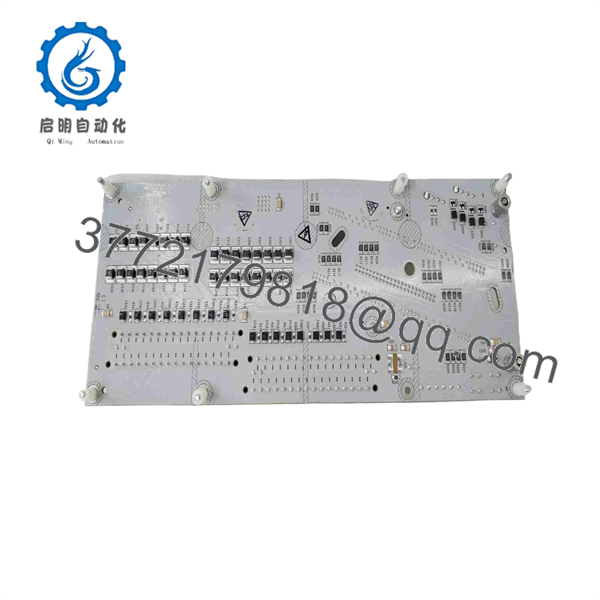
CC-TUI001
Troubleshooting Quick Reference
| Symptom | Possible Cause | Relevance to This Part | Quick Check Method | Recommendation |
|---|---|---|---|---|
| No I/O module LEDs after power-up | Cabinet 24 V DC supply, backplane, controller, or I/O Link fault | ❌ Low | Measure the cabinet supply at the applicable power-distribution terminals with a calibrated Fluke 115 or equivalent; check adjacent Series C modules for normal status | Do not replace the CC-TUI001 first. Confirm cabinet power, controller health, and I/O Link status. |
| One or more field signals read open, zero, or unstable | Loose terminal screw, broken conductor, corroded contact, incorrect shield termination | ✅ Medium | Isolate the loop, verify continuity from the field device to the IOTA terminal, inspect terminal clamp pressure, and compare wiring against the loop drawing | Correct wiring or terminal issues before replacing the assembly. Do not wire from memory. |
| Entire group of channels fails after a maintenance swap | Wrong I/O module fitted, incomplete seating, mismatched IOTA, bent connector contacts | ✅ High | Power down under site procedure; remove the I/O module; inspect mating contacts; verify the I/O module part number against the cabinet drawing and old unit label | Reinstall the exact approved I/O module/IOTA combination. Replace CC-TUI001 only if contacts or terminal hardware are physically damaged. |
| Intermittent analog noise or false digital transitions | Shielding error, poor ground reference, field-side interference, loose terminal | ✅ Medium | Compare shield termination with the loop diagram; check whether noise changes when field cable shielding is corrected; torque-check terminals to the documented value | Correct shield and grounding practice first. A termination assembly rarely creates noise unless its terminals or contacts are damaged. |
| Channel fault remains after field device replacement | I/O module electronics, configuration, channel fuse/protection, damaged IOTA path | ✅ Medium | Swap only under approved maintenance procedure with a known-good channel or module where permitted; review Experion diagnostics and channel configuration | Identify whether the fault follows the I/O module, field wiring, or termination position before ordering parts. |
| New replacement does not fit or terminal wiring differs | Wrong IOTA revision, redundant versus non-redundant mismatch, incorrect part identification | ✅ High | Photograph the existing assembly label, terminal blocks, keying, and installed I/O module before removal; compare against OEM drawings | Stop installation. Confirm the exact assembly part number and compatibility with Honeywell documentation. |
| Visible heat damage, cracked housing, corrosion, or loose terminals | Overcurrent, wiring fault, water ingress, cabinet contamination, prior rework | ✅ High | Lock out power, inspect for discoloration and damaged terminals, then perform continuity checks only as allowed by site procedure | Replace the damaged assembly and investigate the root cause before energizing the replacement. |
❗ Field warning: The most common mistake is calling the IOTA defective when the installed I/O module, field supply, fuse, shield termination, or configuration is actually at fault. Take clear photos of the old terminal layout, module label, jumper/keying details, and diagnostic screen before disconnecting a single wire.
❗ Firmware warning: CC- is a termination component, so it does not normally introduce a firmware mismatch by itself. The paired I/O module and controller configuration can. I have seen technicians replace the wrong active I/O hardware, then spend a shift chasing a communication timeout that originated from an unsupported module or configuration mismatch. Document installed module firmware and controller diagnostics before the swap.
❗ Power-draw warning: The IOTA itself is not the main rack power consumer; the active I/O module and field circuits are. Still, calculate rack and field-power loading, and leave at least a 20% power-supply margin before adding or changing hardware.
❗ ESD warning: Use a grounded wrist strap and handle the I/O module by its edges. I have watched a technician handle an expensive control card in dry winter air without protection; it powered up once, faulted immediately, and never recovered. Do not turn a routine replacement into a second failure.
Keep these checks in mind and you will save yourself 90% of typical rework time. If the diagnosis remains unclear, contact technical support with cabinet photos, the full CC- label, the paired I/O module number, wiring photos, and Experion diagnostic logs.
Frequently Asked Questions
What is the Honeywell CC- used for?
CC- is used as a Honeywell Experion PKS Series C I/O termination assembly, commonly called an IOTA. It provides the physical field-wiring interface for the corresponding Series C I/O hardware. It is not normally the active signal-processing module; the compatible I/O module plugs into the termination assembly and performs the signal handling. Honeywell Series C documentation separates the I/O module from its matching IOTA hardware.
Is CC- a direct replacement for any Honeywell Series C I/O module?
No. It is not a universal replacement for every Series C module, and it should not be treated as an active I/O card. Confirm the installed I/O module part number, IOTA part number, redundancy arrangement, cabinet drawing, terminal configuration, and field-signal type. Similar Honeywell part numbers can look interchangeable from the front of the cabinet while having different field wiring or redundancy requirements.
Can I hot-swap the CC-?
Treat it as not hot-swappable unless your exact Honeywell system documentation and site maintenance procedure explicitly approve a live replacement. The IOTA carries field connections, so removing it can interrupt live signals, create transient inputs, trip an interlock, or damage equipment if you disturb wiring under load. Kill power, isolate affected loops, and follow the plant’s lockout/tagout and bypass-management procedures.
Will I lose programming or configuration when replacing CC-?
The CC- itself generally does not store the control strategy or application program. However, do not assume a replacement is risk-free. Channel assignment, signal type, diagnostics, scaling, alarming, and controller-side configuration belong to the active I/O module and Experion configuration. Back up the current configuration, record diagnostics, and photograph physical settings before touching the assembly.
How do I verify compatibility before ordering?
Provide these details for a proper cross-check:
- A clear photo of the existing
CC-and51306854-175label - The exact installed Series C I/O module part number
- Whether the installation is redundant or non-redundant
- Photos of the terminal blocks, connector keying, and field wiring
- Cabinet assembly drawing or I/O cabinet bill of materials
- Existing controller and Experion release information if the active I/O module is also being replaced
Do not rely on a description such as “Honeywell I/O module.” The actual IOTA and active I/O module are separate parts.
Is this part obsolete, and how does that affect availability?
Honeywell Series C equipment remains widely deployed, but availability depends on the exact part number, condition, date code, and surplus inventory. For a legacy spare, stock can change quickly. Confirm physical quantity, photos of the actual label, condition, packing status, and dispatch lead time before issuing a purchase order. Honeywell continues to publish Series C I/O documentation, including a Series C I/O User Guide dated June 23, 2022.
Is the offered unit New Original, New Surplus, or Refurbished?
This listing should state the actual condition at quotation stage. For a New Original / New Surplus unit, expect unused OEM hardware from surplus inventory, potentially with shelf wear or an older date code. For a Refurbished (tested) unit, expect a previously used assembly that has been cleaned, inspected, and electrically checked. Never accept a vague “used, good condition” description for control-system spare hardware.
For New Surplus stock, the supplier should complete and document this inspection sequence:
- Inbound inspection and traceability: Verify source documents such as OEM packing lists or customs declarations; inspect serial labels, anti-counterfeit markings, housing condition, terminals, and accessories. Reject units showing corrosion, rework marks, UV yellowing, cracked plastic, or damaged contact surfaces.
- Live functional verification: Install the compatible active I/O module in a genuine Honeywell Series C test assembly where available; verify seating, status indication, controller communication, and channel operation through representative signal simulation. A termination assembly cannot be fully validated in isolation as an active I/O module can, so the test must include the correct mating hardware.
- Electrical checks: Inspect terminal-to-contact continuity and verify that there are no unintended shorts between isolated circuits. Use a calibrated Fluke 115 multimeter for continuity and voltage checks. Apply insulation-resistance or hipot tests only when the OEM procedure specifies them; indiscriminate testing can damage sensitive electronics or violate the intended test method.
- Configuration verification: Photograph all labels, mechanical keys, jumpers, terminal blocks, and any site-relevant settings. Record the paired I/O module firmware separately, because that is where compatibility issues are more likely to appear.
- Final QC and packaging: Require QC sign-off, anti-static packaging for the active electronics, protective wrapping, heavy-duty corrugated boxing, and a traceable QC-passed label. Test photos, inspection photos, and a test report should be available upon request.
The price can be lower than factory supply because new-surplus inventory is sourced from project overstock, decommissioned spares holdings, or distributor inventory rather than current OEM production. Lower price is not proof of lower quality, but missing traceability, unclear condition, or refusal to provide label photos are procurement red flags.