WhatsApp: +86 16626708626
 Email:
  Phone: +86 16626708626
Description
Key Technical Specifications
- Manufacturer: Honeywell
- Model Number: CC-TUI031
- Full Honeywell Description: UIO-2 Non-Redundant IOTA, Coated
- Associated Part Number: 51306875-176
- Product Family: Honeywell Experion PKS Series C
- Product Category: I/O Termination Assembly (IOTA)
- Compatible Active Hardware: Honeywell Universal I/O Module, UIO-2 configuration
- Redundancy Arrangement: Non-redundant
- Supported Channel Count: 32 universal I/O channels
- Field Signal Role: Termination interface for configurable analog, digital, and HART-capable Universal I/O applications
- Coating: Conformal-coated printed-wiring assembly variant
- Mounting: Series C I/O hardware assembly; active UIO module plugs into the IOTA
- Field Wiring: Application-specific terminal connections; verify terminal assignment against the approved cabinet and loop drawings
- Replacement Check: Confirm
CC-TUI031and51306875-176; do not substituteCC-TUI041or a redundant IOTA without reviewing the cabinet architecture - System Architecture: Universal I/O hardware connects to C300 controller pairs through Honeywell’s I/O Link serial communications bus in the applicable Experion PKS arrangement.
Product Introduction
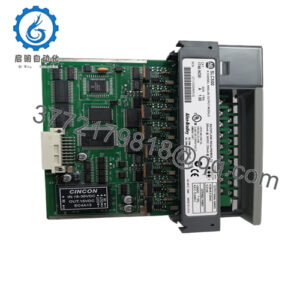
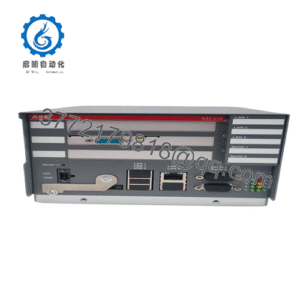
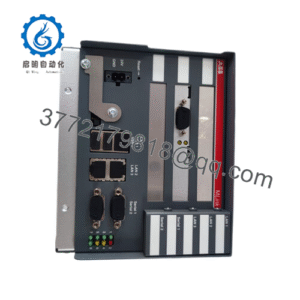
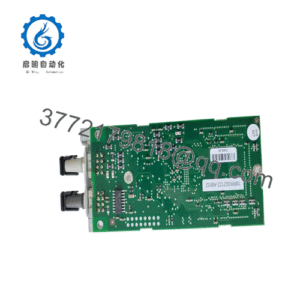
Honeywell CC-TUI031, part number 51306875-176, is a coated, non-redundant UIO-2 I/O Termination Assembly for Honeywell Experion PKS Series C Universal I/O applications. It provides the field-wiring termination interface for a compatible Universal I/O module and supports a 32-channel universal I/O arrangement.
The CC-TUI031 is selected when a plant needs the correct non-redundant, conformal-coated termination hardware for an installed UIO-2 assembly. It is not an active I/O processor or a standalone PLC module. Verify the paired Universal I/O module, field terminal layout, redundancy design, and cabinet drawing before ordering.
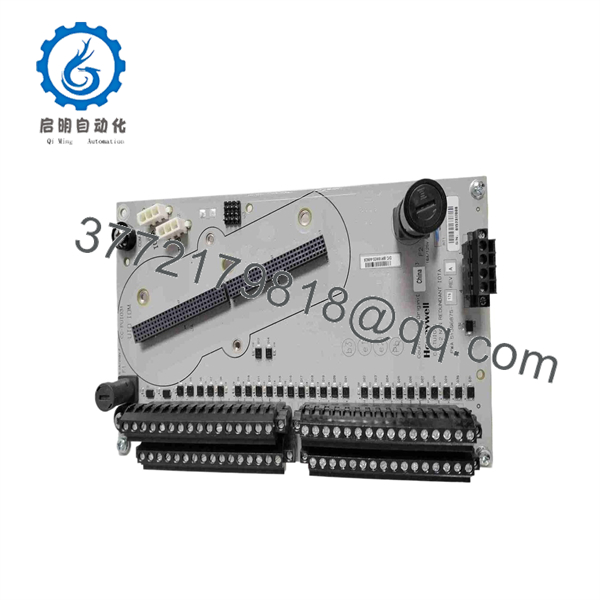
CC-TUI031
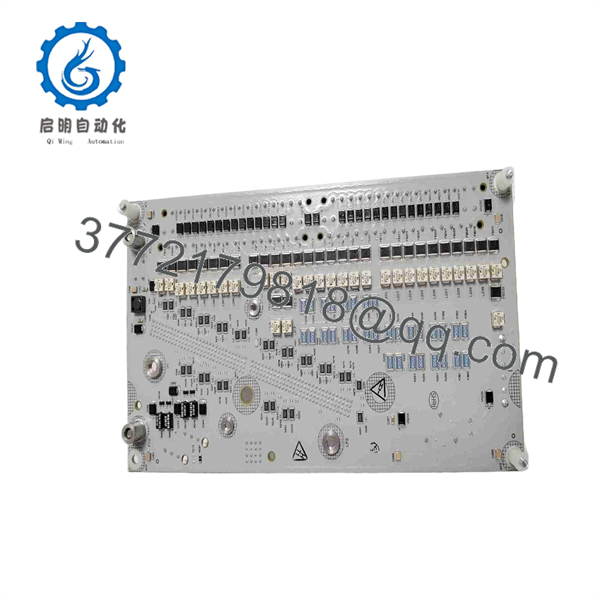
CC-TUI031
Troubleshooting Quick Reference
| Symptom | Possible Cause | Relevance to This Part | Quick Check Method | Recommendation |
|---|---|---|---|---|
| No status LEDs on the installed Universal I/O module | Lost 24 V DC cabinet power, I/O Link issue, failed active UIO module, unseated hardware | ❌ Low | Measure the applicable 24 V DC supply at the I/O assembly power terminals with a calibrated Fluke 115; verify whether adjacent Series C hardware powers normally | Check power distribution, fuses, controller status, and active module seating before replacing CC-TUI031. |
| All 32 channels fail after cabinet maintenance | Active Universal I/O module not seated, IOTA mismatch, backplane connection issue, field power interruption | ✅ Medium | Power down under the site-approved procedure; inspect module-to-IOTA mating contacts and keying; compare all labels to the cabinet bill of materials | Verify the exact UIO-2 module/IOTA pairing. Replace the IOTA only when physical damage or failed continuity testing confirms it. |
| One analog signal stays at 0 mA or 20 mA | Open field loop, failed transmitter, wrong channel configuration, broken terminal connection | ✅ Medium | Measure loop current at the designated test point; verify transmitter supply; review Universal I/O channel configuration and HART diagnostics | Check field wiring and configuration first. The IOTA is less likely than the transmitter, loop supply, or active UIO module to be the root cause. |
| HART device does not communicate | Incorrect channel configuration, inadequate loop resistance, shield/grounding issue, device address conflict | ❌ Low | Use an approved HART communicator or host diagnostic; verify loop current, resistance, shield grounding, and device polling address | Correct the field-loop and configuration problem before replacing termination hardware. |
| Input values jump or show intermittent noise | Loose terminals, shield terminated incorrectly, induced noise, poor field ground | ✅ Medium | Inspect terminal clamp engagement; compare shield termination to the loop drawing; trend the signal while moving the cable only if site procedure permits | Correct the field wiring and shielding. Replace CC-TUI031 only if terminals, conductor clamps, or internal paths are visibly or electrically damaged. |
| Replacement assembly does not match field wiring | Incorrect IOTA model, redundant/non-redundant mismatch, wrong revision, terminal arrangement differs | ✅ High | Photograph the old IOTA front, rear, terminal positions, labels, and paired active I/O module before removal; compare against Honeywell drawings | Stop work. Do not move wires based on appearance alone. Confirm CC- and 51306875-176 against the approved documentation. |
| Corrosion, discoloration, cracked terminal area, or heat marks | Water ingress, overcurrent, cabinet contamination, incorrect wiring, prior field repair | ✅ High | De-energize, inspect terminal hardware and contacts, check for abnormal resistance or unintended shorts using approved test methods | Replace the damaged IOTA and identify the source of moisture, heat, or overcurrent before installing the replacement. |
❗ Firmware mismatch warning: CC- is a termination assembly, so it does not normally carry the firmware that causes controller compatibility faults. The active Universal I/O module and Experion PKS system release do. Document the existing Universal I/O module part number, firmware, and controller diagnostics before replacing any active hardware. I have seen teams spend two days on a “bad I/O rack” when the real issue was an active module revision that did not match the existing system software.
❗ DIP switch and keying warning: Take photos before removal. Seriously. Depending on the cabinet design, mechanical keys, terminal arrangement, and field wiring can vary. The most common avoidable failure is installing a visually similar termination assembly, then reconnecting field wires from memory. Verify the exact assembly and wiring diagram.
❗ Terminal and shielding warning: Do not assume adjacent channels have the same terminal assignment. Check the loop diagram and the terminal identification. Shield grounding can be single-ended or specified differently by the project design; grounding both ends without checking the drawing can create a noise loop.
❗ Power-draw warning: The CC- is not the main source of rack current draw. The active UIO module, transmitters, solenoids, relays, and other field devices are. Calculate cabinet and field-power consumption, then retain at least a 20% capacity margin before changing the installed architecture.
❗ ESD warning: Use a grounded wrist strap when handling the active Universal I/O module. Do not place electronics on painted cabinet steel, cardboard, or a workbench without ESD protection. I once watched a technician handle a $2,000 control card in low-humidity winter air without a strap. It booted once, faulted, and never came back.
Keep these checks in mind and you will save yourself 90% of typical rework time. If you are stuck, send technical support clear photos of the IOTA label, installed UIO module label, terminal wiring, cabinet architecture, and Experion diagnostic logs.
Frequently Asked Questions
What is the Honeywell CC-?
Honeywell CC- is a Series C UIO-2 non-redundant I/O Termination Assembly, commonly called an IOTA. The associated part number is 51306875-176. It provides field termination for a compatible Honeywell Universal I/O module in an Experion PKS Series C cabinet. The listing and Honeywell-related product references identify it as a non-redundant IOTA, often specified as a coated version.
Is CC- the same as a Universal I/O module?
No. This distinction matters during procurement. CC- is the termination assembly that carries the field-wiring interface; it is not the active Universal I/O module that configures and processes field signals. If your failed component has status LEDs, firmware details, or channel diagnostics, you may need the active UIO module rather than the IOTA.
Honeywell’s Universal I/O architecture uses Universal I/O modules with compatible termination hardware. The installed I/O module connects to the controller through the Honeywell I/O Link arrangement.
Can I replace CC- with CC-TUI041?
Do not assume that you can. CC- is identified as a non-redundant IOTA. A different suffix may indicate a different redundancy configuration, physical arrangement, or intended application. Replacing a non-redundant IOTA with a redundant version can create mounting, wiring, or system-architecture problems even if the assemblies look similar.
Confirm the original IOTA label, paired Universal I/O module, terminal layout, and cabinet bill of materials before purchase. A photo of the old unit is far more valuable than a general description such as “Honeywell UIO card.”
Can I hot-swap the CC-?
No, not as a routine practice. The IOTA is connected to field wiring, and removing it can interrupt live analog and digital signals, create false process inputs, or trip interlocks. To be honest, this type of replacement is a hassle in a live process area because the field conductors and safety implications matter more than the physical card swap.
Isolate the affected loops, follow the approved bypass and lockout/tagout process, de-energize as required by the Honeywell procedure, and label every conductor before disconnecting it. Only perform a live replacement if the exact OEM instructions and plant procedure explicitly authorize it.
Will I lose configuration or programming when replacing CC-?
The CC- itself does not normally contain the controller program or active I/O configuration. However, the connected Universal I/O module and Experion configuration determine channel behavior, signal type, scaling, HART setup, alarms, and diagnostics.
Before replacement, back up the relevant Experion configuration, record all channel diagnostics, photograph the physical installation, and document the active I/O module part number and firmware version. If the I/O module is also being changed, compatibility becomes a separate issue.
Why is a New Surplus CC- less expensive than factory supply?
New Surplus stock generally comes from unused project spares, cancelled projects, distributor overstock, or decommissioned warehouse inventory. It can be genuine OEM hardware with an older manufacturing date or shelf storage history. The lower price usually reflects supply-chain source and the absence of a current factory-production channel, not automatically a functional defect.
Ask for actual photos of the label and terminals, packing condition, date code where visible, quantity on hand, warranty terms, and a written inspection record. Avoid listings that call the unit merely “used” or “tested” without defining what was tested.
What quality checks should a supplier complete before shipping?
For a New Original / New Surplus CC-, require a documented process:
- Inbound inspection and traceability: Verify OEM labels, packing documentation, serial or lot identifiers, housing condition, terminal integrity, conformal-coating condition, and evidence of previous installation or rework.
- Visual and contact inspection: Check for corrosion, bent contacts, cracked housings, discoloration, damaged terminal clamps, loose hardware, UV yellowing, or contamination. No repair marks should appear on a unit represented as New Surplus.
- Mated functional evaluation: Where a compatible Honeywell test assembly is available, install the correct active Universal I/O module, verify mechanical fit and contact engagement, validate representative channel operation, and confirm the assembly does not introduce intermittent field-path failures.
- Electrical checks: Use a calibrated Fluke 115 or equivalent to verify continuity through intended terminal paths and absence of unintended shorts. Do not apply a 500 V insulation-resistance test or hipot test unless Honeywell’s specific procedure authorizes it for this assembly.
- Final QC and packing: Obtain QC inspector sign-off, ESD-protective handling for the active electronics, protective wrapping, heavy-duty corrugated packaging, and a QC-passed label. Test photos and inspection photos should be available upon request.