WhatsApp: +86 16626708626
 Email:
  Phone: +86 16626708626
Description
Key Technical Specifications
- Manufacturer: Honeywell MICRO SWITCH
- Model: GLEB01A1B
- Series: GLE / GLS Global
- Product Type: Miniature industrial limit switch
- Actuator: Fixed side rotary metal roller
- Contact Type: Snap action
- Contact Arrangement: SPDT, 1NC/1NO
- Contact Terminals: 13–14 normally open; 21–22 normally closed
- Contact Material: Silver
- Thermal Current: 10 A
- AC Rating: 6 A at 120 V AC; 3 A at 240 V AC
- DC Rating: 0.55 A at 125 V DC; 0.27 A at 250 V DC
- Rated Insulation Voltage: 300 V
- Rated Impulse Voltage: 2.5 kV
- Operating Torque: 0.12 N·m maximum
- Mechanical Life: Up to 10 million cycles
- Conduit: PG13.5
- Housing: Electrostatic epoxy-coated zinc
- Ingress Protection: IP66 in the Honeywell GLS catalog; some distributors list IP67 for this SKU
- Operating Temperature: −40 to +85 °C
- Maximum Operating Frequency: 250 operations/minute
- Shock Resistance: 50 g per IEC 60068-2-27
- Vibration Resistance: 10 g per IEC 60068-2-6
- Dimensions: Approximately 106.5 × 65 × 30 mm, distributor-listed
- Standards: EN50047, IEC/EN 60947-5-1, UL 508, CSA C22.2 No. 14, CCC
- Approvals: CE, UL, CSA, and CCC
- Hazardous-Area Certification: None
Honeywell’s GLS catalog identifies GLEB01A1B as a GLE-series metal-housing limit switch with a fixed side rotary metal roller, PG13.5 conduit, SPDT snap-action silver contacts, and 0.12 N·m maximum operating torque.
The distributor listing reports 6 A switching at 240 V AC, 250 V DC switching capability, −40 to +85 °C operation, and IP67 protection. Honeywell’s catalog lists IP66 for the GLS family, so confirm the required ingress rating from the exact product certificate or current Honeywell datasheet.
Product Introduction
The Honeywell GLEB01A1B is a GLE-series miniature industrial limit switch with a fixed side rotary metal roller and SPDT snap-action contacts. It detects machine position, travel, doors, guards, conveyor movement, and end-of-stroke conditions in industrial equipment.
The switch uses a zinc housing, PG13.5 cable entry, silver contacts, and a standardized EN50047-style mounting format. Verify the required contact arrangement, conduit thread, actuation direction, sealing rating, and load category before substituting a similar GLE or GLS model.
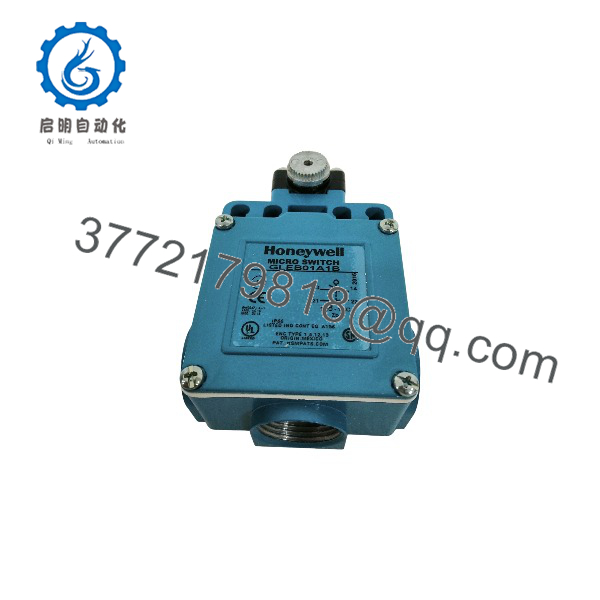
GLEB01A1B
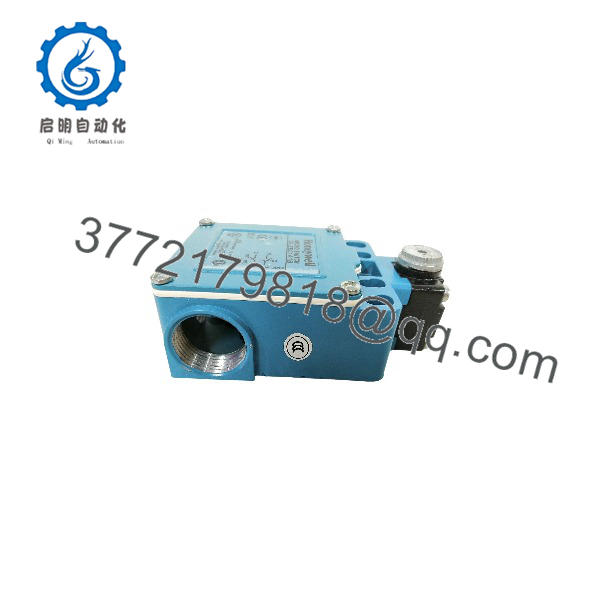
GLEB01A1B
Troubleshooting Quick Reference
| Symptom | Possible Cause | Relevance to This Part | Quick Check Method | Recommendation |
|---|---|---|---|---|
| PLC input never changes state | Misadjusted actuator, broken wire, failed contact, or missing input supply | ✅ High | With power isolated, check continuity across 13–14 and 21–22 while operating the roller; then verify input voltage | Adjust the actuator and replace the switch only after confirming the wiring |
| PLC input remains permanently on | Welded contact, incorrect terminal use, or shorted field wiring | ✅ High | Remove the field wires and test contact continuity independently at the switch terminals | Replace the switch if the contact does not change state mechanically |
| Normally closed circuit opens intermittently | Excessive vibration, insufficient roller travel, worn contact block, or loose terminal | ✅ High | Monitor continuity while slowly moving and vibrating the actuator through its travel | Correct mounting and ensure adequate overtravel; replace if contact bounce is excessive |
| Switch actuates too late | Target is not engaging the roller correctly or actuation direction is wrong | ✅ High | Measure the target position at contact transfer and compare it with the required machine stop point | Reposition the switch or target; do not bend the actuator beyond its limits |
| Switch does not reset | Roller remains depressed, return mechanism is damaged, or target geometry is incorrect | ✅ High | Remove the target from the roller and check whether the actuator returns freely | Correct target clearance or replace the mechanism if it binds |
| Contact welds or burns | Load exceeds AC/DC rating, inductive load lacks suppression, or switching category is wrong | ✅ High | Measure load current and inspect for a relay, solenoid, or motor coil connected directly to the contacts | Use an interposing relay or suppression network sized for the load |
| Water or dust enters enclosure | Damaged gasket, incorrect PG13.5 gland, loose cover, or cable strain | ✅ Medium | Inspect the seal, gland, cover, and cable jacket after de-energizing the circuit | Replace damaged sealing hardware and restore the specified enclosure protection |
| Switch fails after cable replacement | Incorrect terminal numbering, loose screw terminal, or conductor damage | ✅ High | Compare field wiring with the contact diagram and perform a pull test on each conductor | Rewire by terminal number; never rely on the old wire color alone |
| Mechanical action feels rough | Roller bearing wear, side loading, contamination, or impact damage | ✅ Medium | Operate the roller by hand and check for binding, excess play, or rough rotation | Correct target alignment and replace the switch if the actuator is damaged |
| Switch is used in an emergency-stop circuit | Limit switch not certified for the required safety function | ✅ High | Review the machine risk assessment and safety circuit certification | Do not use this switch as an emergency stop or sole protective device |
| False trips during machine motion | Excessive vibration, inadequate overtravel, contact bounce, or poor mounting | ✅ Medium | Trend the input state while measuring vibration and actuator travel | Improve mounting and debounce logic only if permitted by the control-system design |
Important: Honeywell states that GLE limit switches are not safety devices and must not be used where personal injury could result from product failure. Use a properly certified safety switch or safety-rated position device for guard monitoring or emergency-stop functions.
Frequently Asked Questions
What type of switch is the Honeywell GLEB01A1B?
It is a GLE-series industrial limit switch with a fixed side rotary metal roller, SPDT 1NC/1NO snap-action contacts, a zinc housing, and a PG13.5 conduit entry.
What are the contact terminals?
The standard contact numbering is 13–14 for the normally open contact and 21–22 for the normally closed contact. Verify the marking inside the actual switch before wiring because terminal identification must control the installation.
Can it switch 240 V AC directly?
The available distributor data lists 3 A at 240 V AC and 6 A at 120 V AC for the silver-contact configuration. The catalog’s electrical tables also identify the applicable IEC AC-15 ratings. Check the load category and inrush current, especially for contactors, solenoids, and motor starters.
Is GLEB01A1B IP66 or IP67?
Honeywell’s GLS catalog lists IP66 for the GLE family, while RS lists this specific part as IP67. Because the claims differ, verify the exact product certificate and installation conditions before specifying temporary immersion or washdown service.
Is it suitable for a safety interlock?
Not by itself. Honeywell explicitly warns that GLE limit switches are not safety devices. Do not use this model as the sole emergency-stop, guard-lock, or personnel-protection device.
What is the difference between GLEB01A1B and GLEB01A1A?
The actuator differs. GLEB01A1A uses a side rotary plastic roller, while uses a side rotary metal roller. Both belong to the GLE family, but target friction, wear, temperature, and mechanical alignment requirements can differ.
Is it a direct replacement for another limit switch?
Only if the actuator, contact arrangement, conduit, mounting pattern, electrical rating, and operating direction match. A switch with the same body dimensions but a different contact code may change the machine’s fail-state behavior.
What condition should the listing state?
The listing should identify New Original, New Surplus, or Refurbished and tested. For a used unit, request photographs of the actuator, housing, conduit entry, terminal block, and label, plus continuity testing of both contact paths and confirmation that the roller returns freely.