WhatsApp: +86 16626708626
 Email:
 Phone: +86 16626708626
Description
3. Key Technical Specifications
| Parameter | Value / Description |
|---|---|
| Model | LG1093AA24 |
| GE Part Number | 261A1812P012 |
| Manufacturer | Honeywell |
| Sensor Type | Ultraviolet (UV) flame sensor |
| Detection Technology | Geiger-Mueller phototube |
| Spectral Range | Approx. 180–260 nm (solar blind) |
| Mounting Interface | 3/4 inch internal NPT |
| Operating Temperature | –40°F to +350°F (approx. –40°C to +176°C) |
| Window Pressure Rating | High (typically 150 psig class) |
| Flame Response Time | Fast (typically < 0.2 s for flame loss) |
| Cable | Teflon-shielded, various lengths available |
| Typical Application | GE gas turbines (Frames 5, 6, 7, 9) and industrial burners |
4. Product Introduction
The Honeywell LG1093AA24 is an industrial ultraviolet flame sensor designed for reliable flame monitoring in gas turbines and heavy-duty combustion systems. It is the direct equivalent / replacement for GE part number 261A1812P012.
The sensor uses a Geiger-Mueller phototube that responds to ultraviolet radiation in the 180–260 nm range emitted by hydrocarbon flames while remaining essentially blind to visible light and black-body radiation. This makes it suitable for continuous flame supervision on GE Frame 5, 6, 7, and 9 gas turbines as well as other industrial burners and boilers. The robust construction with a high-pressure viewing window and high-temperature capability allows installation close to the combustion chamber.
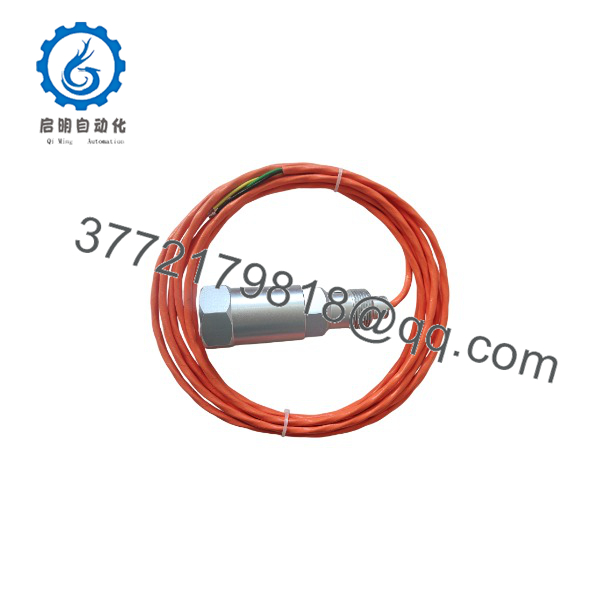
LG1093AA24 261A1812P012
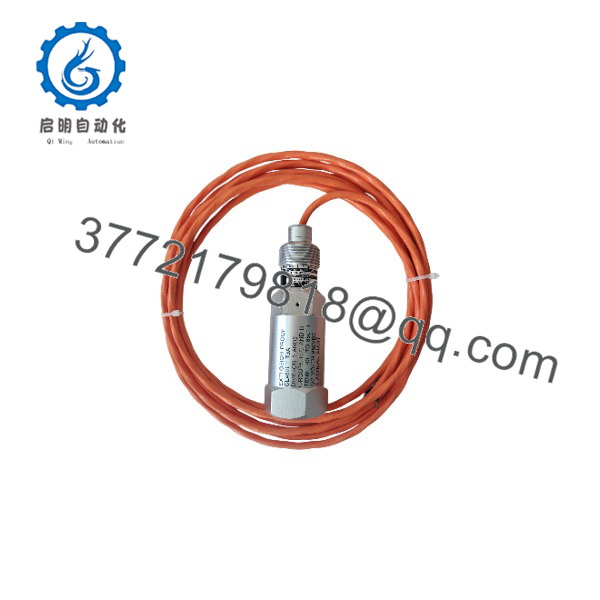
LG1093AA24 261A1812P012
5. Troubleshooting Quick Reference
| Symptom | Possible Cause | Relevance to this Part | Quick Check Method | Recommendation |
|---|---|---|---|---|
| No flame signal | Dirty window, failed tube, or wiring | ✅ High | Inspect window; measure sensor output pulses | Clean window; replace sensor if no output |
| False flame indication | Electrical noise or residual ionization | ✅ Medium | Check shielding and grounding | Improve cable routing and grounding |
| Intermittent signal | Loose connector or cable damage | ✅ High | Wiggle test cable and connectors | Repair or replace cable assembly |
| Slow response to flame loss | Aging tube or incorrect amplifier | ✅ High | Compare response time with specification | Replace sensor; verify amplifier settings |
| Sensor overheating | Excessive process temperature | ✅ Medium | Check mounting location and cooling | Improve cooling or relocate if possible |
| No communication with amplifier | Wiring or amplifier fault | ❌ Low | Verify power and signal wiring to amplifier | Troubleshoot amplifier and interconnect first |
Always follow combustion safety procedures and lockout/tagout. Never look directly into the sensor window while the system is energized.
6. Frequently Asked Questions (FAQ)
Q: What is the relationship between LG1093AA24 and 261A1812P012?
LG1093AA24 is the Honeywell model number. 261A1812P012 is the corresponding GE part number. The Honeywell sensor is the direct functional replacement.
Q: What type of flame does it detect?
It detects ultraviolet radiation from hydrocarbon flames (gas, oil, etc.) and is solar-blind.
Q: Where is this sensor typically used?
Primarily on GE industrial gas turbines (Frames 5, 6, 7, 9) and other heavy-duty combustion systems requiring reliable UV flame supervision.
Q: What is the mounting thread?
3/4 inch internal NPT.
Q: Is the sensor still available?
Yes. Genuine Honeywell LG1093AA24 units (and cross-referenced GE equivalents) remain available as new or carefully tested surplus for maintenance of existing turbine installations.
Q: What should I check before replacement?
Confirm the exact model, cable length, amplifier compatibility, and mounting orientation. Photograph the existing sensor labels and wiring for reference.
Install with a clean viewing window, correct orientation, and proper cable routing. After installation, verify flame-on and flame-loss response times with the associated amplifier to ensure reliable combustion supervision.