WhatsApp: +86 16626708626
 Email:
  Phone: +86 16626708626
Description
Key Technical Specifications
- Switching Topologies: 64 two-wire, 32 three-wire, 32 four-wire, or 128 single-ended
- Relay Type: Latching armature switches
- Wire Mode Configuration: SCPI command or status bit jumpers on terminal card — selectable as 128×1-wire, 64×2-wire, 32×3-wire, or 32×4-wire
- Format: C-size, 1-slot, register-based VXI
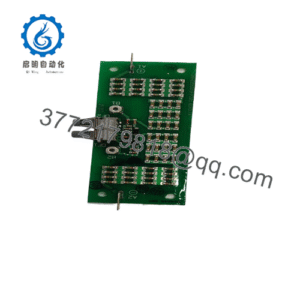
- Component Card: E1460-66202 (switch card)
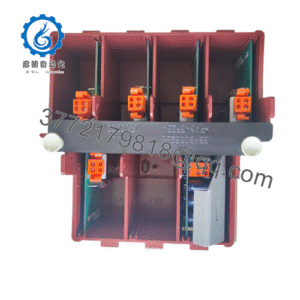
- Terminal Block Options: QUIC screw terminal block (E1460-80011, newer style) or non-QUIC terminal block (E1460-66201, older style, sold separately)
- Shared Switch Card: Same base card used in E1468A and E1469A; matrix topology set by terminal block
- Typical Applications: Wire harness and cable testing, semiconductor testing, PCB testing, scanning voltmeter front-end
- Compatible DMM Pairing: Works with E1411B DMM for scanning voltmeter configurations
- Compliance Note: Discontinued in the EU for non-compliance with RoHS 2011/65/EU
Product Introduction
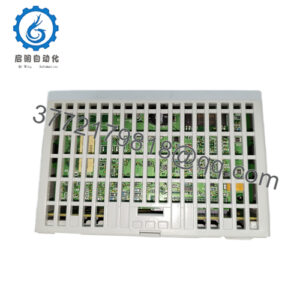
The E1460A is a C-size, 1-slot relay multiplexer built around armature latching relays, giving you a reconfigurable switching front-end instead of a fixed-topology mux. Set the wire mode via SCPI command or the terminal card’s status bit jumpers, and the same switch card supports 128 single-ended, 64 two-wire, 32 three-wire, or 32 four-wire channel counts.
The QUIC terminal block architecture is what separates this from a fixed-wiring mux card — the E1460A, E1468A, and E1469A all share the same base switch card (E1460-66202), so matrix configuration comes down to which terminal block you plug in. Pair it with an E1411B DMM over SCPI and you’ve got a scanning voltmeter setup without custom wiring at the analog bus. It’s a standard choice for wire harness, semiconductor, and PCB test racks running on legacy VXI infrastructure.
Troubleshooting Quick Reference
| Symptom | Possible Cause | Relevance to this Part | Quick Check Method | Recommendation |
|---|---|---|---|---|
| Specific channel won’t close/open | Individual relay contact failure or wear | ✅ High | Run the closed-channel resistance test from the service manual on the affected channel | Isolated single-channel failure usually means the relay card needs repair or replacement |
| All channels unresponsive | VXI backplane fault or Resource Manager not recognizing module | ❌ Low | Verify module enumerates under your command module (e.g., E1406A) | Check backplane seating and Resource Manager status before replacing |
| Wire mode not switching correctly | Status bit jumper misconfiguration or SCPI wire-mode command error | ✅ Medium | Check jumper settings on terminal card against desired mode, or re-send SCPI wire-mode config | Reconfigure jumpers/SCPI before assuming hardware fault |
| High resistance on closed channels | Relay contact wear or oxidation from switching cycles | ✅ High | Run Test 2-1 (Closed-channel Resistance Test) from the service manual | If resistance exceeds spec after cleaning cycles, relay card likely needs replacement |
| Cross-talk or unexpected connections between channels | Terminal block wiring error or wrong terminal block installed | ❌ Low | Verify terminal block part number (QUIC E1460-80011 vs. non-QUIC E1460-66201) matches your wiring diagram | Usually a wiring/terminal-block mismatch, not the switch card |
| DC isolation failure between channels | Contamination, moisture, or relay insulation breakdown | ✅ Medium | Run the DC Isolation Test (Test 2-3) per the service manual | Persistent isolation failure after cleaning points to relay card replacement |
If you’re still stuck after running these checks, send us the self-test error code (if any) along with your wire-mode configuration and terminal block part number so we can help pin it down.
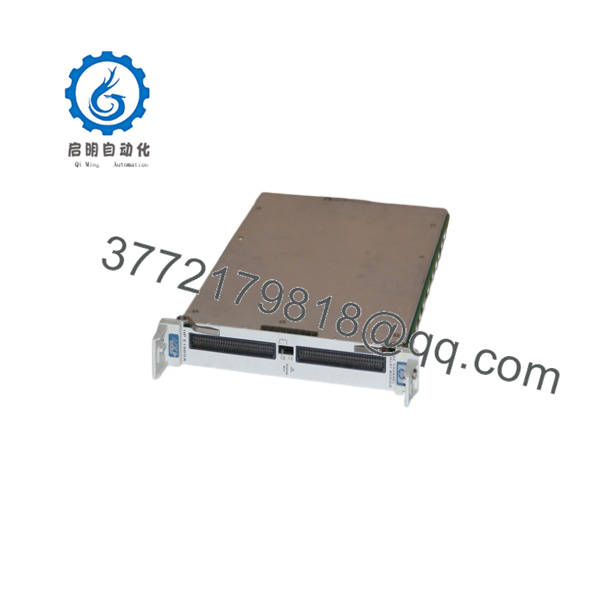
E1460A
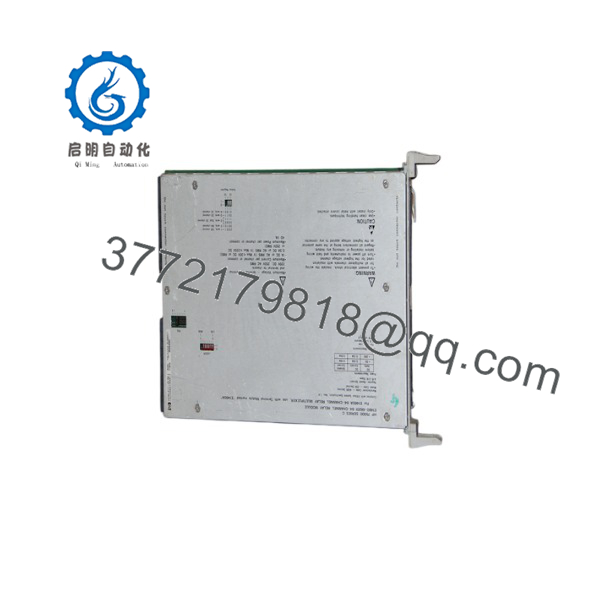
E1460A
Frequently Asked Questions (FAQ)
Do I need to buy the terminal block separately?
Depends on the listing — check whether you’re getting the QUIC version (E1460-80011) or the older non-QUIC version (E1460-66201). Some resellers sell the switch card and terminal block as separate line items, so confirm before you order if you need a complete, ready-to-wire unit.
Can I change the switching topology after I’ve installed it?
Yes — that’s the point of this card. Swap the terminal block or reconfigure via SCPI/status bit jumpers to move between 128×1-wire, 64×2-wire, 32×3-wire, or 32×4-wire modes. You don’t need a different switch card for different topologies.
Is this compatible with the E1468A or E1469A terminal blocks?
The switch card (E1460-66202) is shared across the E1460A, E1468A, and E1469A family. The terminal block is what defines the final matrix configuration, so check part numbers carefully — swapping terminal blocks between these models is exactly how the topology changes.
Why is this listed as unavailable in the EU?
Keysight pulled the E1460A from EU sale for non-compliance with RoHS 2011/65/EU, not because of a functional issue. If you’re outside the EU, that’s not a factor for procurement.
How many switching cycles can I expect before the relays wear out?
To be honest, latching armature relays are a mechanical wear item — expect gradual increases in closed-channel resistance over the module’s service life, especially on heavily-cycled channels. Run the closed-channel resistance test on a used unit before deploying it in a high-cycle-count application.
Is this hot-swappable in a running VXI mainframe?
No. It’s a register-based module — power down the mainframe before installing or removing it to avoid backplane communication errors for other modules.
Why is this cheaper than buying new?
It’s discontinued — Keysight doesn’t manufacture new units. What you’re buying is New Surplus (unused, pulled stock) or Refurbished (tested) genuine OEM hardware, not new-production inventory. Ask for closed-channel resistance and DC isolation test results if you want documented proof of condition before buying used.