WhatsApp: +86 16626708626
 Email:
 Phone: +86 16626708626
Description
Key Technical Specifications
| Parameter | Value |
|---|---|
| Manufacturer | Jetter AG |
| Part Number | JM-204-480-OEM-S1 |
| Product Family | JetMove 2xx |
| Product Type | Digital servo amplifier |
| Rated Input | 3-phase AC 400/480 V |
| Operating Input Range | 3-phase AC 340 to 530 V |
| Maximum Operating Voltage | 480 V class |
| Continuous Motor Current | 4 A RMS at 45 °C ambient |
| Peak Motor Current | 8 A RMS for up to 3 minutes, duration dependent on heatsink temperature |
| Continuous Motor Power | 2 kW / approximately 1.5 hp |
| Maximum Motor Output Voltage | 850 V |
| Logic Supply | 24 V DC, 20 to 28.8 V DC |
| Logic Supply Current | 0.6 A maximum |
| Control Inputs | Enable, reference switch, positive limit, negative limit, and input |
| Digital Input Voltage | 20 to 30 V DC |
| Digital Input Current | 7.5 mA maximum per input |
| Digital Outputs | PNP transistor outputs |
| Digital Output Voltage | 20 to 30 V DC |
| Digital Output Current | 0.5 A maximum per output |
| Output Protection | Short-circuit, overload, overvoltage, and overtemperature protection |
| Regeneration Resistor | Internal PTC resistor; approximately 120 Ω |
| Internal Braking Power | 75 W continuous; up to 1 kW for 0.6 seconds |
| Network Interface | Optional integrated Ethernet on OEM variant |
| Encoder Interface | Verify encoder type and connector against the motor package |
| Safety Variant | S1; verify the applicable performance-level implementation |
| Installation | Cabinet-mounted servo amplifier with heatsink clearance requirements |
| Compliance | Verify current machine-specific CE, EMC, and safety documentation |
| Product Status | Legacy / availability varies by condition and revision |
The Jetter manual identifies the “204” code as a 4 A rated-current class, the “480” code as a maximum 480 V operating class, and the OEM suffix as the version with an optional integrated Ethernet interface. The S1 designation identifies the relevant safety-function version.
Product Introduction
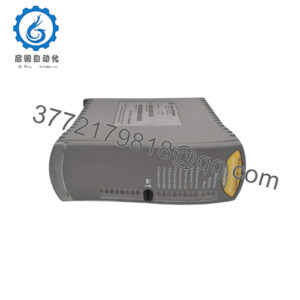
The Jetter JM-204-480-OEM-S1 is a JetMove 2xx digital servo amplifier for 3-phase AC servo motors. It accepts a 340 to 530 V AC supply, provides 4 A RMS continuous motor current and up to 8 A RMS peak current, and is rated for approximately 2 kW of continuous motor power. The OEM version supports an optional integrated Ethernet interface.
This drive is used in multi-axis machinery where the installed Jetter controller, motor feedback, network interface, and safety circuit match the JetMove configuration. Confirm motor data, encoder compatibility, Ethernet option, parameter set, and S1 safety requirements before energizing the replacement.
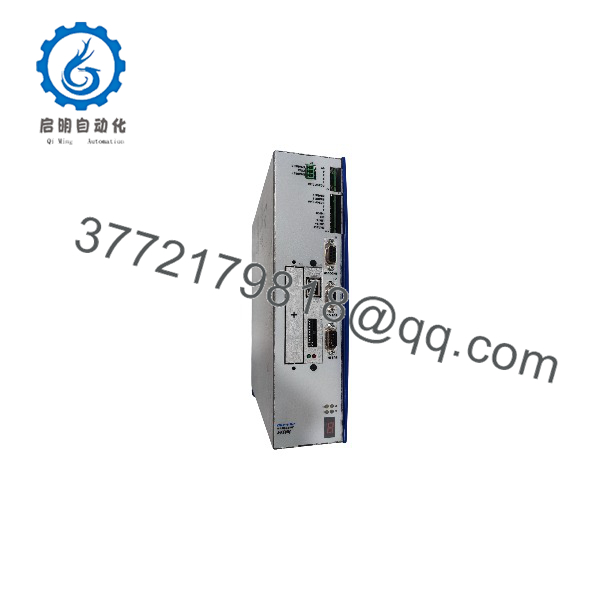
JM-204-480-OEM-S1
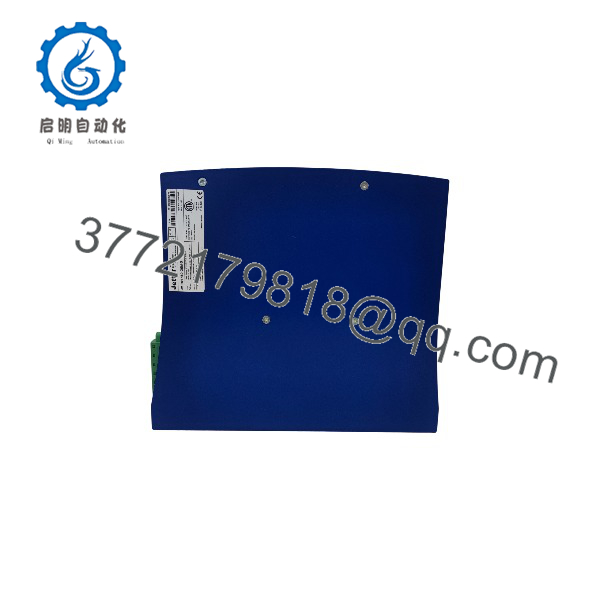
JM-204-480-OEM-S1
Troubleshooting Quick Reference
| Symptom | Possible Cause | Relevance to This Part | Quick Check Method | Recommendation |
|---|---|---|---|---|
| No display or status indication | Missing 24 V DC logic supply, blown fuse, incorrect polarity, or drive failure | ✅ High | Measure 20 to 28.8 V DC at the designated logic-supply terminals | Verify logic power and polarity before applying the high-voltage input |
| Drive will not enable | Safety input open, enable signal absent, controller inhibit, or fault latch | ✅ High | Measure the enable and safety-related inputs at the terminals and review the drive fault code | Check the complete enable chain before replacing the amplifier |
| DC bus does not rise | Missing phase input, input fuse, contactor problem, or supply undervoltage | ✅ High | Measure all three input phases and verify the bus precharge sequence | Check the mains path and fuses; do not bypass the precharge circuit |
| Overvoltage fault during deceleration | Regenerative load, incorrect braking resistor, or excessive deceleration | ✅ High | Review DC-bus voltage, deceleration time, resistor wiring, and resistor temperature | Reduce deceleration demand or verify the braking-resistor configuration |
| Drive trips on overcurrent | Shorted motor cable, motor winding fault, incorrect motor data, or mechanical jam | ✅ High | Isolate the motor cable, check phase-to-phase resistance, and inspect the load | Test the motor and cable separately before replacing the drive |
| Motor does not rotate | Missing enable, wrong commutation or encoder feedback, incorrect parameters, or motor wiring fault | ⚠️ Medium | Verify enable status, motor parameters, feedback diagnostics, and phase wiring | Restore the approved parameter set and confirm encoder compatibility |
| Encoder or feedback alarm | Wrong encoder type, damaged feedback cable, connector issue, or incompatible motor | ✅ High | Inspect the feedback connector and compare the motor nameplate with drive parameters | Match the complete motor/feedback package; do not substitute by power rating alone |
| Position following error | Mechanical overload, tuning issue, wrong inertia, feedback fault, or incorrect motor data | ⚠️ Medium | Compare commanded and actual position, load torque, and feedback quality | Check mechanics and tuning before condemning the amplifier |
| Drive overheats | Blocked airflow, insufficient cabinet clearance, overload, or heatsink contamination | ✅ High | Measure ambient temperature, inspect airflow, and review thermal diagnostics | Correct cooling and load issues; maintain the manufacturer’s clearance requirements |
| Ethernet communication fails | Missing OEM Ethernet option, wrong IP settings, cable fault, or controller configuration error | ✅ Medium | Identify the installed option, check link status, and verify network parameters | Confirm that the unit is the OEM Ethernet variant before replacement |
| Digital output does not operate | Output overload, wiring fault, missing 24 V supply, or failed output transistor | ⚠️ Medium | Measure output voltage under load and test with a known-good load | Check load current and wiring before replacing the amplifier |
| Motor brake does not release | Brake wiring, brake supply, parameter setting, or motor variant issue | ❌ Low to medium | Verify whether the motor has a brake and measure the brake supply at the motor connector | Do not assume the amplifier includes or controls a brake without the correct motor data |
| Drive trips after several minutes | Thermal overload, heatsink saturation, excessive peak-current duty, or poor cabinet ventilation | ✅ High | Trend heatsink temperature and motor current during the complete duty cycle | Check application sizing and cooling before replacement |
| Safety function does not reset | S1 safety input wiring, reset logic, external safety relay, or incorrect implementation | ✅ High | Verify the safety circuit against the machine risk assessment and approved wiring diagram | Do not bypass the safety circuit; validate the complete safety function |
Critical warning: The JM-204-480-OEM-S1 operates on hazardous three-phase voltage and can produce up to 850 V motor output. Isolate, lock out, and verify discharge before opening the cabinet or disconnecting motor wiring. The manual also specifies that residual voltage can remain after power removal; follow the Jetter discharge and measurement procedure.
For technical support, provide the exact drive label, hardware revision, motor model, encoder type, fault code, input-voltage readings, DC-bus behavior, Ethernet option, parameter backup, and photos of the power, motor, feedback, and safety wiring.
Frequently Asked Questions (FAQ)
What is the Jetter JM-204-480-OEM-S1?
It is a JetMove 204-480 digital servo amplifier with the OEM Ethernet option and S1 safety-function designation. The “204” identifies the 4 A rated-current class, while “480” identifies the 480 V operating class.
Is this a 480 V AC servo drive?
It is a 480 V-class, three-phase servo amplifier. The manual specifies an operating range of approximately 340 to 530 V AC and a direct supply of 3 × 400/480 V. Confirm the actual plant voltage, protection, grounding, and motor package before installation.
What motor size does it support?
The manual lists approximately 2 kW of continuous motor power, with 4 A RMS continuous current and 8 A RMS peak current for a limited period. Actual motor compatibility depends on motor voltage, current, feedback, commutation data, inertia, and application duty—not power alone.
Does the OEM version include Ethernet?
The OEM designation indicates the version for which an integrated Ethernet interface can be ordered. Confirm the physical network connector and option marking on the actual unit; do not assume every seller’s JM-204-480-OEM-S1 includes the same installed communication hardware.
Can I replace JM-204-480-OEM-S1 with JM-204-480-S1?
Not automatically. The OEM suffix can identify the Ethernet-equipped configuration, while the base S1 unit may not contain the same network hardware. Compare connectors, option markings, firmware, controller protocol, safety configuration, and parameter compatibility before substitution.
Is this drive obsolete?
It is a legacy JetMove 2xx component, and independent suppliers commonly offer repair, refurbished, service-exchange, or used units. Confirm the exact condition, hardware revision, Ethernet option, test report, warranty, and return terms before purchase.
What should a supplier test before shipment?
Testing should include visual inspection, insulation and connector checks, 24 V logic power, three-phase input operation, DC-bus charging, enable and safety inputs, motor output under a controlled load or compatible motor, feedback operation, digital I/O, Ethernet communication when fitted, thermal behavior, and fault logging. The report should identify the tested serial number and motor or test-rack configuration.