WhatsApp: +86 16626708626
 Email:
 Phone: +86 16626708626
Description
Key Technical Specifications
- Manufacturer: KB Electronics (Nidec)
- Part Number: KBLC-120 (9109, 9109A)
- Product Family: KBLC series full-wave SCR DC motor speed controls
- Input Voltage: 115 VAC, 50/60 Hz
- Output Voltage: 0–90 VDC (armature)
- Continuous Output Current: 6 A DC (without auxiliary heatsink)
- Output Current with Auxiliary Heatsink: 12 A DC (with KB P/N 9861 or equivalent)
- Horsepower Rating:
- Approx. 1/100 to 1/2 HP @ 115 VAC (without aux. heatsink)
- Up to 1 HP @ 115 VAC with auxiliary heatsink (per KB datasheet)
- Speed Range: 50:1
- Load Regulation: Better than 2% over 50:1 speed range (typical for KBLC family)
- Line Regulation: Approx. 0.54% speed change for ±15% line variation
- Control Inputs:
- 5 kΩ speed potentiometer (KB P/N 9111 or equivalent)
- Voltage following mode: 0–7 VDC isolated analog input (terminals P2+ / F–)
- Protection Features:
- Electronic current limiting (CL)
- MOV transient protection on AC input
- Auto Inhibit® to prevent false starts on AC cycling
- Adjustments (trimpots): MIN speed, MAX speed, ACCEL (0.5–4 s), IR compensation, CL (current limit)
- Mounting: Chassis / panel-mount; approx. 4.30 × 3.64 × 1.25 in (109 × 92 × 32 mm)
- Ambient Temperature: Up to 45 °C (113 °F) at full rating
- Standards: UL recognized component; CE compliance requires external RFI filter (e.g., KBRF-200A) and proper wiring
Note: Exact HP ratings, current limits, and thermal performance depend on installation, heatsinking, and motor type (PM vs. shunt wound). Always verify against the KBLC datasheet and motor nameplate before sizing.
Product Introduction
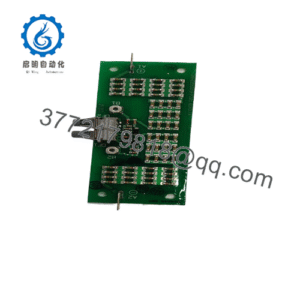
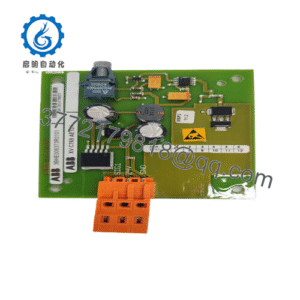
The KB Electronics KBLC-120 (9109) is a compact, full-wave SCR DC motor speed control designed for 90 V DC permanent magnet (PM) and shunt wound motors. It accepts 115 VAC, 50/60 Hz input and provides a 0–90 VDC armature output with up to 6 A continuous current (12 A with an auxiliary heatsink), supporting speed ranges up to 50:1 with better than 2% regulation.
This drive is commonly found in conveyor systems, packaging equipment, lab machines, and light industrial drives where simple, reliable speed control is needed without complex programming. Buyers choose KBLC-120 units to maintain or repair existing equipment designed around KB’s classic SCR drives, keeping the same wiring, potentiometer interface, and performance characteristics.
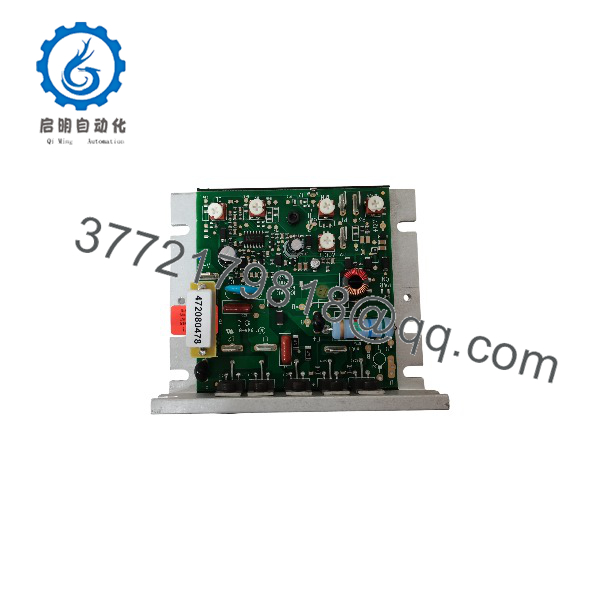
KBLC-120
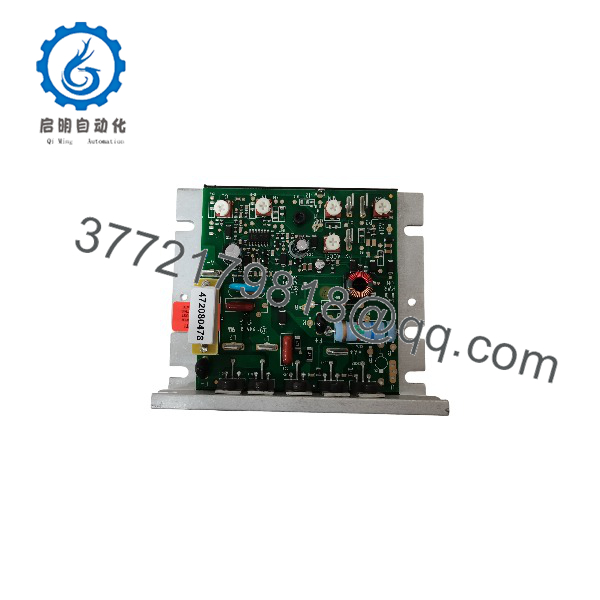
KBLC-120
Troubleshooting Quick Reference
| Symptom | Possible Cause | Relevance to this Part | Quick Check Method | Recommendation |
|---|---|---|---|---|
| Motor does not run, no output voltage | AC input missing; blown fuse; control not enabled | ✅ High | Measure 115 VAC at L1/L2 terminals; check upstream fuse/breaker; verify inhibit wiring | Restore AC power and check fuses; if AC is good but no output, suspect control |
| Motor runs at full speed, pot has no effect | Potentiometer wiring wrong; pot failed open; MAX trimpot misadjusted | ✅ High | Measure resistance across pot (should be ~5 kΩ); check P1/P2/P3 wiring; verify 0–7 VDC if using analog mode | Rewire or replace pot; adjust MAX trimpot per KB procedure |
| Motor runs but speed is unstable or surges | IR compensation misadjusted; poor pot connection; load fluctuations | ✅ Medium | Check IR trimpot setting; inspect pot wiring and terminals; monitor motor current under load | Adjust IR and CL trimpots per KB manual; secure all connections |
| Control trips or motor stalls under load | Current limit set too low; motor overload; mechanical binding | ✅ High | Measure armature current; check CL trimpot setting; inspect coupling, bearings, and load | Increase CL carefully; fix mechanical issues before raising current limit |
| Burning smell, discolored components, or visible damage | Past overload; shorted motor; failed SCR/power bridge | ✅ High | Visual inspection for burnt parts, cracked PCB, or melted terminals; smell for overheated components | Do not reuse visibly damaged controls; replace and investigate root cause |
If you’re unsure whether the issue is the KBLC-120 or the motor/load, send photos of the wiring, pot connections, and any nameplate data. That often tells us whether this is a control fault or a mechanical/motor problem.
Frequently Asked Questions (FAQ)
Q1: What exactly is the KBLC-120?
A: It’s a 115 VAC input, 0–90 VDC output SCR DC motor speed control from KB Electronics, rated for 6 A continuous (12 A with an auxiliary heatsink). It’s designed for 90 V DC permanent magnet and shunt wound motors up to about 1/2 HP (1 HP with heatsink).
Q2: What kind of motors can I run with a KBLC-120?
A: Primarily 90 V DC permanent magnet (PM) and shunt wound DC motors. It is not intended for 12/24 V DC motors or universal (AC/DC) motors unless specifically engineered into the system. Match the motor’s armature voltage and current to the ’s ratings.
Q3: Is the still made?
A: The is considered an older, legacy model. KB/Nidec has moved to newer drive families, and units now come from surplus stock or refurbished inventories. For new designs, engineers typically use newer KBIC/KBMM or other modern DC drives.
Q4: Can I use a KBIC-120 or KBMM instead of a ?
A: Often yes, but not blindly. KBIC and KBMM drives share similar 115 VAC input, 90 VDC output architecture, but terminal layouts, HP ratings, and features (e.g., dynamic braking, current limit behavior) can differ. For a drop-in replacement, match voltage, current, HP, and terminal functions, then verify in the manual.
Q5: Do I need a special potentiometer with the ?
A: KB specifies a 5 kΩ potentiometer (P/N 9111 or equivalent) for speed control. Using the wrong value (e.g., 1 kΩ or 10 kΩ) can cause poor linearity, limited range, or unstable speed. Wire it to P1, P2, and P3 as shown in the KBLC wiring diagram.
Q6: What does “voltage following mode” mean on the ?
A: Instead of a pot, you can feed an isolated 0–7 VDC analog signal into terminals P2+ and F– to control speed proportionally. This is useful for PLC or process control integration where an external controller sets speed. The analog source must be isolated from line voltage.
Q7: What condition are these drives in?
A: Available units are typically “New Surplus” (old stock, never installed) or “Refurbished / Repaired” (tested, with faulty components replaced). They are not new from the factory. For critical applications, request test reports and photos of the actual unit before purchase.