WhatsApp: +86 16626708626
 Email:
  Phone: +86 16626708626
Description
Key Technical Specifications
| Parameter | AR-181 Specification |
|---|---|
| Manufacturer | KEBA |
| Model | AR 181 / AR-181 |
| Module Type | Analog measuring and control module |
| Processor | Intel 80960 RISC |
| CPU Clock | 16 MHz |
| Analog Inputs | 8 |
| Analog Resolution | 14 bit |
| Analog Input Range | -10 V to +10 V |
| Typical Transducer Signals | Stroke, hydraulic pressure, mold cavity pressure, clamp-force pressure |
| Serial Inputs | 3 serial inputs, 14-bit resolution, for compatible stroke transducers with AS141 A/D converter |
| Watchdog | Hardware watchdog |
| Watchdog Timeout | 45 ms |
| Reset Duration | 90 ms |
| Original Memory | 1 MB DRAM, 0.5 MB Flash |
| AR 181/A Memory | 2 MB DRAM, 1 MB Flash, 16 KB SRAM |
| AR 181/B Memory | 4 MB DRAM, 1 MB Flash, 16 KB SRAM |
| AR 181/C Memory | 2 MB DRAM, 1 MB Flash, 16 KB SRAM |
| System Role | Slave to the main CPU |
| System Application | EC100 / CC100 machine-control systems |
The KEBA technical manual lists AR 181 as an analog measuring and control module and distinguishes several hardware revisions. This is important when replacing an older card because memory capacity can affect software compatibility. The documentation specifically identifies applications involving stroke and pressure transducers and proportional hydraulic control.
Product Introduction
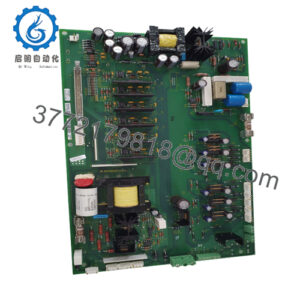
The KEBA AR-181 is a legacy analog measuring and control module used in EC100/CC100 machine-control systems. Its Intel 80960 RISC processor handles analog acquisition and control functions between the machine’s main CPU and field transducers. The documented hardware provides eight 14-bit analog inputs with a -10 V to +10 V range, plus three serial inputs for compatible stroke-transducer interfaces.
In the documented EC100/CC100 architecture, AR-181 is associated with hydraulic pressure, stroke, mold-cavity pressure, and clamp-force measurements and supplies analog control information to proportional-valve amplifier circuitry. Later AR-181/A, /B, and /C versions use different memory configurations, so the exact hardware revision should be checked before substitution.
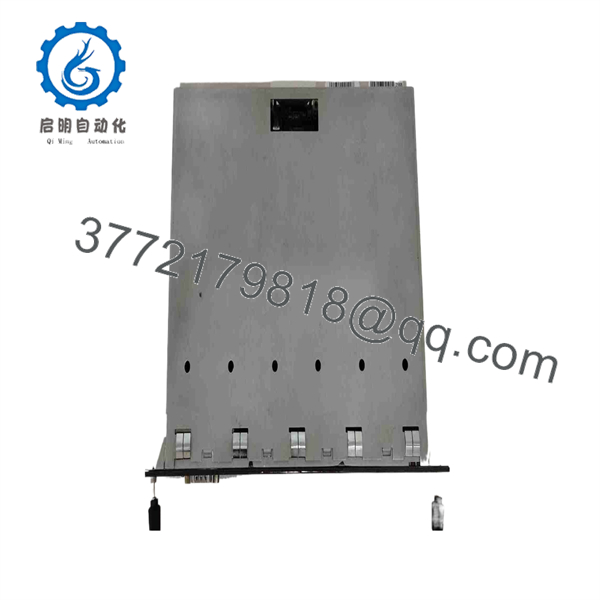
AR-181
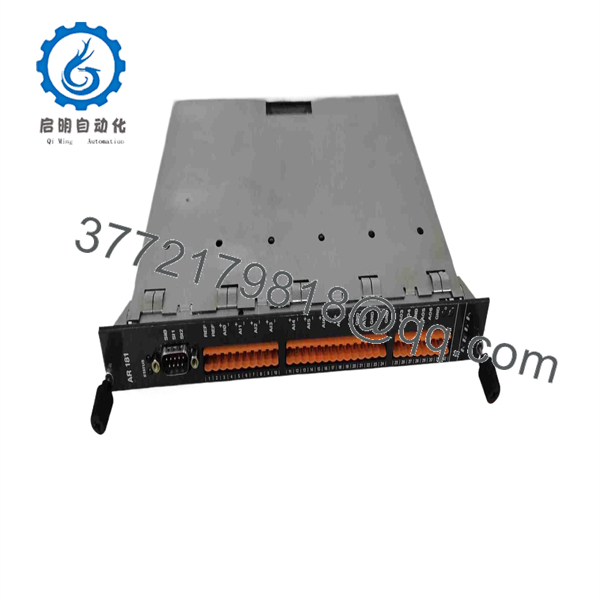
AR-181
Installation & Configuration Guide
Stage 1 — Pre-Installation Preparation
- Confirm the complete part marking. Check whether the existing card is AR 181, AR 181/A, AR 181/B, or AR 181/C.
- Record the existing card address/coding-switch position before removal. The maintenance documentation states that AR181 master modules must have unique addresses within the same rack.
- Back up the machine parameters and applicable control software.
- Confirm that the replacement hardware has sufficient memory for the installed application.
- Prepare ESD protection and suitable hand tools.
⚠️ Do not assume that every AR-181 listing represents the same hardware revision. Memory configuration and firmware requirements can differ between revisions.
Stage 2 — Removing the Existing Module
- Place the machine in its approved maintenance state.
- Remove control power according to the machine manufacturer’s shutdown procedure.
- Label connected wiring and record connector positions.
- Remove the rack-retaining hardware and carefully withdraw the module.
- Inspect the rack connector for contamination, bent contacts, or mechanical damage.
Stage 3 — Installing the Replacement Module
- Verify the replacement part number and revision against the removed card.
- Set the address/coding selector to the documented position for that rack.
- Do not force the board into the rack. Align the backplane connector before applying insertion pressure.
- Secure the module mechanically.
- Reconnect field and system wiring according to the original documentation.
- Verify transducer wiring polarity and signal range before applying power.
Stage 4 — Power-On & Testing
- Restore control power using the machine’s normal startup procedure.
- Observe the module status indicators and controller diagnostics.
- Confirm that the main CPU recognizes the AR-181.
- Verify each analog channel against its expected sensor value.
- Check pressure and position feedback before enabling automatic machine operation.
- Perform a controlled test of the proportional hydraulic functions.
- Review diagnostic records for AR181-related errors.
⚠️ The documented AR181 hardware watchdog triggers a reset if the operating system does not service it within 45 ms. After a reset, documented outputs are reset to 0 V, so unexpected resets should be investigated before returning the machine to production.
FAQ
1. What is the KEBA AR-181?
The AR-181 is an analog measuring and control module used in legacy KEBA EC100/CC100 machine-control systems. It is based on an Intel 80960 RISC processor and interfaces with analog machine transducers.
2. How many analog inputs does the AR-181 have?
The documented AR181 provides eight analog inputs with 14-bit resolution and a -10 V to +10 V input range. Typical applications include stroke and hydraulic pressure transducers.
3. Is AR-181 a digital I/O module?
No. The older KEBA technical documentation identifies AR-181 as an analog measuring and control module. Some modern reseller pages incorrectly or inconsistently categorize it as a digital I/O or servo-control module, so buyers should use the actual board marking and technical documentation for identification.
4. Are AR 181, AR 181/A, AR 181/B, and AR 181/C interchangeable?
They should not be assumed interchangeable. The technical manual lists different processor/memory configurations, including 1 MB DRAM for the original AR 181 and larger memory configurations for later variants. Software requirements should therefore be checked before substitution.
5. Is the KEBA AR-181 still manufactured?
Available industrial-spares sources identify the AR-181 as discontinued by the manufacturer. Replacement procurement is therefore generally handled through remaining stock, surplus inventory, refurbishment, repair, or service-exchange channels.
6. Does the AR-181 retain its program after a power failure?
The maintenance documentation states that the module has no buffer battery. After power is restored, the module resets and its software restarts; machine control functions must then be restarted by the higher-level control system.
7. What should be checked before purchasing a replacement AR-181?
At minimum, verify the full board designation, hardware revision, memory configuration, address setting, connector arrangement, and installed machine/controller generation. For an EC100/CC100 replacement, matching the revision rather than purchasing solely by the base “AR-181” designation is the safer approach.