WhatsApp: +86 16626708626
 Email:
  Phone: +86 16626708626
Description
Key Technical Specifications
| Parameter | Specification / Feature |
| Model Number | DO321 (DO321/B) |
| Manufacturer | KEBA Industrial Automation |
| Number of Channels | 16 discrete channels |
| Output Type | 24 V DC Transistor (Open collector, Short-circuit protected) |
| Nominal Operating Voltage | 24 V DC |
| Output Current Capacity | 0.5 A per channel (up to 8.0 A total module load) |
| Isolation Method | Galvanic optical isolation between system bus and field I/O |
| Response Time | < 1 ms high-speed output switching |
| Status Indicators | LED per channel + Module Status/Power LED |
| System Interface | Internal KEBA parallel backplane / Kemro system bus |
| Mounting Format | Integrated DIN rail enclosure mount |
| Operating Temperature | −25 to +70 °C |
Product Introduction & Supply Chain Strategy
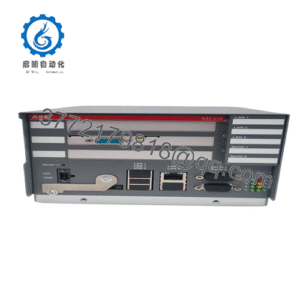
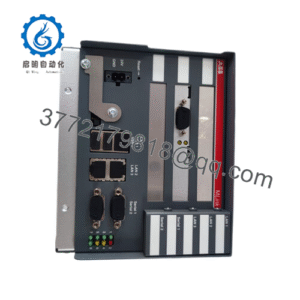
This product is a Brand New Surplus unit. It is not used, not pulled from a decommissioned plant, and not refurbished. All modules undergo rigorous quality verification to ensure OEM-level reliability. The KEBA DO321 is a high-performance 16-channel digital output module designed for KEBA KeControl and Kemro K2 automation systems. Operating on a 24 V DC power bus, it drives high-speed actuators, solenoid valves, hydraulic directionals, and interlock relays primarily across plastic injection molding machinery, robotics, and industrial automation control loops.
From a total cost of ownership (TCO) standpoint, maintaining a New Surplus KEBA DO321 on-site serves as an essential buffer stock insurance policy. Digital output modules directly control machine motion and safety circuits; an output transistor failure halts valve or core-pull sequence execution immediately. Sourcing this unit as New Surplus provides genuine OEM manufacturing standards, zero backplane pin degradation, and full component longevity at a fraction of standard factory lead-time costs. Sourcing refurbished output cards introduces major hidden risks—worn switching transistors and degraded optical isolators in second-hand units frequently lead to channel latch-up, ground loops, or thermal short-circuits. A plastic molding facility recently attempted to save 400 on procurement by buying a refurbished digital output card; three months later, an internal switching transistor shorted, misfiring an ejector pin sequence during mold closure and causing over 55,000 in tool damage and unplanned downtime. Securing certified New Surplus inventory eliminates these catastrophic failure modes while guarding against unexpected supplier lead time variability.
Installation & Configuration Guide
Stage 1: Pre-Installation (Prep & Safety)
- Lock-out / Tag-out: Shut down power to the main machine controller and de-energize the external 24 V DC field bus supply feeding the terminal blocks. Use a calibrated digital multimeter to verify 0 V DC before servicing.
- ESD Precautions: Wear a grounded anti-static wrist strap throughout handling to prevent static discharge to exposed backplane connectors.
- Documentation: Take clear photos of wiring termination plugs, node address settings, and module ordering along the rack assembly.
Stage 2: Removal
- Field Wiring Terminal: Unclip or unscrew the removable terminal block plugs from the front of the DO321 module without loosening individual field wires.
- Rack Extraction: Release the top and bottom mounting tabs on the module casing. Slide the module straight forward off the DIN rail to disengage the rear bus interconnects cleanly without bending pins.
Stage 3: Installation (Clone & Seat)
- Mechanical Inspection: Confirm the backplane male connector pins on the new DO321 are straight and free of debris.
- Module Mounting: Align the with the adjacent rack slot guide grooves. Slide the card backward onto the DIN rail until the rear backplane connectors seat fully and the enclosure latches snap shut. Reattach the terminal block plug.
Stage 4: Power-On & Testing
- Short Circuit Check: Measure resistance across the output terminals to ground before applying power to ensure field wiring is free from low-impedance shorts.
- Power & Loop Verification: Turn on the 24 V DC system supply. Verify the green Power LED lights up solidly. Drive individual output bits from the KEBA controller diagnostics software and check that corresponding output LEDs illuminate while 24 V DC appears at the field device.
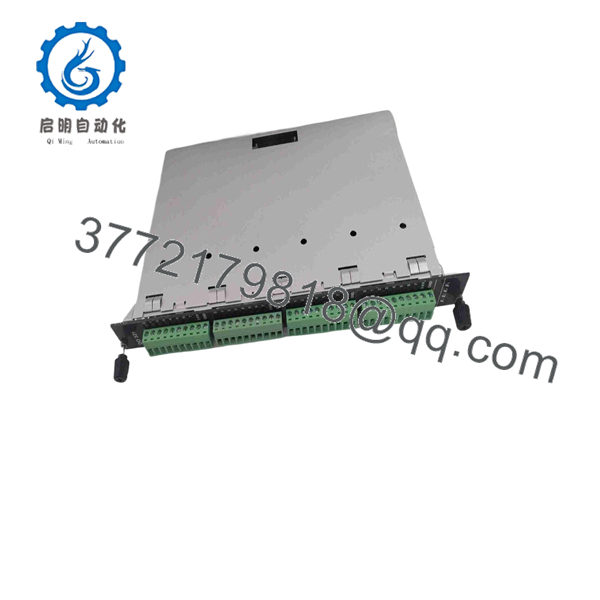
DO321
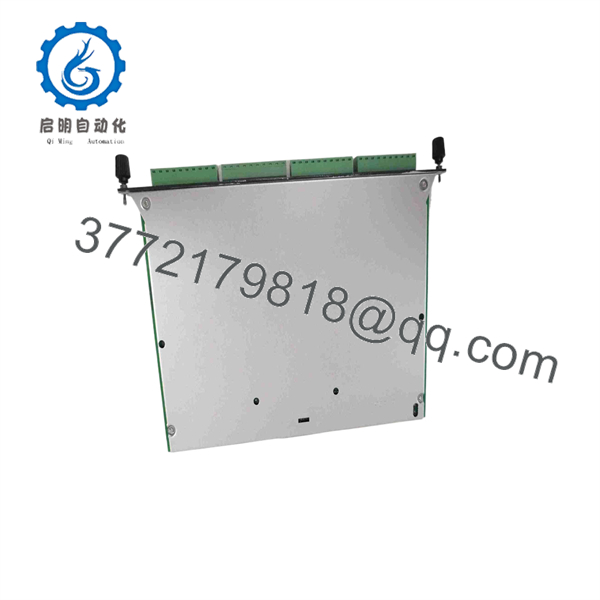
DO321
Firmware/Software Versions & Upgrade Notes
- System Compatibility: The communicates directly over the KEBA internal bus. It is transparent to higher-level application software (e.g., KeStudio / Kemro automation environment), requiring no independent firmware flash.
- Hardware Revisions: Check the revision code on the side label (such as vs. /B). While general output logic remains backward compatible, minor hardware revisions may alter maximum total current sinking limits or channel insulation barriers.
- Controller Hardware Configuration: When replacing hardware in existing machine controller racks (e.g., Engel injection molding lines), ensure the hardware configuration tree in project files matches the module slot assignment. Inserting a into a slot reserved for a different module type will generate a system bus configuration fault on startup.
Frequently Asked Questions (FAQ)
Q: Are these KEBA modules genuinely brand new, or are they refurbished parts with cleaned housings?
A: These units are strictly Original New Surplus. They are completely unused, sourced from surplus allocation and authorized channels, and preserved in original anti-static packaging. They have never been installed in a machine, repaired, or refurbished. Every module undergoes ESD-safe inspection and electrical parameter checks prior to shipment.
Q: Why is New Surplus pricing lower than OEM list price but higher than second-hand alternatives?
A: Our pricing reflects the market value of acquiring authentic, zero-hour OEM components available for immediate dispatch without standard factory lead times. It is priced higher than used or repaired parts because it offers factory-fresh internal components (capacitors, optocouplers, driver ICs) with full rated operating lifespans (10–15 years), eliminating premature failure risks.
Q: Can I hot-swap the KEBA while the system power is live?
A: No. Standard industrial safety protocols require powering down the 24 V DC field supply and the controller backplane before pulling or inserting I/O cards. Hot-swapping risks arcing across bus connectors, inducing voltage spikes that can corrupt adjacent I/O cards or lock up the main central control unit.
Q: Is the KEBA module compatible with plastics machinery outside of injection molding?
A: Yes. While widely recognized in Engel and other injection molding machine control systems, the is a standard 24 V DC digital output module within the KEBA KeControl architecture. It is equally suitable for blow molding, robotics, packaging machinery, and general motion control applications.
Q: What warranty coverage is provided with this New Surplus digital output module?
A: Every KEBA unit comes backed by a comprehensive 1-year functional replacement warranty. If the module fails under standard operational parameters within the warranty period, we provide an immediate replacement unit from stock to minimize plant downtime.