WhatsApp: +86 16626708626
 Email:
  Phone: +86 16626708626
Description
Key Technical Specifications
- Manufacturer: KNIEL
- Full Model: FPD 375.16PC/24.4
- Product Family: FPD industrial switched-mode power supply
- Product Type: High-power DC power supply module
- Nominal Output: 24 V DC
- Power Class: 375 W, based on the
FPD 375model designation - Nominal Output Current: Approximately 15.6 A at 24 V DC, calculated from 375 W ÷ 24 V; confirm nameplate rating before installation
- Primary Function: Provides regulated DC supply power to industrial machine controls, motion hardware, and associated electronics
- Known Equipment Association: Listed in ASML-related service inventory as a long-stroke power supply
- Known Equipment References: 4022.476.01533 and 4022.476.01532 are separately listed ASML assembly references associated with FPD 375.16PC/24.4
- Weight: Approximately 4.95 kg for one listed ASML-associated assembly; verify against the actual unit supplied
- Input Voltage: Confirm from the exact power-supply nameplate and OEM documentation before energizing
- Mounting and Terminals: Confirm physical dimensions, mounting pattern, terminal labeling, remote-sense terminals, enable/control connections, and protective-earth arrangement against the removed unit
- Lifecycle Status: Legacy industrial/semiconductor-equipment spare; availability depends on verified surplus inventory
Industrial inventory references identify this unit as a KNIEL FPD 375.16PC/24.4 power supply and associate it with ASML long-stroke assemblies. However, publicly indexed sources do not provide a reliable OEM datasheet establishing the exact input range, output-current rating, adjustment range, protection functions, or connector pinout. Those details must be read from the unit nameplate or original machine documentation.
Product Introduction
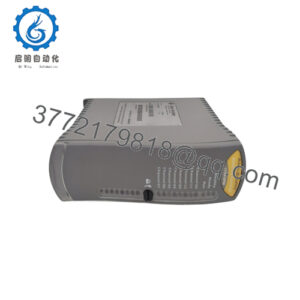
The KNIEL FPD 375.16PC/24.4 is a high-power industrial DC power supply module used in specialized automation and semiconductor-equipment assemblies. Available references associate the unit with ASML long-stroke equipment, where stable low-voltage DC power is required for control, motion, interface, or auxiliary machine circuits.
The 24.4 designation indicates a 24 V DC output class, while FPD 375 identifies the 375 W power class. Do not assume it is a generic 24 V supply. The exact input voltage, output current, adjustment range, remote-control features, and wiring must match the installed FPD 375.16PC/24.4 unit and machine schematic.
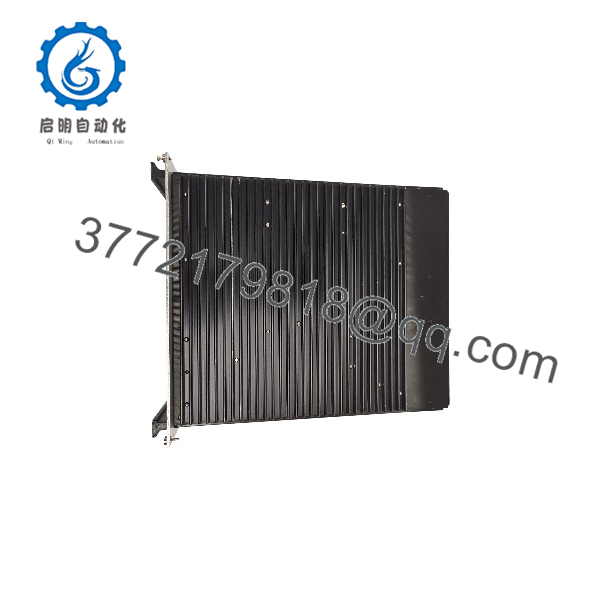
FPD 375.16PC/24.4
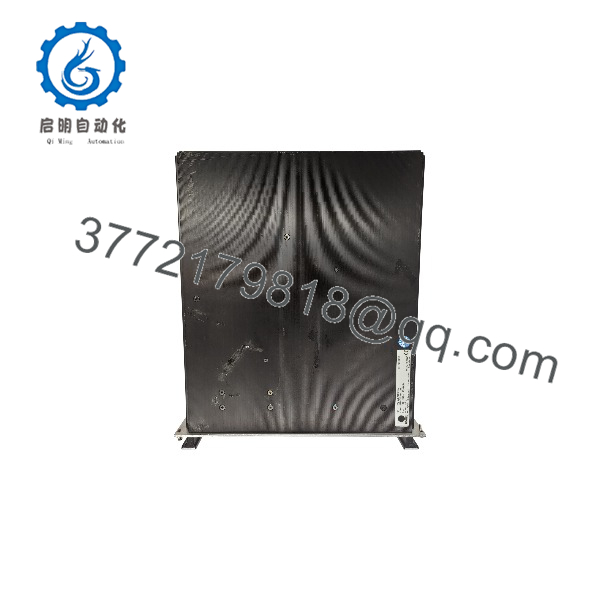
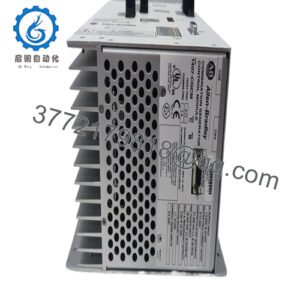
FPD 375.16PC/24.4
Troubleshooting Quick Reference
| Symptom | Possible Cause | Relevance to This Part | Quick Check Method | Recommendation |
|---|---|---|---|---|
| Machine has no 24 V DC control power | Upstream AC/DC input absent, open fuse, failed disconnect, loose terminal, failed power supply | ✅ Medium to high | Verify the exact input supply at the module terminals using the machine schematic; check upstream breaker, fuse, interlock, and protective-earth connection | Confirm correct input voltage before replacing the FPD 375.16PC/24.4 |
| Output measures 0 V DC with correct input present | Internal supply failure, inhibited enable input, external short, failed output fuse | ✅ High | Verify input is present; identify any remote-enable or inhibit terminals; disconnect downstream loads only as permitted; measure output directly at supply terminals | If the unit has correct input and is enabled but output remains absent, replace or bench-test the supply |
| Output voltage falls below 24 V when motion starts | Overload, downstream short, weak supply, undersized wiring, excessive voltage drop, failing capacitors | ✅ High | Measure output voltage at the supply and at the load while the long-stroke or motion system starts; compare voltage drop between points | Find the overload or wiring loss first. A replacement supply can fail quickly if the downstream fault remains |
| Supply cycles on and off | Overcurrent protection, short circuit, thermal protection, unstable input voltage, remote-enable fault | ✅ Medium to high | Observe output with a meter or oscilloscope; isolate loads by branch under approved procedure; inspect cooling path and cabinet temperature | Correct the overload, cooling, or enable issue before replacing the unit |
| Output is present but machine controller remains off | Separate controller fuse, wiring fault, incorrect common reference, downstream power-distribution issue | ❌ Usually low | Measure 24 V DC at the controller power terminals; check branch fuses, terminal blocks, and 0 V return continuity | Trace the distribution circuit before condemning the KNIEL supply |
| Machine faults only after warming up | Thermal stress, blocked airflow, aging capacitors, loose connections, high cabinet ambient temperature | ✅ Medium | Run under normal load; log output voltage and cabinet temperature; inspect for blocked vents or clogged filters | Correct cabinet cooling and terminal torque issues; replace the supply only after confirming thermal output loss |
| Replacement supply does not start | Incorrect input connection, remote-enable mismatch, different pinout, missing interlock, wrong model revision | ✅ High | Compare every terminal, connector, jumper, and control wire against the removed unit and OEM drawings; verify part number character by character | Do not force a substitute. Confirm the complete FPD model and machine-specific interface first |
| Fuse blows immediately after replacement | Input wiring error, reversed polarity on DC input, downstream short, incorrect supply configuration | ✅ Medium | Lock out power; inspect wiring; isolate output branches where allowed; check resistance to 0 V and protective earth before re-energizing | Do not repeatedly replace fuses. Locate the wiring or load fault first |
| Visible bulged capacitors, burnt odor, or discoloration | Internal failure, overheating, contamination, overvoltage | ✅ High | Isolate and discharge according to site procedure; inspect terminals, ventilation, PCB area where visible, and adjacent components | Replace the module and correct the upstream electrical or environmental cause |
Field warning: A 24 V reading with no load does not prove this supply is good. Measure it during the actual motion or machine-start event. A tired supply can hold 24 V at idle, then collapse when contactors, valves, or axis electronics pull current.
❗ Do not guess at the input terminals. Some machine power supplies have remote-enable, interlock, sense, or machine-specific wiring. Photograph the original terminal layout before removal, label each wire, and check the schematic. A wrong connection can destroy the replacement in seconds.
If the diagnosis is inconclusive, provide technical support with photographs of the full KNIEL label, ASML equipment reference if present, all terminals and connectors, input/output voltage readings under load, upstream fuse details, cabinet temperature, fault codes, and the original machine schematic page.
Frequently Asked Questions (FAQ)
What is KNIEL FPD 375.16PC/24.4?
It is a KNIEL industrial DC power supply identified as FPD 375.16PC/24.4. Available inventory references associate it with specialized ASML long-stroke equipment and describe it as a power-supply module. The FPD 375 designation identifies a 375 W-class supply, and 24.4 indicates a 24 V DC output class.
Is this a generic 24 V DIN-rail power supply?
No. Treat it as an equipment-specific industrial power module until the exact mechanical, electrical, and control-interface details are verified. It may use nonstandard mounting, terminal arrangements, remote sensing, remote enable, output adjustment, grounding, or fault signaling. A standard DIN-rail supply may have the right output voltage but still be unsuitable for the machine.
What is the output current?
A 375 W supply operating at 24 V DC would provide approximately 15.6 A by calculation:
I=PV=375 W24 V=15.625 A
That is only an engineering estimate from the apparent model designation. Confirm the actual continuous current, peak current, derating curve, and protection limits from the original nameplate or KNIEL documentation before connecting a replacement.
What input voltage does FPD 375.16PC/24.4 require?
Do not infer the input voltage from the product name. Publicly indexed inventory listings do not provide sufficiently reliable OEM input data for safe connection. Read the voltage, frequency, phase, terminal designation, and protective-earth requirements from the actual unit label and original equipment schematic before energizing.
Can I replace it with another FPD 375 supply?
Only if the full model, output voltage, current rating, input requirement, mechanical format, terminals, remote-control features, and machine interface match. The suffix 16PC/24.4 matters. Similar KNIEL supplies can have different input ranges, output rails, control terminals, or mounting configurations.
Why is the machine still dead when the supply output reads 24 V?
The fault may be downstream. Check branch fuses, 0 V return wiring, distribution terminals, contactor or safety-circuit status, controller input terminals, and voltage drop under load. Also measure the output during the failure, not only while the machine is idle. A supply can look normal until the connected load starts.
Is FPD 375.16PC/24.4 obsolete?
It should be treated as a legacy machine spare. It is commonly found through industrial-surplus channels and equipment-part inventories rather than current standard distribution. Confirm stock, condition, lead time, and warranty before scheduling a repair.
What condition should I request for a replacement unit?
Ask for the actual condition in writing: New Original / New Surplus, Refurbished and tested, or Used, tested. For a critical power supply, request clear photos of the complete nameplate, terminals, connectors, enclosure, and any ASML asset labels. Request verification of input power-up, output-voltage test under load, protection behavior, thermal operation, and written warranty terms.