WhatsApp: +86 16626708626
 Email:
  Phone: +86 16626708626
Description
Key Technical Specifications
| Parameter | Value |
|---|---|
| Model | 6SM37M-6000 |
| Brand | Kollmorgen / Seidel |
| Motor Type | Brushless synchronous servo motor |
| Rated Speed | 6,000 RPM |
| Rated Torque at 6,000 RPM | 0.8 Nm |
| Holding Torque | 1.0 Nm |
| Peak Torque | 4.0 Nm |
| Torque Constant | 0.62 Nm/A |
| Rotor Inertia | 0.7 kg·cm² |
| Winding | 400 V class |
| Feedback | Resolver |
| Flange | 75 mm square |
| Mounting Pattern | 4 mounting holes, 90 mm PCD |
| Shaft Diameter | 11 mm |
| Shaft Keyway | No keyway |
| Locating Spigot | Ø60 mm |
| Overall Length | 157 mm |
| Weight | Approximately 2.3 kg |
The published Kollmorgen/Seidel documentation confirms the 6SM37M-6000 torque characteristic, while technical listings identify the 0.8 Nm rated torque at 6,000 RPM, 1.0 Nm holding torque, 4.0 Nm peak torque, resolver feedback, 400 V winding, and 0.7 kg·cm² rotor inertia.
Compatibility warning: Do not select the servo amplifier solely from the motor’s 6,000 RPM rating. The motor uses a resolver and a 400 V-class winding; the amplifier must match the motor’s electrical characteristics, feedback interface, current requirements, and required DC-bus voltage. The available documentation indicates operation up to 3,000 RPM on a 300 V DC bus, with the full 6,000 RPM capability associated with a higher DC-bus voltage.
Product Introduction
The Kollmorgen 6SM37M-6000 is a brushless synchronous servo motor from the Seidel 6SM family. It is a six-pole, sinusoidally wound motor with resolver feedback, a 400 V-class winding, 6,000 RPM rated speed, and 0.8 Nm rated torque at rated speed.
Its 75 mm square flange, 11 mm shaft, 60 mm locating spigot, and compact 157 mm overall length make the motor suitable for precision machine axes where high rotational speed is required. Mechanical dimensions and connector arrangements should be checked against the installed motor before replacement.
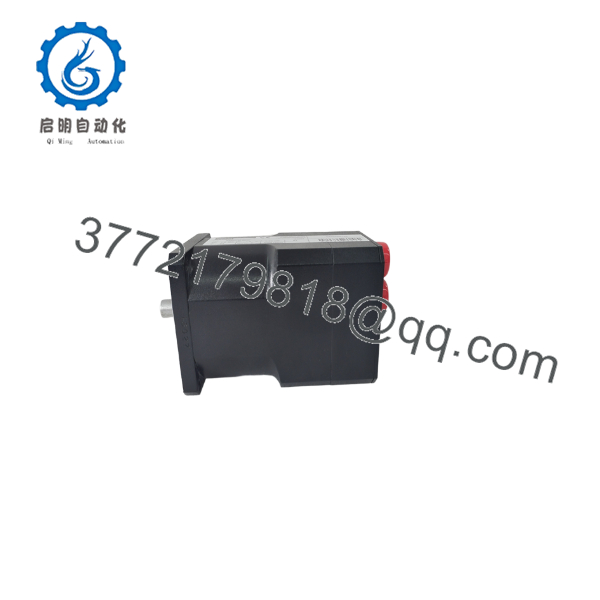
6SM37M-6000
Installation & Configuration Guide
Stage 1: Pre-Installation Preparation — Approximately 10 minutes
⚠️ Safety First: The 6SM37M-6000 is associated with a high-voltage servo system. Isolate the drive, apply lockout/tagout, and verify that the DC bus has discharged before touching motor or drive wiring.
Tools Required:
- ESD wrist strap
- Appropriate screwdrivers
- Multimeter
- Mechanical alignment tools
- Wire labels
- Smartphone or camera for connection documentation
Data Backup:
- Record the existing motor model and complete nameplate information.
- Photograph the motor connectors and cable routing.
- Record the servo amplifier model and configured motor parameters.
- Save the existing amplifier configuration.
- Record resolver wiring before disconnecting anything.
- Document mechanical coupling orientation and shaft position.
Do not assume that another 6SM motor with the same frame size has identical electrical parameters. The 6SM family contains multiple winding and speed variants, including 6SM37S-6000, 6SM37M-6000, 6SM37L-4000, and 6SM37VL-6000.
Stage 2: Removing the Old Motor — Approximately 10 minutes
- Shut down the machine using the site’s approved procedure.
- Apply lockout/tagout.
- Verify absence of hazardous voltage.
- Mark all motor and resolver connections.
- Photograph connector orientation and cable routing.
- Release the mechanical coupling.
- Remove the four motor mounting fasteners.
- Withdraw the motor without applying side load to the shaft.
- Inspect the coupling, mounting face, and locating spigot.
⚠️ Do not use the motor shaft as a lifting or prying point. The 6SM37M-6000 has an 11 mm shaft and no keyway, so the coupling arrangement is particularly important.
Stage 3: Installing the New Motor — Approximately 10 minutes
- Verify the exact model: Confirm that the nameplate reads 6SM37M-6000.
- Check mechanical dimensions: Verify the 75 mm flange, 90 mm mounting-hole pattern, Ø60 mm locating spigot, and 11 mm shaft.
- Clean the mounting face and locating surfaces.
- Install the motor squarely against the mounting surface.
- Install and tighten mounting hardware according to the machine builder’s specified torque.
- Align the motor shaft with the driven equipment.
- Reinstall the coupling without forcing the shaft.
- Reconnect the motor power and resolver connections.
- Secure cables away from rotating and hot components.
Configuration Clone — Crucial: Before enabling the axis, verify the amplifier’s motor data, resolver configuration, current limits, speed limits, acceleration/deceleration limits, and feedback direction.
Self-Checklist:
- Exact 6SM37M-6000 model confirmed
- 75 mm flange confirmed
- 11 mm shaft confirmed
- Coupling aligned
- Resolver connected
- Motor power wiring verified
- Amplifier motor parameters checked
- Cable shielding/grounding verified
Stage 4: Power-On & Testing — Approximately 10 minutes
- Keep the mechanical load in a safe condition.
- Power the control system without immediately commanding full-speed motion.
- Check the servo amplifier for faults.
- Verify resolver feedback.
- Command a low-speed jog.
- Confirm correct direction of rotation.
- Check actual speed against commanded speed.
- Increase speed gradually.
- Monitor motor current and drive fault status.
- Perform the final motion test under controlled production conditions.
⚠️ Do not immediately command 6,000 RPM after replacement. First verify resolver polarity/direction, motor configuration, mechanical alignment, and drive current limits.
If the motor rotates in the wrong direction, do not simply exchange motor phases without following the amplifier manufacturer’s motor/feedback commissioning procedure. A resolver-based servo system requires the drive’s commutation relationship to remain correct.
Frequently Asked Questions (FAQ)
Can the Kollmorgen 6SM37M-6000 operate at 6,000 RPM?
Yes. The 6SM37M-6000 has a rated speed of 6,000 RPM. The published torque characteristic identifies 6,000 RPM as the rated speed, with approximately 0.8 Nm rated torque at that point.
What feedback device does the 6SM37M-6000 use?
The documented configuration uses a resolver. This matters when selecting or replacing the servo amplifier because an encoder-compatible drive is not automatically a resolver-compatible drive.
What is the rated torque?
The documented rated torque is approximately 0.8 Nm at 6,000 RPM. Holding torque is approximately 1.0 Nm, while the listed peak torque is 4.0 Nm.
Is the 6SM37M-6000 a 400 V motor?
The available technical documentation identifies the motor as having a 400 V-class winding. The documentation also states that operation at up to 3,000 RPM is possible on a 300 V DC bus, while full-speed operation requires the appropriate higher DC-bus voltage.
What are the main mechanical dimensions?
The published dimensions are a 75 mm square flange, 11 mm shaft, Ø60 mm locating spigot, four mounting holes on a 90 mm PCD, and approximately 157 mm overall length. The shaft has no keyway.
Is the 6SM37M-6000 obsolete?
The model belongs to the older Kollmorgen Seidel 6SM family, and current availability is primarily through specialist industrial automation and surplus/repair suppliers. However, I would not label the exact commercial lifecycle status as an official OEM declaration without a current Kollmorgen lifecycle notice. The Kollmorgen technical manual remains available and specifically documents the 6SM37M-6000.
Will replacing the motor erase my servo program?
Normally, replacing the physical motor does not itself erase the servo amplifier’s stored configuration. However, motor identification and feedback parameters must be verified after replacement. Do not assume that an existing drive configuration is correct merely because the replacement carries the same model number. Also retain the original motor until commissioning has been completed successfully.