WhatsApp: +86 16626708626
 Email:
 Phone: +86 16626708626
Description
Core Product Summary
The Kollmorgen S60300-PB is the 3 A model of the SERVOSTAR 600 family of digital servo amplifiers, built as a SERVOSTAR 603 fitted with the PROFIBUS DP expansion card. The base order number S60300 identifies the 3 ARMS continuous current rating and 2 kVA installed load; the -PB suffix designates the factory PROFIBUS option, whose expansion card provides two 9-pin Sub-D sockets wired in parallel for fieldbus cabling. The amplifier drives brushless synchronous servomotors, and the SERVOSTAR 600 platform also supports linear and asynchronous motors.
The drive connects directly to a grounded three-phase supply from 3×230 V to 3×480 V (±10%, 50/60 Hz) and supplies 3 ARMS continuous or 6 ARMS peak output current, with an 8 kHz output stage clock frequency and a rated DC bus link voltage of 290 V. Feedback handling covers resolver signals as well as sine-cosine signals from high-resolution encoders, with encoder emulation output in incremental or SSI format. Integrated CANopen (500 kBaud default), an electrically isolated RS-232 interface, and a pulse-direction interface are standard, alongside four programmable digital inputs and two digital outputs. Setup runs through the manufacturer’s Windows-based software over RS-232 or through front-panel keys and the three-character LED display. The unit mounts vertically in a cabinet, weighs 4 kg, measures 275 × 70 × 265 mm without connectors, and is rated IP20.
Key Technical Specifications
| Parameter | Value |
|---|---|
| Product family / type | SERVOSTAR 600 series digital servo amplifier (SERVOSTAR 603), with PROFIBUS DP expansion card |
| Supply input | 3×230 V to 3×480 VAC (grounded system, TN/TT), ±10%, 50/60 Hz; single-phase supply possible for setup |
| Rated installed load (S1) | 2 kVA |
| Rated DC bus link voltage | 290 VDC |
| Rated output current | 3 ARMS (±3%) |
| Peak output current | 6 ARMS (max. approx. 5 s, ±3%) |
| Output stage clock frequency | 8 kHz |
| Load inductance range | 12 mH minimum / 75 mH maximum |
| Form factor of output current | 1.01 (at rated data and minimum load inductance) |
| Current controller bandwidth | > 1.2 kHz (digital current controller, 62.5 µs) |
| Control loop cycle times | Speed controller 65 µs or 250 µs; position controller 250 µs |
| Residual voltage drop at rated current | 5 V |
| Power dissipation | 15 W quiescent (output stage disabled); 40 W at rated current (including power supply losses, excluding regen dissipation) |
| Overvoltage protection threshold | 450–900 V (family range; threshold depends on amplifier type) |
| Fieldbus (this configuration) | PROFIBUS DP expansion card, two 9-pin Sub-D sockets wired in parallel |
| Integrated interfaces | CANopen (default 500 kBaud), electrically isolated RS-232, pulse-direction interface |
| Feedback | Resolver and sine-cosine high-resolution encoder inputs; encoder emulation output (incremental or SSI) |
| Analog inputs | 2 setpoint inputs, 14-bit and 12-bit resolution, ±10 V |
| Digital I/O | 4 programmable digital inputs, 2 programmable digital outputs (open collector), BTB/RTO relay output |
| Auxiliary supply | 24 VDC (−0/+15%); 1 A without brake, 3 A with brake; brake output 24 V, 0.15/2 A |
| Fusing (SERVOSTAR 601/603) | AC supply 6 AT time-delay; internal auxiliary fuse 3.15 AT |
| Dimensions (H × W × D, without connectors) | 275 mm × 70 mm × 265 mm |
| Weight | 4 kg |
| Enclosure protection | IP20 |
| Ambient temperature | 0 to +45 °C at rated data; +45 to +55 °C with 2.5 %/K power derating |
| Humidity / altitude | Max. 85% relative humidity, no condensation; up to 1000 m unrestricted, 1000–2500 m with 1.5%/100 m derating |
| Mounting | Vertical mounting in closed switchgear cabinet; forced convection by built-in fan |
| Regen circuit | Internal regen resistor standard; external regen resistor optional; DC bus link (260–900 VDC) can be paralleled between amplifiers with dynamic regen power distribution |
Engineering Selection Highlights
- PROFIBUS DP expansion card with two parallel 9-pin Sub-D sockets — the -PB suffix defines this unit as the fieldbus variant; the drive is commissioned and commanded as a PROFIBUS DP slave, so the controller side must have a PROFIBUS DP master and the protocol functions described in the manufacturer’s PROFIBUS communication profile.
- 3 ARMS continuous / 6 ARMS peak (approx. 5 s) — a 2:1 peak ratio suited to axes with moderate continuous torque and short acceleration bursts; verify motor continuous and peak ratings fit this envelope.
- Wide supply range on one unit — direct connection to grounded three-phase systems from 3×230 V to 3×480 V means the same drive fits 230 V and 400/480 V installations; supplies up to 5000 A symmetrical require no isolating transformer, other mains networks do.
- Motor inductance window 12–75 mH — both a floor and a ceiling apply; verify the motor winding’s line-to-line inductance falls inside this range before pairing.
- Feedback flexibility — resolver and sine-cosine encoder inputs are standard, with incremental or SSI encoder emulation output that can feed a higher-level controller without an additional feedback device; resolver cables up to 100 m and encoder cables up to 50 m are supported with the specified cable types.
- Thermal and derating limits — full rating applies only to +45 °C ambient and 1000 m altitude, with 2.5 %/K derating above 45 °C and 1.5%/100 m above 1000 m; the drive dissipates 40 W at rated current and relies on its built-in fan plus cabinet forced ventilation.
- DC bus paralleling for multi-axis cabinets — the regen circuit supports dynamic distribution of regenerative power between several amplifiers sharing one DC bus link, which can reduce or eliminate individual external regen resistors in grouped installations.
Detailed Product Overview
The S60300-PB belongs to the SERVOSTAR 600 generation of fully digital servo amplifiers, a platform that spans six current ratings from 1.5 A to 20 A in three instrument widths. Within that range, the SERVOSTAR 603 occupies the 3 ARMS / 2 kVA slot in a 70 mm-wide housing, and the -PB suffix identifies a unit fitted at the factory with the PROFIBUS DP expansion card. This distinction matters at ordering time: an S60300 without the suffix uses the standard integrated interfaces only, and other fieldbus variants of the same platform exist for SERCOS, DeviceNet, EtherCAT, and SynqNet. All of them share the same power stage, so the choice is dictated by the machine’s control architecture, not by the axis hardware.
Electrically, the amplifier connects directly to a grounded three-phase supply from 3×230 V to 3×480 V. This breadth is more than a convenience: it means one drive model covers both 230 V plant networks and 400/480 V systems without hardware changes, provided the supply is a TN or TT system with a grounded neutral and no more than 5000 A rms symmetrical capacity. The B6 rectifier bridge feeds a DC bus rated at 290 V for this model, with soft-start, overvoltage recognition, short-circuit protection, and phase-failure monitoring built in. An internal regen resistor is standard, external resistors are available for heavy deceleration duty, and the DC bus can be paralleled across multiple SERVOSTAR amplifiers so that regenerative energy is shared dynamically rather than dumped in each drive separately.
The control chain is fully digital: a current controller running on a 62.5 µs cycle with more than 1.2 kHz bandwidth, a speed controller selectable at 65 µs or 250 µs, and an integral position controller at 250 µs. Output current form factor is 1.01 at rated conditions, which keeps additional motor heating low. The amplifier evaluates resolver signals and the sine-cosine signals of high-resolution encoders, and it can emulate an incremental or SSI encoder output for the higher-level controller. Four programmable digital inputs (two typically configured as limit switches) and two digital outputs are standard, with an optional I/O expansion card adding 14 inputs and 8 optically isolated outputs.
What the PROFIBUS card adds is standardized network integration. The card carries two 9-pin Sub-D sockets wired in parallel for the DP segment, is powered from the amplifier, and implements the PROFIBUS DP communication profile documented in the manufacturer’s separate profile manual. For an engineer, this means the axis is addressed, parameterized, and commanded as a DP slave, and cable selection, shielding, and termination follow the PROFIBUS User Organization’s installation guidelines rather than drive-specific wiring rules.
Installation follows the platform’s cabinet conventions: vertical mounting on an unpainted, grounded plate, unobstructed airflow above and below the unit, and the built-in fan providing forced convection. The 4 kg, 275 × 70 × 265 mm housing suits dense multi-axis panels, but the thermal budget must respect the 40 W dissipation at rated current, the 0–45 °C ambient rating, and the derating slopes above 45 °C and above 1000 m altitude. Commissioning runs through the Windows-based setup software over the isolated RS-232 interface, or directly on the unit with two front-panel keys and the three-character LED display when no PC is available.
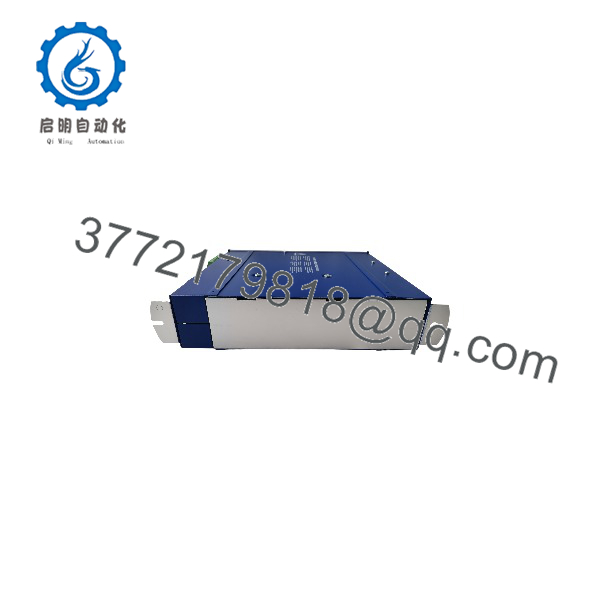
S60300-PB
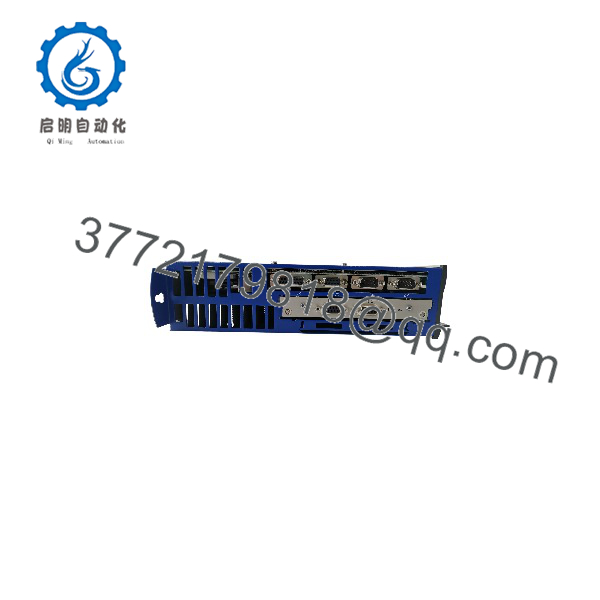
S60300-PB
System Compatibility & Integration Requirements
| Item / Dependency | Verified Compatibility or Requirement | Practical Note |
|---|---|---|
| Fieldbus (this configuration) | PROFIBUS DP expansion card, two 9-pin Sub-D sockets wired in parallel | Cable selection, termination, and transmission times follow the PROFIBUS User Organization installation guidelines; the card is powered from the amplifier |
| Mains supply | Grounded 3×230 V to 3×480 VAC TN or TT system, max. 5000 A rms symmetrical | Other mains networks require an isolating transformer; single-phase supply is possible for setup only |
| Auxiliary control power | External 24 VDC supply, −0/+15% | Required for control electronics; 1 A without holding brake, 3 A with brake |
| Feedback devices | Resolver (max. 100 m cable) or sine-cosine high-resolution encoder (max. 50 m cable) | Cable types and cross-sections per the reference manual’s connection data |
| Higher-level feedback output | Encoder simulation, incremental or SSI | Can replace a separate position feedback device on the controller side |
| Motors | Synchronous servomotors; SERVOSTAR 600 platform also supports linear and asynchronous motors | Motor inductance must be within 12–75 mH for this model |
| Commissioning | Windows-based setup software via RS-232, or front-panel keys with 3-character LED display | Integrated CANopen (default 500 kBaud) allows parameter setting of several amplifiers from one PC interface |
| Regen energy | Internal regen resistor standard; external resistor optional; DC bus link paralleling with dynamic regen distribution | Multi-axis installations can share regen power across amplifiers |
| Safety options | Option -AS-: built-in safety relay (personnel-safe restart lockout) | Available as a separate order option on the SERVOSTAR 600 platform |
| Standards | Stop functions per EN 60204 (Stop categories 0/1/2); CE conformance and UL/cUL conformance documented for the family | Conformity details are covered in the product manual’s standards section |
Dimensions, Mounting & Connection Notes
| Item | Data |
|---|---|
| Height × Width × Depth (without connectors) | 275 mm × 70 mm × 265 mm |
| Weight | 4 kg |
| Mounting | Vertical mounting in a closed switchgear cabinet on a grounded, conductive mounting plate; painted (non-conductive) plates must not be used |
| Ventilation | Forced convection by built-in fan; keep required clearance above and below the amplifier unobstructed and ensure adequate cool, filtered airflow into the cabinet |
| Torque recommendations | 0.5–0.6 Nm for control connectors (X3, X4); 0.5–0.6 Nm for power connectors (X0A, X0B, X7, X8, X9); 3.5 Nm for the ground bolt |
| External fusing | 6 AT time-delay fuse for the AC supply (SERVOSTAR 601/603 rating); 6 AT for the 24 V supply; regen resistor fuse per the manual |
| PROFIBUS connection | Two 9-pin Sub-D sockets wired in parallel; AGND and DGND at connector X3 must be joined |
| Feedback connectors | Resolver via 9-pin Sub-D socket; sine-cosine encoder via 15-pin Sub-D socket; encoder emulation (ROD/SSI) via 9-pin Sub-D plug |
| PC / CAN interface | 9-pin Sub-D plug; RS-232 electrically isolated, CANopen integrated |
| Power and control wiring | Power via Combicon 7.62 (4×4 + 1×6-pole, 4 mm²); control signals via Combicon 5.08 (18-pole, 2.5 mm²) |
| Environmental limits | 0 to +45 °C at rated data (2.5 %/K derating to +55 °C); max. 85% RH non-condensing; up to 1000 m altitude unrestricted (1.5%/100 m to 2500 m); pollution level 2; keep away from strong magnetic field sources |
Applications & System Role
In the machine architecture, the S60300-PB operates as a networked single-axis servo amplifier: a PROFIBUS DP master — typically a PLC or motion controller — issues setpoints over the fieldbus, and the drive closes its current, speed, and position loops around the motor and its feedback device, converting the commands into regulated motor current through an IGBT output stage with space-vector PWM at an 8 kHz clock frequency.
Fit scenarios that follow from the verified capability profile:
- Axes on PROFIBUS DP-controlled machines where the controller architecture is fieldbus-based rather than analog-command based.
- Single axes with moderate continuous torque (3 ARMS) and short bursts up to 6 ARMS — such as indexing, feed, and positioning axes on packaging, handling, and assembly equipment.
- Applications requiring direct cabinet integration on a 230 V or 400/480 V grounded three-phase supply, where the wide input range avoids a dedicated transformer or supply variant.
- Machines using resolver-based or sine-cosine encoder feedback, including cases where the drive’s encoder emulation output feeds position data back to the controller and eliminates a separate feedback device.
- Multi-axis cabinets where several SERVOSTAR amplifiers share a common DC bus link and distribute regenerative power dynamically.
The practical boundaries are the ambient and altitude derating limits, the 12–75 mH motor inductance window, and the requirement for a grounded TN/TT mains system or an isolating transformer.
FAQ
What is the Kollmorgen S60300-PB?
It is a SERVOSTAR 603 digital servo amplifier from the SERVOSTAR 600 family, rated 3 ARMS continuous and 2 kVA, fitted with the PROFIBUS DP expansion card.
What does the -PB suffix mean?
-PB designates the PROFIBUS DP expansion card, which provides two 9-pin Sub-D sockets wired in parallel for connection to a PROFIBUS DP network.
What are its current and power ratings?
Rated output current is 3 ARMS (±3%) with 6 ARMS peak available for approximately 5 seconds; the rated installed load for S1 operation is 2 kVA and the rated DC bus link voltage is 290 V.
What supply does it need?
A grounded three-phase supply from 3×230 V to 3×480 VAC (±10%, 50/60 Hz), TN or TT system with grounded neutral; other mains networks require an isolating transformer. Single-phase supply is possible for setup only.
Which feedback does it support?
It evaluates resolver signals and sine-cosine signals from high-resolution encoders, and provides an encoder emulation output in incremental (ROD) or SSI format for the higher-level controller.
Which communication interfaces are standard?
Integrated CANopen (default 500 kBaud), an electrically isolated RS-232 interface, and a pulse-direction interface; the PROFIBUS DP card on this model adds fieldbus operation.
How is the drive commissioned?
Through the manufacturer’s Windows-based setup software over RS-232, or with two front-panel keys and the three-character LED status display.
What installation limits apply?
Vertical mounting in a closed cabinet at IP20, 0 to +45 °C ambient at rated data (2.5 %/K derating to +55 °C), up to 1000 m altitude unrestricted (1.5%/100 m derating to 2500 m), and unobstructed ventilation for the built-in fan.