WhatsApp: +86 16626708626
 Email:
 Phone: +86 16626708626
Description
Core Product Summary
The Kollmorgen S70602-NANANA is a digital servo amplifier in the S700 series, designed to control a servo motor within an industrial motion-control system. It provides the power-stage and control functions needed to regulate motor operation, making the exact model designation important when selecting equipment for an existing machine or maintaining a configured servo axis.
The standard S70602-NANANA configuration includes onboard EtherCAT and CANopen interfaces, an internal braking resistor, and dual-channel Safe Torque Off (STO). Its specified mains supply range is 208–480 V AC. These characteristics help identify the drive’s network and power architecture, but they do not establish compatibility with every motor or controller. Motor feedback, control-system configuration, safety circuit design, and wiring requirements must also match the intended installation.
Key Technical Specifications
| Parameter | Specification |
|---|---|
| Manufacturer | Kollmorgen |
| Model / Order Number | S70602-NANANA |
| Product Type | Digital servo amplifier |
| Product Series | S700 |
| Rated Mains Supply | Three-phase, 208–480 V AC with specified voltage tolerances |
| Mains Frequency | 50/60 Hz |
| Rated Continuous Output Current | 6 A RMS |
| Peak Output Current | 18 A RMS for approximately 2 seconds |
| Rated Input Power | 4.5 kVA |
| Maximum DC Bus Voltage | 900 V DC |
| Built-in Communication Interfaces | EtherCAT and CANopen |
| Braking | Internal braking resistor |
| Safety Function | Dual-channel Safe Torque Off (STO) |
Detailed Product Overview
The Kollmorgen S70602-NANANA is a digital servo amplifier designed for applications requiring controlled motor torque, speed, and position within an industrial motion-control architecture. It combines a power stage with digital control functions, allowing a compatible servo motor to operate as part of a machine’s coordinated motion system.
Electrical sizing and motor selection
The drive’s 6 A RMS continuous output-current rating and 4.5 kVA rated input power are important when evaluating its suitability for a machine axis. Selection should account for the motor’s rated current, peak torque demand, acceleration profile, operating duty cycle, and the electrical supply available at the installation site.
The three-phase supply specification covers 208–480 V AC, subject to the drive’s specified voltage tolerances and grounding requirements. The motor and drive must be assessed as a matched combination rather than selected solely by nominal power or current.
Network integration
EtherCAT and CANopen are integrated into the standard configuration. These interfaces provide communication options for incorporating the amplifier into a compatible automation network. The actual control architecture depends on the selected protocol, controller capabilities, network configuration, and the drive’s supported operating modes.
Before commissioning, the engineer should establish which device controls the motion axis, how motion commands and status information are exchanged, and how faults are reported to the supervisory controller. Network availability alone does not establish compatibility with a particular PLC or motion controller.
Braking and functional safety
The internal braking resistor is part of the standard configuration. Braking-energy management must still be assessed against the machine’s inertia, deceleration profile, operating frequency, and applicable drive limits. The presence of an internal resistor does not establish that every regenerative load can be handled without additional measures.
The drive also incorporates dual-channel Safe Torque Off. STO is intended to prevent the drive from generating motor torque when the function is correctly activated. It is not a substitute for electrical isolation, mechanical restraint, or a complete machine-level risk assessment. The safety circuit must be designed and validated for the machine’s intended safety functions.
Configuration and commissioning
The exact order code matters when matching a replacement amplifier to an existing installation. Confirm the model label, installed option configuration, motor feedback type, power connections, communication interface, and safety-circuit arrangement before installation. Commissioning should follow the applicable drive instructions and include parameter configuration, feedback verification, controlled motion testing, and validation of protective functions.
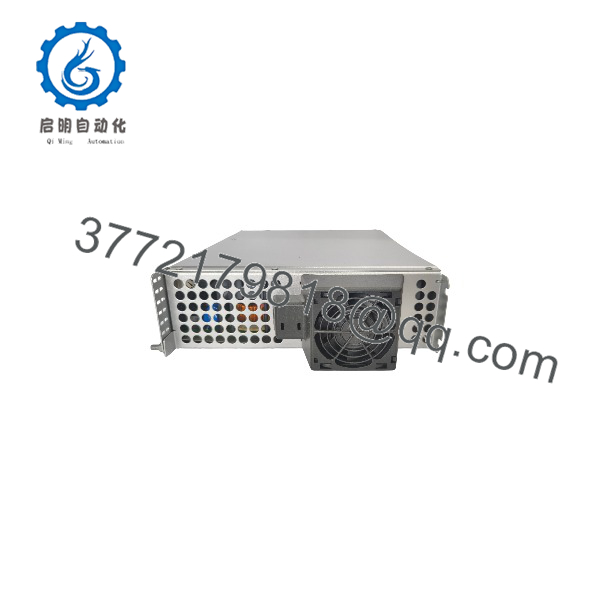
S70602-NANANA
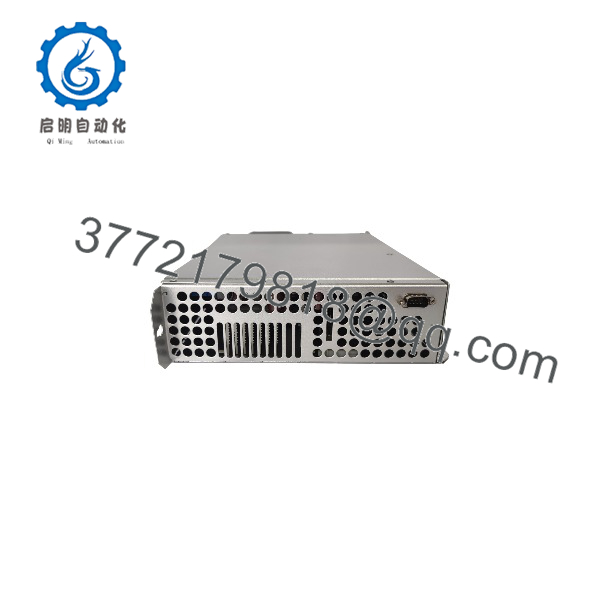
S70602-NANANA
Dimensions, Mounting & Connection Notes
Installation should follow the S700 drive’s applicable installation instructions. Before fitting the amplifier into a control cabinet, assess the available mounting space, cooling airflow, electrical clearances, protective earthing, and separation of power and signal wiring.
Power, motor, feedback, communication, and safety connections must use the appropriate terminals and cables for the configured installation. Connector assignments and wiring details should be taken from the applicable drive documentation rather than inferred from another S700 variant.
System Compatibility & Integration Requirements
| Item / Dependency | Verified Compatibility or Requirement | Practical Note |
|---|---|---|
| Drive family | Kollmorgen S700 | Confirm the full model and order code against the existing system documentation. |
| AC supply | Three-phase, 208–480 V AC, within specified tolerances | Check supply voltage, grounding, protective devices, and installation requirements. |
| Communication | Onboard EtherCAT and CANopen | Select the protocol supported by the controller and configure the corresponding network. |
| Motor feedback | Must match a feedback interface supported by the configured drive | Confirm the motor and feedback-system combination before wiring. |
| Safety circuit | Dual-channel STO | Integrate and validate the safety function in accordance with the machine design. |
| Braking circuit | Internal braking resistor | Evaluate braking-energy requirements against the actual application duty cycle. |
FAQ
What is the Kollmorgen S70602-NANANA?
The Kollmorgen S70602-NANANA is a digital servo amplifier in the S700 series for industrial motor-control applications.
What is the rated output current of the S70602-NANANA?
Its rated continuous output current is 6 A RMS. Its documented peak output current is 18 A RMS for approximately 2 seconds.
What power supply does this servo amplifier require?
The drive uses a three-phase AC supply in the 208–480 V range, subject to the specified voltage tolerances and installation requirements.
Which communication protocols are integrated?
The standard S70602-NANANA configuration includes onboard EtherCAT and CANopen interfaces. The selected protocol must be supported by the connected controller and network architecture.
Does the S70602-NANANA include a braking resistor?
Yes. The standard configuration includes an internal braking resistor. Application-specific braking-energy requirements must still be evaluated.
Does this model include Safe Torque Off?
Yes. The standard configuration includes dual-channel STO. Machine-level safety depends on the complete safety architecture, correct wiring, and appropriate validation.
What should be checked before replacing an existing S700 drive?
Confirm the complete order code, supply requirements, motor and feedback compatibility, network interface, parameter configuration, braking requirements, and safety connections. Matching the series name alone is insufficient to establish that a replacement will operate correctly.