WhatsApp: +86 16626708626
 Email:
 Phone: +86 16626708626
Description
Core Product Summary
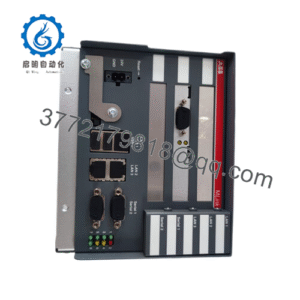
The Kongsberg Maritime RCU500 is a single-unit real-time computer designed for process control duties aboard vessels and offshore installations. Part of the Kongsberg Maritime controller family, it executes process automation, dynamic positioning support, and safety-related control logic, and is typically deployed as the processing element of K-Chief 700 and related vessel control systems.
At its core is a PowerPC 8245 processor running at 400 MHz with 32 MB SDRAM and 16 MB flash memory. Connectivity is extensive for a controller of this class: dual 10/100 Mbps Ethernet ports, dual CAN bus and dual Profibus interfaces, an SPBus link for RIO 400 remote I/O units, and 16 serial channels spanning RS-232, RS-422 and RS-485, four of which are isolated. Four general-purpose digital inputs and outputs handle local signal duties, and the front panel carries status LEDs plus a console port. The unit is prepared for redundant RCU operation with hot-replacement capability, and includes built-in self-test with error reporting to operator stations, a watchdog, and high-temperature and cooling-fan alarm functions. It mounts on a DIN rail with plug-in connections.
Key Technical Specifications
| Parameter | Value |
|---|---|
| Product type | Remote Controller Unit, single-unit real-time computer for process control |
| Article number | 602265 |
| Typical applications | Dynamic Positioning systems, Vessel Control Systems, Process Control Systems, Safety Systems |
| CPU | PowerPC 8245, 400 MHz |
| Memory | 32 MB SDRAM, 16 MB Flash |
| Application support | Capable of running AIM and DP applications |
| Ethernet | Dual 10/100 Mbps Ethernet interfaces |
| Fieldbus | Dual CAN bus (1 Mbps), dual Profibus (12 Mbps) |
| Remote I/O bus | SPBus (Serial Process Bus) to RIO 400 remote I/O units |
| Serial ports | 12 × RS-232/RS-422/RS-485 (up to 3 Mbps per channel type); 4 × isolated RS-232/RS-422/RS-485 (up to 230 kbps); 4 × serial switch; RS-232 console |
| Digital I/O | 4 general-purpose digital inputs, 4 general-purpose digital outputs |
| Redundancy | Prepared for redundant RCU operation with hot-replacement of an RCU 500 in a redundant system |
| Diagnostics | Built-in Self Test (BIST) with error reporting via Operator Stations; watchdog with system status output |
| Monitoring | Built-in high-temperature and cooling-fan alarms |
| Front panel | 8 status LEDs plus Run/Error LED |
| Mounting | DIN standard rail mounting, plug-in connections |
| Supply voltage | 24 VDC (±20%) |
| Power consumption | Max. 20 W |
| Enclosure rating | IP20 |
| Dimensions (H × W × D) | 355 × 158 × 87 mm |
| Weight | Approx. 1.35 kg |
Detailed Product Overview
The RCU500 sits at the level of a control architecture where hard real-time execution matters more than sheer computing throughput. Its role is to run cyclic control and monitoring programs — process control, dynamic positioning support, vessel control logic and safety functions — with deterministic behaviour, while the wider Kongsberg system handles supervision, alarm handling and operator interaction from separate operator stations. Because the controller reports BIST results and watchdog status to those operator stations, an engineer in the control room can see a failing RCU500 without physically inspecting the unit, which matters on vessels where controllers are distributed between machinery spaces and bridge consoles.
The choice of a PowerPC 8245 at 400 MHz with 32 MB of memory is proportionate to this task: control programs and I/O scanning simply do not demand workstation-class hardware, and a conservative, embedded-grade CPU with flash-resident software contributes to long service life in a marine environment. The memory split — RAM for runtime, 16 MB flash for program and operating software — also means the unit boots its application directly from onboard storage rather than depending on a network load at every power-up.
Interface breadth is the RCU500’s defining strength. Two independent Ethernet ports allow segregated networks — for example, one for the operator/system network and one for a dedicated control or redundant link. Dual CAN and dual Profibus channels support field device integration at up to 1 Mbps and 12 Mbps respectively, and the dedicated SPBus link connects RIO 400 remote I/O units, which is the normal route for gathering distributed process signals. The sixteen general serial channels, four of them galvanically isolated, cover the mixed RS-232/RS-422/RS-485 device population typical of older vessel equipment, and the four serial switch channels support switched serial line distribution.
Redundancy support deserves emphasis when specifying: the RCU500 is prepared for redundant RCU operation, including hot-replacement of a unit in a running redundant system. For safety and DP applications this changes the maintenance model — a failed or suspect controller can be exchanged without taking the controlled process down.
On the practical side, DIN rail mounting and plug-in connections keep installation and replacement mechanical work simple, and the eight front-panel LEDs plus Run/Error indicator give first-line troubleshooting cues on the spot. The integrated high-temperature and cooling-fan alarms extend self-monitoring into the unit’s own thermal condition, which is a common early indicator of fan wear or clogged ventilation in machinery spaces.
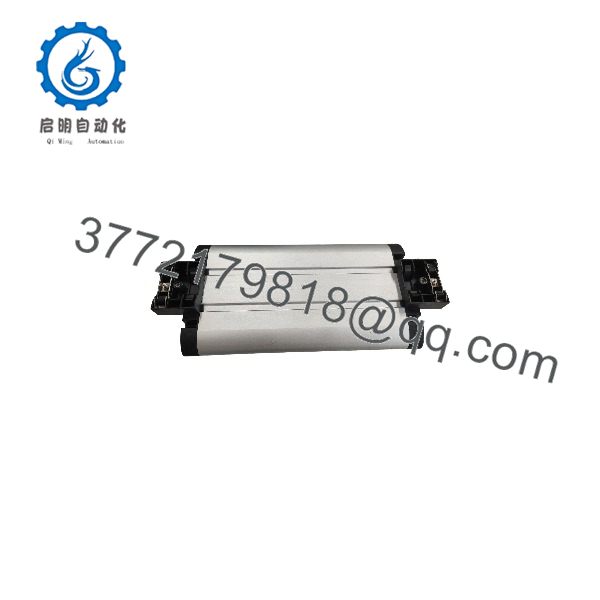
RCU500
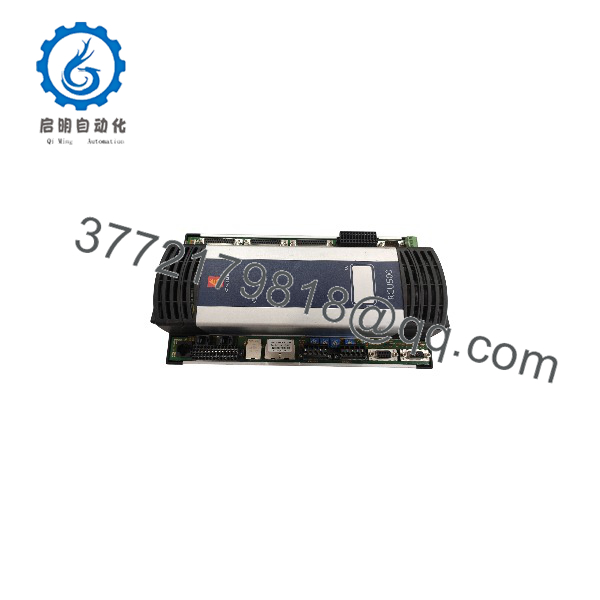
RCU500
System Compatibility & Integration Requirements
| Item / Dependency | Verified Compatibility or Requirement | Practical Note |
|---|---|---|
| System family | Kongsberg Maritime process control, DP and vessel control systems (e.g. K-Chief 700 remote control units) | Typically deployed as the real-time processing element of the automation system |
| Software compatibility | Software compatible with the RCU 400H controller unit and SBC 500 single board computer | Reuse of application software across these platforms is supported per manufacturer documentation |
| Remote I/O | RIO 400 remote I/O units via SPBus (Serial Process Bus) | SPBus is the dedicated link for distributed I/O |
| Operator interface | Error reporting via Operator Stations | BIST and watchdog status surfaced in the operator system |
| Redundant operation | Prepared for redundant RCU operation with hot-replacement of an RCU 500 in a redundant system | Enables unit exchange without process shutdown |
| Ethernet | Dual 10/100 Mbps Ethernet | Two independent ports available for segregated networks |
| Fieldbus | Dual CAN bus (1 Mbps), dual Profibus (12 Mbps) | Field device integration |
| Serial devices | RS-232 / RS-422 / RS-485, 4 channels galvanically isolated | Isolated channels recommended for longer runs or noisy environments |
| Power supply | 24 VDC (±20%), max. 20 W | Standard vessel control supply level |
| Application environment | AIM and DP applications supported | Confirms use in Kongsberg automation and dynamic positioning contexts |
Dimensions, Mounting & Connection Notes
| Item | Detail |
|---|---|
| Dimensions (H × W × D) | 355 × 158 × 87 mm |
| Weight | Approx. 1.35 kg |
| Mounting | DIN standard rail mounting |
| Connections | Plug-in connections |
| Enclosure rating | IP20 — intended for installation inside cabinets or enclosed panels, not exposed locations |
| Front panel | 8 status LEDs, Run/Error LED, RS-232 console port |
| Thermal monitoring | Built-in high-temperature and cooling-fan alarms — keep ventilation paths clear; fan condition is self-monitored |
| Environmental limits | Install within the manufacturer’s stated ambient temperature limits for the unit; avoid sealed enclosures without airflow, since the unit actively monitors its own cooling |
FAQ
What is the Kongsberg RCU500?
The RCU500 is a single-unit real-time computer from Kongsberg Maritime used as a remote controller for process control in marine automation systems.
What applications is the RCU500 used for?
It is used in Dynamic Positioning systems, Vessel Control Systems, Process Control Systems and Safety Systems, and can run AIM and DP applications.
What processor and memory does the RCU500 have?
It uses a PowerPC 8245 processor at 400 MHz with 32 MB SDRAM and 16 MB flash memory.
What communication interfaces does the RCU500 provide?
It provides dual 10/100 Mbps Ethernet, dual CAN bus (1 Mbps), dual Profibus (12 Mbps), an SPBus link to RIO 400 remote I/O units, 12 general RS-232/RS-422/RS-485 serial channels (four of them isolated), four serial switch channels and an RS-232 console.
How is the RCU500 connected to remote I/O?
Remote I/O connection is via the SPBus (Serial Process Bus) interface to RIO 400 remote I/O units.
Does the RCU500 support redundant operation?
Yes — it is prepared for redundant RCU operation, including hot-replacement of an RCU 500 in a redundant system.
What power supply does the RCU500 need?
It requires a 24 VDC supply (±20%), with a maximum power consumption of 20 W.
How is the RCU500 mounted and what protection rating does it have?
It mounts on a DIN standard rail with plug-in connections and has an IP20 enclosure rating, so it must be installed inside a cabinet or enclosed panel.
What self-diagnostics does the RCU500 include?
It has a Built-In Self Test (BIST) with error reporting via operator stations, a watchdog with system status output, and high-temperature and cooling-fan alarms.
Which Kongsberg units is the RCU500 software-compatible with?
The manufacturer documents software compatibility with the RCU 400H controller unit and the SBC 500 single board computer.