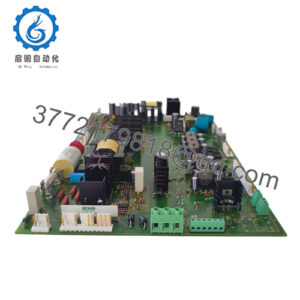
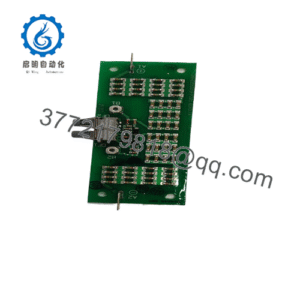
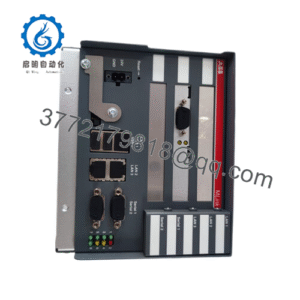
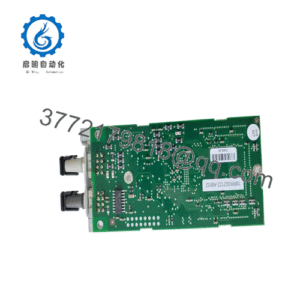
WhatsApp: +86 16626708626
 Email:
  Phone: +86 16626708626
Description
Key Technical Specifications
| Parameter | Value |
|---|---|
| Manufacturer | Lam Research |
| Part Number | 685-247270-101 |
| Product Family | Lam Research semiconductor equipment |
| Equipment Platform | FLEX reported |
| Assembly Description | MDL, ELEC, FLEX, EIOC1, COMMON TM |
| Product Type | Electronic control module / controller assembly |
| System Function | Tool control / equipment I/O |
| Application | Semiconductor manufacturing |
| Regulatory Identification | R-R-Lmk-685-247270-101 |
| Certification Manufacturer | Lam Research Manufacturing Korea Ltd. |
| Certification Category | MDL, ELEC, FLEX, EIOC1, COMMON TM |
| Related Revision | 685-247270-102 is separately documented as a FLEX EIOC1 Common TM controller |
| Weight | Approx. 8.99 kg reported by one aftermarket listing |
| Electrical Ratings | Not reliably established from public OEM documentation |
| Communication Protocol | Not reliably established from public OEM documentation |
| Operating Temperature | Not reliably established from public OEM documentation |
The most useful public evidence identifies 685-247270-101 as a Lam Research electronic module associated with FLEX / EIOC1 / Common TM. A Korean government certification database lists the exact model number under Lam Research Manufacturing Korea and gives the equipment designation as “MDL,ELEC,FLEX,EIOC1,COMMON TM.”
There is also current trade data classifying 685-247270-101 under HS 8504401900 as a power converter. That classification does not, by itself, establish the electrical input/output ratings or prove that the unit is a standalone power supply.
⚠️ Important identification issue: Public aftermarket listings contain contradictory descriptions, including “interface board,” “spectrometer,” “power converter,” and “semiconductor tool control module.” I would not publish voltage, current, communications, or I/O specifications from those listings as verified OEM specifications. The strongest evidence supports its identification as a Lam Research FLEX EIOC1/Common TM electronic assembly.
Product Introduction
The Lam Research 685-247270-101 is an electronic assembly associated with FLEX semiconductor manufacturing equipment. Lam Research Manufacturing Korea’s certification record identifies the exact model as an Common TM electronic module.
This part should be treated as a tool-specific semiconductor-equipment spare, not as a generic PLC module. Exact tool configuration, hardware revision, connector arrangement, and installed software must be checked before substitution. Public sources do not provide enough reliable information to claim universal interchangeability.
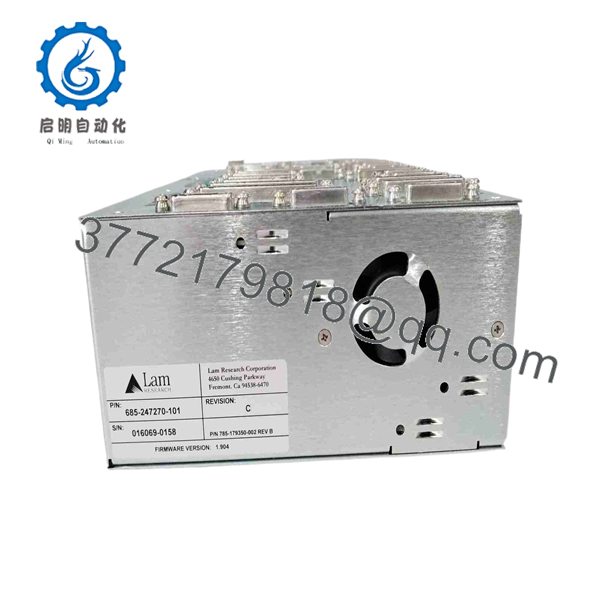
685-247270-101
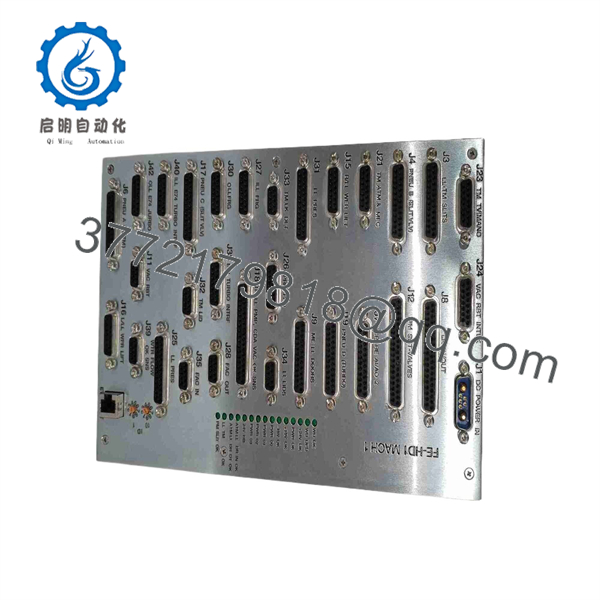
685-247270-101
Installation & Configuration Guide
Estimated replacement time: 45–90 minutes for an experienced semiconductor-equipment technician, excluding software configuration and tool qualification.
Stage 1: Pre-Installation Preparation
⚠️ Safety First
- Place the Lam Research tool into its approved maintenance state.
- Stop active wafer processing.
- Follow the equipment-specific shutdown procedure.
- Apply the required electrical and pneumatic/vacuum isolation procedures.
- Verify that hazardous energy has been removed.
- Observe all cleanroom contamination-control requirements.
- Allow the assembly to reach the approved service condition before removal.
Tools Required
- ESD wrist strap
- Approved cleanroom gloves
- Insulated screwdriver set
- Digital multimeter where applicable
- Torque-controlled driver
- Connector labels
- Camera/smartphone
- Tool configuration backup
Data Backup
Before removing the installed module:
- Photograph the complete assembly.
- Record the full part number: 685-247270-101.
- Photograph the serial number and revision label.
- Record the cabinet/rack location.
- Photograph every connector.
- Record cable routing.
- Save the current tool configuration.
- Record active alarms and diagnostics.
⚠️ Do not erase or alter the existing tool configuration before confirming that a usable backup exists.
Stage 2: Removing the Existing Module
- Confirm the equipment is in the approved maintenance state.
- Verify electrical isolation.
- Verify any applicable vacuum, pneumatic, RF, or process-gas isolation.
- Photograph the installed assembly from multiple angles.
- Label connectors before removal.
- Disconnect cables without pulling on individual conductors.
- Release the module mounting hardware.
- Support the assembly while removing it.
- Pull the module straight out where rack/backplane connectors are used.
- Inspect connectors and mating surfaces.
Check for:
- Bent connector pins
- Oxidation
- Contamination
- Heat discoloration
- Damaged locking mechanisms
- Loose mounting hardware
- Cable damage
Estimated time: 20–30 minutes.
Stage 3: Installing the New Module
- Verify the replacement marking reads 685-247270-101.
- Compare the revision and serial-label information with the removed assembly.
- Confirm the physical connector layout.
- Confirm the mounting position.
- Use ESD protection throughout handling.
- Install the module without forcing the backplane or cable connectors.
- Secure all mounting hardware.
- Reconnect each cable according to the photographs and equipment documentation.
- Verify connector locking mechanisms.
- Check grounding/bonding connections.
Self-Checklist
- Exact 685-247270-101 number verified
- Hardware revision recorded
- Correct FLEX/ position confirmed
- Connector orientation verified
- Cables fully seated
- Mounting hardware secured
- ESD precautions maintained
- Existing configuration backed up
Stage 4: Power-On & Testing
- Restore power according to the Lam Research maintenance procedure.
- Observe module status indicators.
- Check for controller or EIOC-related alarms.
- Verify the tool recognizes the installed hardware.
- Confirm communication with the Common TM/control architecture.
- Review diagnostic logs.
- Verify applicable equipment I/O.
- Run the manufacturer’s hardware diagnostic sequence.
- Confirm interlocks.
- Perform the approved dry-run sequence.
- Run chamber/tool qualification as required.
- Return the tool to production only after the normal qualification criteria are satisfied.
⚠️ Do not substitute generic PLC commissioning procedures for the Lam Research tool’s equipment-specific commissioning sequence. This is a semiconductor-tool assembly, and software/configuration dependencies can be just as important as the physical hardware.
Frequently Asked Questions (FAQ)
1. What is Lam Research 685-247270-101?
The strongest available identification is a Lam Research FLEX electronic assembly associated with /Common TM. This designation is supported by a Korean government equipment certification record for the exact model number.
2. Is 685-247270-101 a PLC module?
It should not be described as a conventional Siemens, Rockwell, or Honeywell PLC module. It is a Lam Research tool-specific electronic assembly used within semiconductor manufacturing equipment.
3. What does Common TM mean?
The public certification record identifies the assembly as FLEX, , Common TM. However, I would not expand the abbreviations into specific electrical functions without the applicable Lam Research equipment documentation.
4. Is 685-247270-101 the same as 685-247270-102?
No. The part numbers should be treated as different assemblies unless Lam Research documentation establishes interchangeability.
Recent trade records identify 685-247270-102 separately as an “MDL, ELEC, FLEX, , COMMON TM” controller, which confirms that the suffix is meaningful.
5. Can I use a 685-247270-101 from another FLEX tool?
Not automatically. Verify:
- FLEX tool model
- Tool configuration
- /Common TM architecture
- Hardware revision
- Connector arrangement
- Firmware/software compatibility
- Installed configuration
A module can be electrically functional yet unsuitable for a particular tool revision.
6. Why do online listings give different specifications?
This part is a good example of why secondary-market specifications need verification. Some listings describe it as an interface board, while others call it a control module, spectrometer, or power converter. Trade records also classify it as a power converter.
For procurement, I would prioritize the physical nameplate, Lam Research documentation, tool BOM, and equipment-specific part list over generic reseller specifications.
7. What should I request before purchasing?
Request:
- Clear photograph of the 685-247270-101 nameplate
- Serial number and revision
- Front/rear photographs
- Connector photographs
- Exact FLEX tool compatibility
- New Original/New Surplus/Used Tested condition
- Functional test report
- Warranty period
For a production-critical semiconductor tool, the tool model and hardware revision are essential. If you have a photo of the nameplate or the installed module, it can help resolve the conflicting public descriptions.