WhatsApp: +86 16626708626
 Email:
 Phone: +86 16626708626
Description
Key Technical Specifications
- Rated Power: 2.8 kW
- Rated Torque: 7.5 Nm
- Stall Torque: 11.4 Nm
- Peak Torque: 29 Nm
- Rated Speed: 3,525 rpm (max speed 6,000 rpm)
- Rated Current: 5.7 A (max current 24 A)
- Supply Voltage: 480 V AC system (325 V DC link region, input 288 V); frequency at rated point 235 Hz
- Feedback: Resolver (RS0 = resolver, no brake)
- Brake: None (order an -GB0 variant if you need a holding brake)
- Rotor Inertia: 7.3 kg·cm²
- Insulation Class: F
- Protection Rating: IP65 (standard for the MCS12 series)
- Ambient Temperature: up to 40 °C rated
- Connector: Rotatable angular connector for power and feedback (per B19N/ST5S00N options)
Verify the exact option code on your existing nameplate against the Lenze MCS catalog before ordering — the suffixes define connector type, feedback, and shaft options.
Product Introduction
The Lenze MCS12H35-RS0B0 is a 2.8 kW synchronous servo motor in the MCS12 family, delivering 7.5 Nm rated torque at 3,525 rpm with resolver feedback and no holding brake. It’s the workhorse behind packaging machines, print units, winders, and indexing conveyors where high dynamic response and tight speed regulation matter more than absolute positioning accuracy.
The resolver feedback is the draw for harsh plants: no glass scale, no optical encoder to fog or shatter, just a rugged electromagnetic transducer that survives vibration and washdown environments. Pair it with a Lenze i500 or 9400 servo drive, load the motor data via the drive’s commissioning tool, and you’re running in an afternoon. The stack length H gives you the thermal mass for cyclic duty — motors sized one stack shorter cook themselves on the same profile.
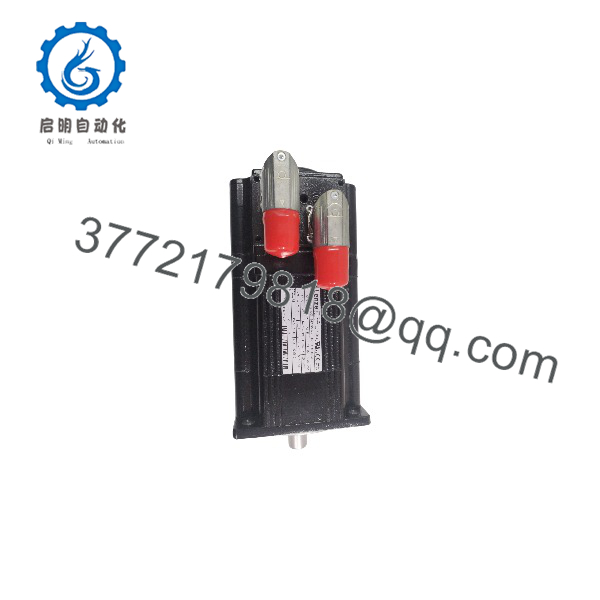
MCS12H35-RS0B0
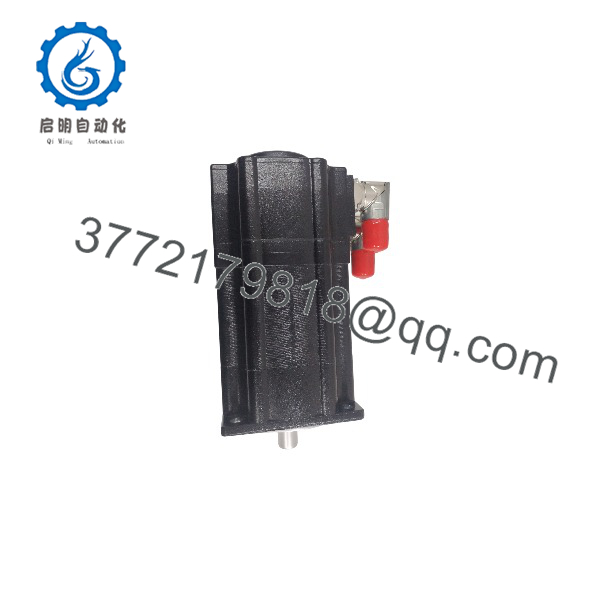
MCS12H35-RS0B0
Troubleshooting Quick Reference
| Symptom | Possible Cause | Relevance to this Part | Quick Check Method | Recommendation |
|---|---|---|---|---|
| Motor won’t rotate, no fault on drive | Torque command never reaches drive or enable missing | ❌ Low | Check drive status word and enable signal in the drive’s diagnostic menu | Verify control wiring and PLC enable logic — the motor is fine |
| Erratic position/speed, drive trips on overspeed | Resolver wiring fault or broken feedback cable | ✅ High | Wiggle-test the feedback connector while monitoring resolver signal on the drive; check for chafed cable at the drag chain | Repair or replace the feedback cable before condemning the motor |
| Motor runs hot at rated load | Ambient above 40 °C, blocked cooling, or undersized stack for cyclic duty | ❌ Low | Measure surface temperature and ambient; log RMS torque demand in the drive | Reduce duty cycle or move up a stack length — don’t blame the motor first |
| Loud grinding noise, vibration | Worn bearings (typical at 20,000–30,000 hrs) or coupling misalignment | ✅ High | Listen at each end bell; check radial play with a dial indicator; laser-align the coupling | Replace bearings or the motor; check alignment before reinstalling |
| Drive trips on overcurrent at startup | Shorted motor winding or phase-to-ground fault | ✅ High | Measure winding resistance phase-to-phase (should match within ±5%); Megger phases to ground at 500 V (>10 MΩ) | Low/unbalanced resistance or ground fault confirms motor replacement |
| Motor jitters at standstill | Tuning mismatch after drive replacement or inertia change | ❌ Low | Re-run autotuning with the correct motor data set loaded | Retune the drive — load the exact MCS12H35 data, not a generic equivalent |
Straight talk: the stator and rotor on these motors almost never die. Bearings and resolver cables account for the vast majority of MCS12 failures. If you’re stuck, contact our technical support with the drive fault code, winding resistance measurements, and a photo of the nameplate — that’s usually enough to identify the fault remotely.
Frequently Asked Questions (FAQ)
Q1: What do the letters in MCS12H35-RS0B0 actually mean?
MCS12 is the frame/series, H is the stack length (longest of the MCS12 builds — highest continuous torque), 35 is the speed class (3,500 rpm region), RS0 is resolver feedback with no brake, and B0 is no brake. So if your machine needs the brake variant for vertical axes or hold-at-stop applications, you need a -GB0 code, not this one. Ordering the wrong brake option is the most common mistake we see on this model.
Q2: Can I swap this motor for a different brand with the same torque rating?
Physically, maybe. Electrically, don’t — not without re-engineering. The winding constants, resolver pole count, and thermal characteristics are matched to Lenze servo drives. A same-torque motor from another maker will run, but your tuning, speed loop bandwidth, and thermal protection all shift. If your drive is a Lenze i500 or 9400, keep the MCS12 family and your commissioning data transfers directly. If you’re changing platforms entirely, budget for retuning and mechanical re-verification.
Q3: Is this motor discontinued? What’s the current replacement path?
The MCS series is mature in Lenze’s portfolio, and the MX / i-series motors are the newer platform. Lenze continues to support MCS, but new surplus stock is the practical sourcing route for like-for-like replacements in running machines. Our units are New Original / New Surplus — factory-sealed stock, serial-verified. If you’re designing a new machine rather than repairing one, ask us about the current motor family before committing to MCS.
Q4: Why does the same model number have different suffixes like B19N or A19N?
The suffixes define the option set: connector type, shaft/keyway, feedback cable length, and seals. MCS12H35-RS0B0-B19N-ST5S00N-R0SU and MCS12H35-RS0B0-A19N-ST5S00N-R0SU are both 2.8 kW servo motors, but the connector orientation differs. This matters for fitting inside an existing machine frame. Check your nameplate — the full order code is printed on it — and order the exact suffix. We stock the common configurations and can source others; tell us your full code when requesting a quote.
Q5: Does swapping the motor require any drive reconfiguration?
Yes, but it’s minor. Load the motor data set (Lenze publishes these per model) into the drive, run autotuning with the actual load coupled, and verify rotation direction before releasing to production. If your application stores position offsets — an indexing conveyor, for example — note that the resolver gives no absolute position, so your home/reference routine re-establishes position on power-up. Nothing is “remembered” across the swap. That trip limit is why some applications track an absolute encoder variant instead.
Q6: How do I verify the motor is actually the problem before pulling it?
Three measurements, ten minutes. First, phase-to-phase winding resistance with a quality multimeter — all pairs should match within about 5%. Second, a 500 V insulation test phase-to-ground; anything under 10 MΩ is suspect. Third, rotate the shaft by hand with the coupling opened: smooth, quiet rotation with no axial play means the mechanics are healthy. I’ve seen techs condemn a 4,000 motor over a 40 feedback cable more times than I can count. Do the measurements first.
Q7: What’s the lead time and warranty?
In-stock units ship within 24–48 hours, professionally crated — these motors ship on a pallet, not in a courier bag, because a dented flange or cracked connector housing turns a good motor into scrap. Every unit carries a 1-year warranty and our test report. For quantities or specific option codes, contact us with your full order code; if we don’t have your exact suffix on the shelf, we’ll tell you honestly what the real lead time is instead of taking the order and going quiet.