WhatsApp: +86 16626708626
 Email:
 Phone: +86 16626708626
Description
Key Technical Specifications
| Parameter | Published specification |
|---|---|
| Manufacturer | Lenze |
| Full model number | MDSKSRS071-03 |
| Motor family | MDSKS |
| Motor technology | Synchronous permanent-magnet servo motor |
| Rated output power | 2.0 kW |
| Rated voltage | 330 V, as listed by a product supplier |
| Rated current | 4.2 A |
| Maximum current | 19 A |
| Rated speed | 3,400 rpm |
| Rated torque | 5.7 Nm |
| Feedback device | Resolver |
| Cooling | Natural convection |
| Frame designation | 071 |
| Holding brake | Not fitted on the MDSKSRS variant |
| Protection rating | Verify against the motor nameplate and exact documentation |
| Shaft dimensions, inertia, and weight | Confirm from the applicable dimensional drawing and motor configuration |
Sources: Lenze motor catalog and supplier technical listings. The catalog’s performance data is based on a three-phase 400 V mains connection to the drive system; the motor’s listed 330 V rating should not be interpreted as a direct mains supply instruction.
Engineering note: Confirm the nameplate, drive compatibility, feedback interface, and exact motor variant before ordering. Do not substitute a similarly numbered MDSKSBR model without checking the brake requirement; that variant is listed with a brake.
Product Introduction & Supply Chain Strategy
The Lenze MDSKSRS071-03 is designed for industrial motion-control applications that require resolver-based feedback and controlled motor positioning. Its 2.0 kW rating and naturally cooled housing make it a candidate for compatible machine axes in packaging equipment, machine tools, printing machinery, and material-handling systems. Actual suitability depends on the machine’s torque-speed curve, duty cycle, mechanical interface, and servo-drive configuration.
For maintenance and procurement teams, the primary sourcing concern is not just motor availability. It is whether the replacement matches the installed motor’s feedback system, mounting dimensions, shaft arrangement, brake configuration, and drive parameters. For a production-critical axis, compare replacement lead time against the expected cost of downtime and consider holding one verified spare if no qualified alternative is readily available.
Installation & Configuration Guide
Stage 1 — Pre-installation inspection
- Verify the complete model number and nameplate ratings.
- Confirm that the motor is the no-brake MDSKSRS variant.
- Check flange dimensions, shaft diameter, coupling, and mechanical alignment.
- Verify that the servo drive supports the motor and its resolver feedback.
- Inspect the shaft, connectors, housing, and mounting surfaces for shipping damage.
Stage 2 — Remove the existing motor
- Isolate and lock out all relevant power sources.
- Follow the drive manufacturer’s discharge-time requirements before handling power connections.
- Label motor-power and resolver cables before disconnecting them.
- Support the motor and driven load before removing the mounting fasteners.
- Inspect the coupling and driven mechanism for wear or misalignment.
Stage 3 — Install and connect
- Mount the motor using the specified fasteners and tightening torques.
- Align the shaft and coupling within the machinery manufacturer’s tolerances.
- Route motor-power and resolver cables according to Lenze wiring guidance.
- Connect protective grounding and cable shielding as specified.
- Maintain adequate clearance around the cooling ribs for natural airflow.
Stage 4 — Commission and test
- Load or verify the correct motor data in the compatible drive.
- Confirm resolver feedback and motor identification before enabling motion.
- Conduct a controlled, low-speed test with the driven equipment secured.
- Check rotation direction, following error, abnormal noise, and temperature.
- Verify the machine’s safety functions and operating sequence before returning it to production.
Hot-swap warning: Do not assume this motor can be replaced while energized. Perform installation and removal under the site’s electrical and mechanical isolation procedures.
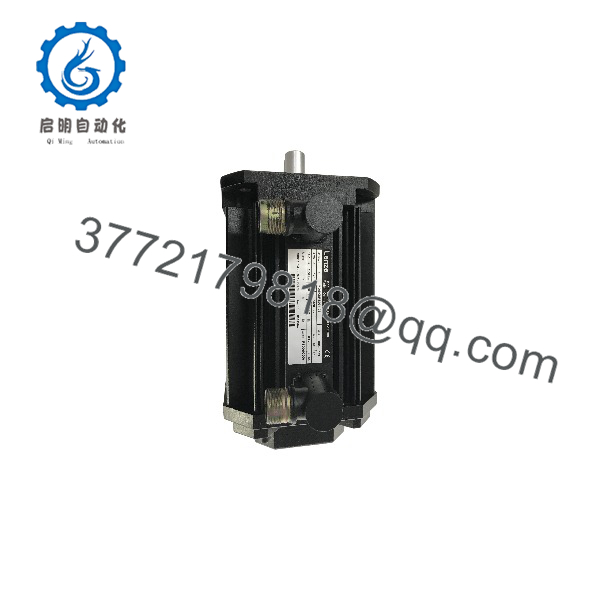
MDSKSRS071-03
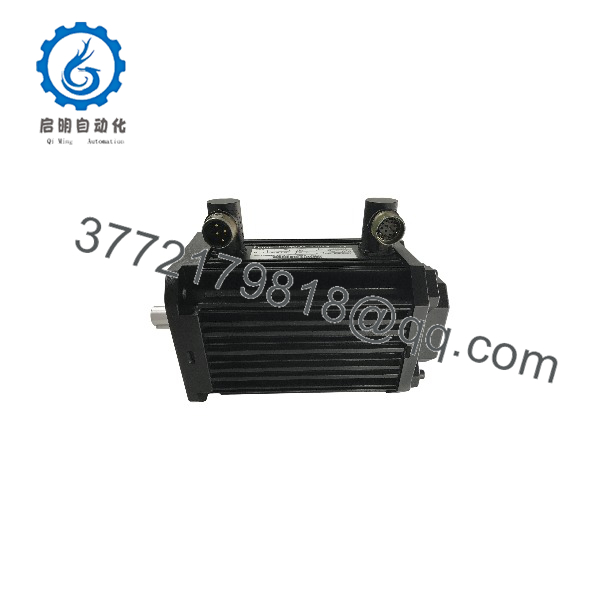
MDSKSRS071-03
Firmware, Software & Configuration Notes
The MDSKSRS071-03 is a motor, not a standalone programmable controller. Its operating behavior depends on the compatible servo drive, motor parameter set, feedback wiring, and machine-control system.
- Motor identification: Confirm that the drive’s motor configuration matches the exact MDSKS variant.
- Feedback setup: Verify resolver compatibility, wiring, and feedback direction.
- Parameter retention: Back up the existing drive parameters before replacement. Do not assume motor parameters will transfer automatically to a replacement drive.
- Firmware compatibility: No specific firmware version for this motor is established by the cited product listings. Check the installed drive’s documentation before any firmware update.
- Commissioning: Confirm current limits, speed limits, torque limits, and application-specific tuning against the applicable Lenze documentation.
- Replacement compatibility: Compare the complete model number and nameplate data, rather than relying only on the MDSKS family designation.
The Lenze MD-series operating instructions are a useful starting point for verifying installation and commissioning requirements.
Frequently Asked Questions
Q1. What is the Lenze MDSKSRS071-03 used for?
It is a synchronous servo motor intended for controlled industrial motion. With resolver feedback, it can operate in a compatible closed-loop servo system for speed, torque, or position control.
Q2. What are its main rated specifications?
Published listings identify a 2.0 kW rated output, 330 V rated voltage, 4.2 A rated current, 5.7 Nm rated torque, and 3,400 rpm rated speed. Verify these values against the actual motor nameplate and the applicable Lenze documentation before commissioning.
Q3. Does the MDSKSRS071-03 include a holding brake?
The Lenze selection catalog lists the MDSKSRS071-03 as the no-brake variant. If the original machine requires a holding brake, confirm the required motor variant and the machine’s load-holding safety arrangements before purchasing.
Q4. Can it replace another MDSKS071-03 motor?
Not automatically. Confirm the full model suffix, brake configuration, resolver feedback, mounting and shaft dimensions, rated data, and drive compatibility. A similar family designation alone is insufficient to establish interchangeability.
Q5. Is the motor still in production?
Its current production status and manufacturer support lifecycle have not been confirmed by the available sources. For maintenance planning, verify availability of the motor, compatible cables, drive support, and technical documentation before setting a long-term replenishment policy.
Q6. How should buyers verify New Original or New Surplus condition?
Request clear photographs of the actual motor and nameplate, the complete part number, serial or date-code information where available, confirmation of storage condition, and a written warranty. New Surplus stock should not be treated as factory-fresh production stock without supporting evidence.
Q7. What should be checked before returning the machine to service?
Verify mechanical alignment, grounding, cable connections, resolver feedback, drive parameters, rotation direction, current behavior, alarms, and safety interlocks. Test the machine under controlled conditions before releasing it for normal production.