WhatsApp: +86 16626708626
 Email:
  Phone: +86 16626708626
Description
Key Technical Specifications
| Parameter | Specification |
|---|---|
| Model | D201189 |
| Module Designation | AI8H |
| Manufacturer | Metso Automation / Valmet |
| Product Type | Analog input module |
| Input Channels | 8 |
| Input Signal | 0–20 mA / 4–20 mA |
| Input Impedance | 249 Ω |
| A/D Resolution | 16 bit |
| Channel Current Limitation | 30 mA |
| Transmitter Supply | 24 VDC nominal |
| Minimum Transmitter Supply | 21 VDC |
| Measurement Accuracy | 0.1%; ±0.05% / 10 °C reported in technical documentation |
| Analog Filter | −3 dB at 20 Hz |
| Measurement Interval | 4.4 ms |
| Programmable Digital Filter | 35 ms–81 s |
| HART | Supported on input channels |
| Field-Circuit Monitoring | Open circuit, short circuit, overrange, underrange |
| Channel Count | 8 |
The detailed technical source reports independent transmitter power on each channel, current limiting, supply-voltage monitoring, analog RF/low-pass filtering, programmable digital filtering, and monitoring of field-circuit short/open conditions and measurement-range violations.
The D201189 should not be confused with D201134. The available technical references identify D201134 as an AI8C analog input module, while D201189 is the AI8H version with HART functionality.
Product Introduction
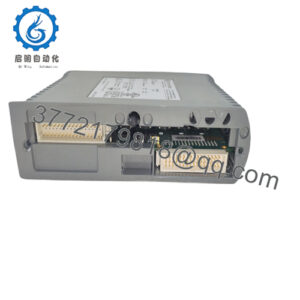
The Metso D201189 AI8H is an eight-channel analog input module designed to acquire 0–20 mA or 4–20 mA process signals in Metso DNA control systems. Each channel provides transmitter power and current limiting, while the module supports HART communication for compatible field devices.
The AI8H also provides analog and programmable digital filtering plus field-circuit diagnostics. This makes D201189 applicable to process transmitters used for pressure, flow, level, temperature and other continuously measured variables where both the analog process value and HART device information are required.
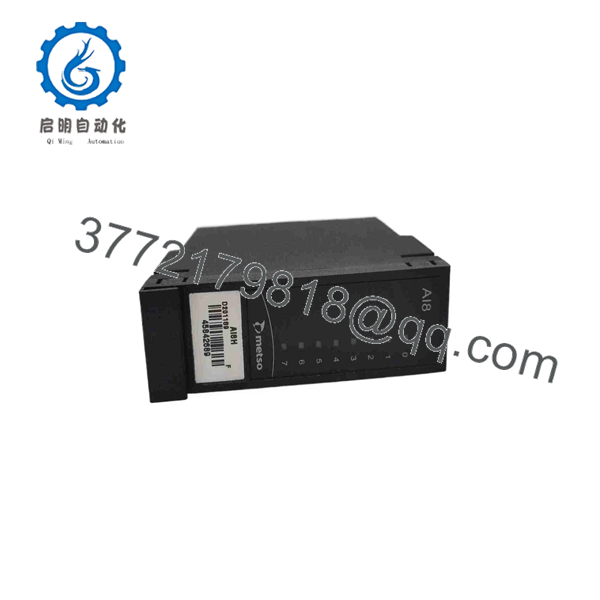
D201189
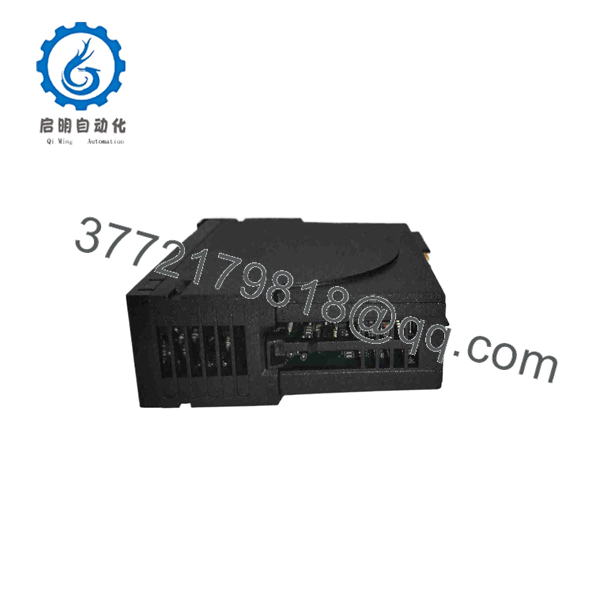
D201189
Installation & Configuration Guide
Stage 1 — Pre-Installation Preparation
Estimated time: 20–30 minutes
- Apply LOTO (Lockout/Tagout) to the affected DCS cabinet and field instrument circuits.
- Wait at least 5 minutes after power isolation before handling the module.
- Wear an ESD wrist strap and use an ESD-safe work surface.
- Prepare a PH1 screwdriver, calibrated multimeter, wire labels, camera/smartphone, and the applicable Metso DNA engineering documentation.
- Photograph the existing D201189, terminal arrangement, rack position, LEDs, and connected transmitter wiring.
- Record every channel’s transmitter tag, signal range, scaling, alarm limits, and HART configuration.
- Back up the relevant DCS configuration before removing the module.
- Verify the replacement nameplate reads .
- Confirm that the replacement is intended for the same Metso DNA I/O architecture.
⚠️ Do not substitute D201134 simply because it is also an eight-channel analog input module. D201134 is identified as AI8C, whereas is AI8H with HART functionality.
Stage 2 — Removing the Old Module
Estimated time: 15–25 minutes
- Confirm the cabinet and connected field loops are electrically isolated.
- Measure the field-loop voltage before disconnecting any transmitter wiring.
- Label all eight input channels.
- Photograph the original wiring and terminal positions.
- Disconnect the field connections using the approved cabinet procedure.
- Release the module’s retaining mechanism.
- Carefully withdraw the without damaging the backplane connector.
- Inspect the mating connector and rack slot for contamination, bent contacts, corrosion, or heat damage.
- Inspect the transmitter loops if the old module failed because of a short circuit or excessive loop current.
⚠️ Because supplies field transmitters, an external wiring fault can cause repeated module failures. Investigate the field loop before installing a replacement.
Stage 3 — Installing the New
Estimated time: 20–30 minutes
- Compare the replacement with the removed module: , AI8H, revision, connector arrangement, and physical form factor.
- Inspect the rear connector and front terminal assembly.
- Install the module in the correct rack position.
- Secure the module using the original retaining mechanism.
- Reconnect all eight field channels according to the cabinet wiring documentation.
- Verify transmitter polarity and loop wiring before applying power.
- Confirm each loop is compatible with the documented 0–20 mA or 4–20 mA input range.
- Check loop resistance and transmitter supply voltage.
- Confirm that no channel exceeds the documented 30 mA current limit.
- If HART communication is required, verify the field device, loop resistance, and HART wiring arrangement before commissioning.
⚠️ Do not treat a HART analog input as a simple passive 4–20 mA input during troubleshooting. Verify both the analog loop and the HART communication path when a smart transmitter reports a fault.
Stage 4 — Power-On & Testing
Estimated time: 30–60 minutes
- Restore power according to the plant’s commissioning procedure.
- Observe the status indicators during startup.
- Verify that the DCS recognizes the AI8H module without an I/O configuration fault.
- Check all eight channels individually.
- Measure the transmitter loop current with a calibrated instrument.
- Confirm that the displayed process value corresponds to the calibrated transmitter output.
- Check channel scaling, engineering units, high/low alarms, and range configuration.
- Verify HART communication with representative smart transmitters.
- Check for open-loop, short-loop, overrange, and underrange diagnostics.
- Verify the configured digital filtering. The documented programmable filter range is 35 ms to 81 s.
- Confirm stable readings under normal process conditions.
- Record channel-by-channel test results before returning the DCS cabinet to service.
For a critical process installation, acceptance should include both 4–20 mA measurement verification and HART communication testing. A correct current reading alone does not prove that the HART interface is functioning.
Frequently Asked Questions (FAQ)
1. What is the Metso ?
is the Metso DNA eight-channel analog input module with HART functionality. It is intended for measurement of 0/4–20 mA analog current signals.
2. How many analog inputs does have?
The provides 8 analog input channels. The documented input ranges are 0–20 mA and 4–20 mA.
3. Does support HART?
Yes. The designation and technical documentation identify HART communication capability on the input channels. A separate technical description states that the module provides HART communication for its analog input channels.
4. What is the input impedance of ?
The documented input impedance is 249 Ω. The same technical source specifies a 30 mA channel-level current limit.
5. What is the difference between and D201134?
is identified as , the HART-capable analog input module. D201134 is identified as AI8C, a different analog input configuration. They should not be treated as interchangeable solely because both provide eight-channel analog input functionality.
6. Is obsolete?
belongs to the legacy Metso/Valmet automation hardware family and is now primarily encountered through industrial spare-parts channels. A current certification document separately lists and D201189L as Metso Automation analog-input modules.
7. I found listings calling an IU interface unit. Which description is correct?
There is conflicting aftermarket information for this part number. One current reseller page describes as an IU interface unit, but multiple independent technical sources specifically identify , including a technical thesis with detailed electrical specifications and a public procurement document that explicitly lists “ VALMET .”
For procurement, the identification is substantially better supported by the available evidence. Before installation, however, verify the physical nameplate and connector arrangement against the existing unit. This is especially important because D201189L is also documented as a separate analog-input variant.